
A commercial guava puree shipment involves more than turning ripe fruit into a sealed drum. Buyers need to understand each production control, specify the differences between white and pink puree, choose the right storage format, and verify the shipment before it enters the factory. By the end, you will know what to request, inspect, store, and adjust during formulation.
Key takeaways
- Reject mouldy, damaged, and underripe fruit before washing and processing.
- Keep white and pink guava lots separate to control colour and flavour.
- Match aseptic, chilled, or frozen delivery to your production schedule.
- Verify Brix, pH, colour, pack size, lot code, and microbiological limits.
From incoming guavas to sealed puree
Ripe, sound guavas are weighed, lot-coded and inspected before processing. Workers reject mouldy, damaged or underripe fruit, then wash the accepted load to remove soil and field debris. The lot remains traceable from raw fruit through the sealed puree.
1. Sort and trim the fruit, removing stems, damaged portions and foreign material.
2. Pulp the guavas, then pass the pulp through finisher screens that separate skin, seeds and coarse fibre. Screen size controls the puree’s particle character and seed residue.
3. Standardise the pulp by blending lots or adjusting it to the agreed soluble-solids target, acidity, colour and viscosity. Single-strength puree commonly falls near 8–12 °Brix, but the contract value controls.
4. Deaerate the puree to remove entrained air. This limits oxidation, foaming and colour loss during heating and filling.
5. Apply the validated pasteurisation or commercial-sterilisation schedule. Aseptic product enters pre-sterilised packaging inside a controlled aseptic zone; the scheduled process and its records prove shelf stability.
6. Fill, seal and cool the packs, then hold them under the specified storage conditions pending quality release and dispatch.
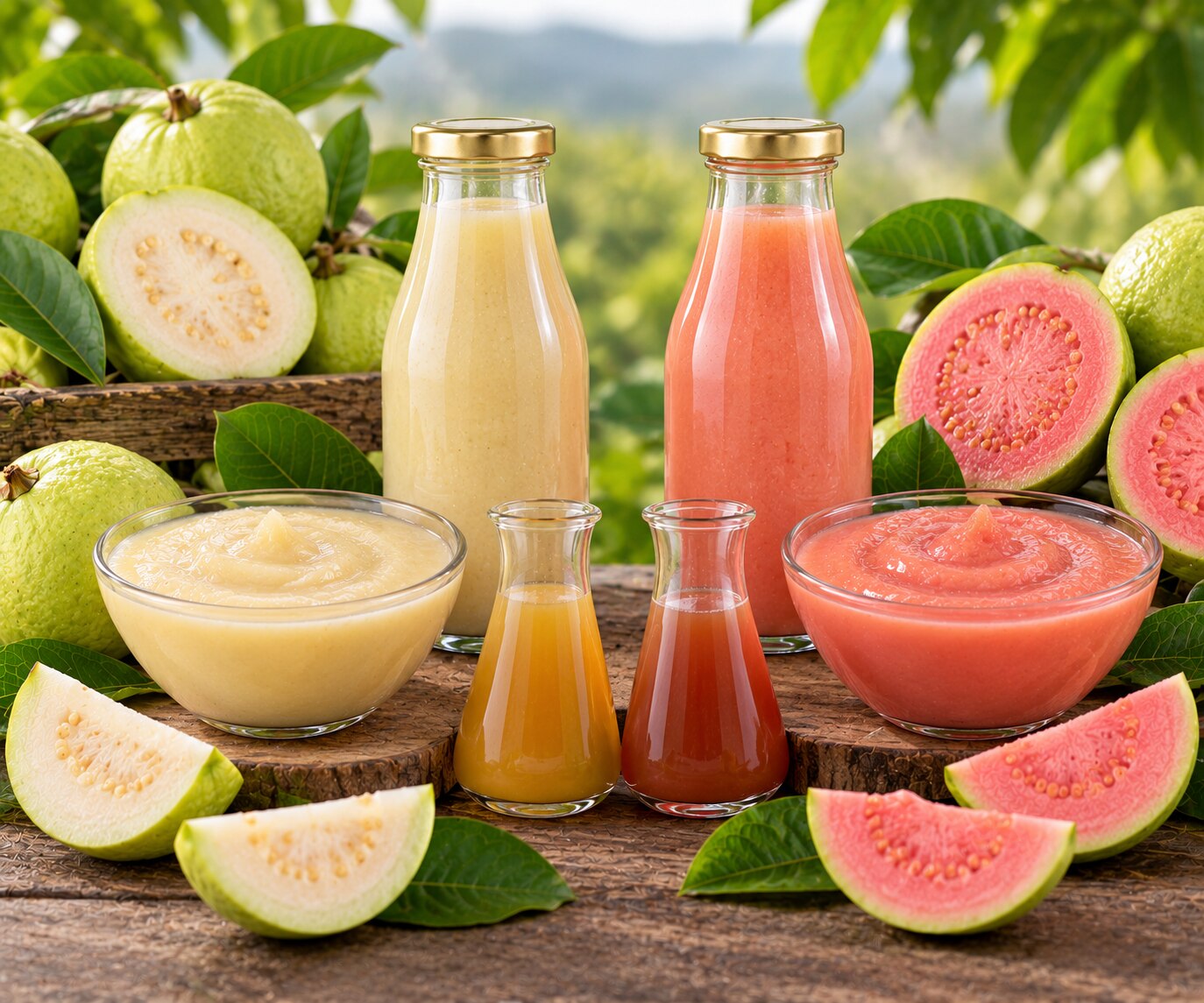
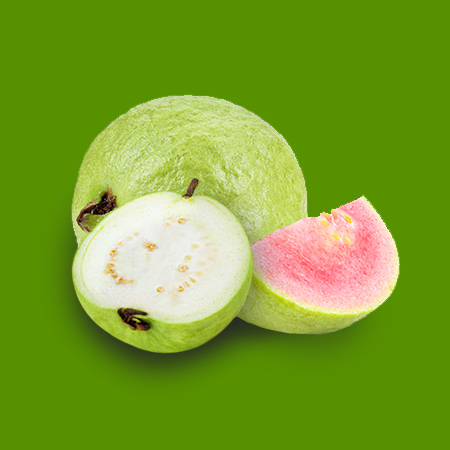
Pink-fleshed guava contributes carotenoid colour, while white-fleshed guava generally produces a pale cream or yellow puree. The processor checks colour, aroma, acidity and viscosity against the specification because fruit maturity and cultivar change each lot. This route shows how white pink guava puree is made and supplied without treating the two colour types as interchangeable.
Why white and pink guava require different process controls
The main change is appearance: pink guava contributes carotenoid colour, while white guava usually produces a pale cream or yellow puree. In white pink guava puree production, treating colour as a label rather than a measurable specification creates inconsistent beverages, dairy products and fruit fillings.
1. Set a colour target before processing. Specify an acceptable visual range or instrumental L*, a*, b* values for each type. Do not approve a sample labelled only “white” or “pink”; orchard maturity, variety and storage can shift colour.
2. Adjust pulper and finisher settings to control seeds and fibre. Guava seeds are hard and numerous, so inadequate screening leaves gritty particles. Excessive refining removes useful fibrous pulp, reducing body and increasing waste. Check particle size and seed limits in the released lot.
3. Protect pink puree from avoidable colour loss. Heat exposure and storage can darken pink puree or reduce its brightness, so inspect the finished application rather than judging colour only at receipt. Do not alter the thermal process casually: aseptic product requires the validated scheduled process, its time-temperature records and controlled aseptic filling.
4. Validate the recipe against both raw-material ranges. Compare acidity, pH, soluble solids, viscosity, aroma and colour across realistic lots. White and pink puree can require different formulation adjustments even when the fruit specification and package format match.
The order-to-receipt route into a Bengaluru factory
A Bengaluru manufacturer usually starts the guava puree supply process with a technical approval sample, not a full truckload. The buyer agrees the fruit type, soluble solids, pH, acidity, colour, viscosity, particle size, packaging, shelf life and storage condition before issuing a purchase order.
1. The supplier confirms the purchase order, production date, allocated lot, pack size and dispatch plan. The lot code must link the finished puree to raw-fruit receiving records and processing records.
2. Before loading, quality control releases the lot against the agreed specification. Request the certificate of analysis, showing test results for soluble solids, pH or acidity, viscosity, colour and any agreed seed or fibre limit.
3. For aseptic puree, request the scheduled-process or commercial-sterility release reference and filling records. Heating alone is not proof of shelf stability; the validated thermal process and its records provide that evidence.
4. For frozen puree, request temperature records from dispatch and insist on continuous frozen transport. Arrange rapid transfer into your freezer after arrival.
5. At the Bengaluru factory, inspect every drum, bag or carton for punctures, leakage, swelling, broken seals, water damage, frost abuse and an unreadable lot code. Record the received quantity and container condition before moving the shipment into storage.
6. File the invoice, packing list, certificate of analysis, batch details, storage instructions, shelf-life statement and retain-sample reference. Hold the lot if the seal, temperature history or traceability record fails inspection.
| Shipment format | Documents and release evidence | Receipt check |
|---|---|---|
| Aseptic | Certificate of analysis and scheduled-process release | Check seals, lot code and ambient storage condition |
| Frozen | Certificate of analysis and temperature log | Check frozen state, packaging and immediate freezer transfer |
| Both | Packing list, invoice and traceability details | Reconcile quantity and retain a sample reference |
Choosing aseptic, chilled, or frozen delivery
Choose the format by matching your storage capacity, delivery network, weekly consumption, and production line—not by fruit variety alone.
| Option | Storage and transport | Best fit | Main failure risk |
|---|---|---|---|
| Aseptic | Ambient warehouse; protected transport without the frozen-truck regime | Large batches, irregular use, limited freezer space, and lines that can open sealed drums hygienically | A punctured aseptic bag, sunlight, or excessive heat removes the shelf-stability assumption |
| Chilled | Continuous refrigerated storage and delivery | Fast consumption with reliable local cold-chain capacity and short production cycles | Delayed unloading or extended holding can reduce quality and increase spoilage risk |
| Frozen | Continuous frozen storage, temperature records, rapid transfer into the freezer, and controlled thawing | Smaller or seasonal production runs, freezer capacity, and applications where a fresher sensory profile matters | Thawing and refreezing can create microbial, texture, and separation problems |
Choose aseptic for ambient warehousing and variable call-offs. Choose frozen when your freezer, energy budget, thaw space, and line can absorb the extra handling. Chilled suits a plant that converts the puree quickly; it is a poor choice if deliveries wait for production.
Your line also decides the answer. Frozen puree needs a documented thaw plan and complete incorporation after thawing, while aseptic puree needs controlled opening and hygienic transfer. Confirm that the finished product’s heating step will not darken pink puree beyond your colour target.
For guava puree for food manufacturers in bengaluru, ask Zeus India Enterprise to link each delivery lot to its release records and retain sample before you approve the supply model.
Related product
 | White and Pink Guava Puree Zeus India is a trusted exporter and supplier of premium White Guava Puree and Pink Guava Puree in India, catering to the growing demands of the... View product → |
The specification and formulation checks before use
A buyer should approve a specification before requesting a price. “100% guava puree” identifies the fruit, but not its colour, viscosity, seed tolerance, heat treatment, or formulation suitability.
1. State the fruit identity and permitted ingredients: white, pink, or blended guava; puree rather than concentrate; and whether sugar, acid, water, preservatives, or other additives are allowed. Set soluble solids, usually around 8–12 °Brix for single-strength puree, plus pH and titratable acidity.
2. Define the physical and sensory limits. Specify viscosity or screen size, seed and fibre particle tolerance, colour or instrumental colour values, flavour, aroma, foreign matter, pesticide-residue compliance, and microbiological limits. Pink puree needs a colour-retention target because heating and storage can reduce brightness.
3. Fix the supply and release details: aseptic, chilled, or frozen format; pack type and net weight; shelf life; storage temperature; lot identification; and temperature records for frozen loads. Frozen puree needs uninterrupted frozen transport and rapid freezer transfer, not substitution with aseptic storage.
4. Request an approval sample, then test a realistic range of lots before ordering. Confirm the certificate of analysis, pre-dispatch release, retain sample, and traceability link to raw fruit and processing records. Suppliers of guava puree for food manufacturers in Bengaluru should be able to provide these records.
In formulation, weigh puree as a fruit ingredient, not as juice, flavouring, or whole fruit. Calculate its water, acidity, solids, colour, and viscosity contribution, then adjust the recipe after pilot heating. Validate the finished beverage, dairy preparation, or filling across lot variation—not only against one laboratory sample.
Frequently asked questions
How does guava become sealed puree?
Processors weigh and lot-code ripe guavas, remove defective fruit, wash the accepted load, pulp it, refine it, and fill the puree into sealed packs under controlled conditions.
Why do white and pink guava need different process controls?
White and pink guavas differ in pulp colour, pigment stability, flavour, seed content, and processing response. Keep lots separate and confirm colour, Brix, pH, and texture against the specification.
How does guava puree reach a Bengaluru food manufacturer?
The buyer confirms the specification and order, the supplier schedules production and dispatch, and the shipment arrives with lot, pack, transport, and quality documents for receiving checks.
How should you choose between aseptic, chilled, and frozen guava puree?
Choose aseptic packs for ambient storage and longer planning windows, chilled packs for short refrigerated supply chains, and frozen packs when extended storage is needed and thawing capacity is available.