
A guava puree lot can fail through colour drift, browning, separation, fermentation, package leakage or an unreliable Brix result, and the cause is not always the supplier. By the end, you will have a receiving test plan, a traceability record, and a quarantine workflow for deciding whether to reject, replace, rework or release a lot.
Key takeaways
- Quarantine lots with identity, safety, sensory or packaging deviations.
- Record batch, harvest, processing, test and dispatch details for every lot.
- Compare suppliers using retained samples, specifications, COAs and corrective-action records.
- Trace colour changes to raw fruit, oxygen, heat, handling or factory controls.
Which guava puree batch problems should trigger an investigation?
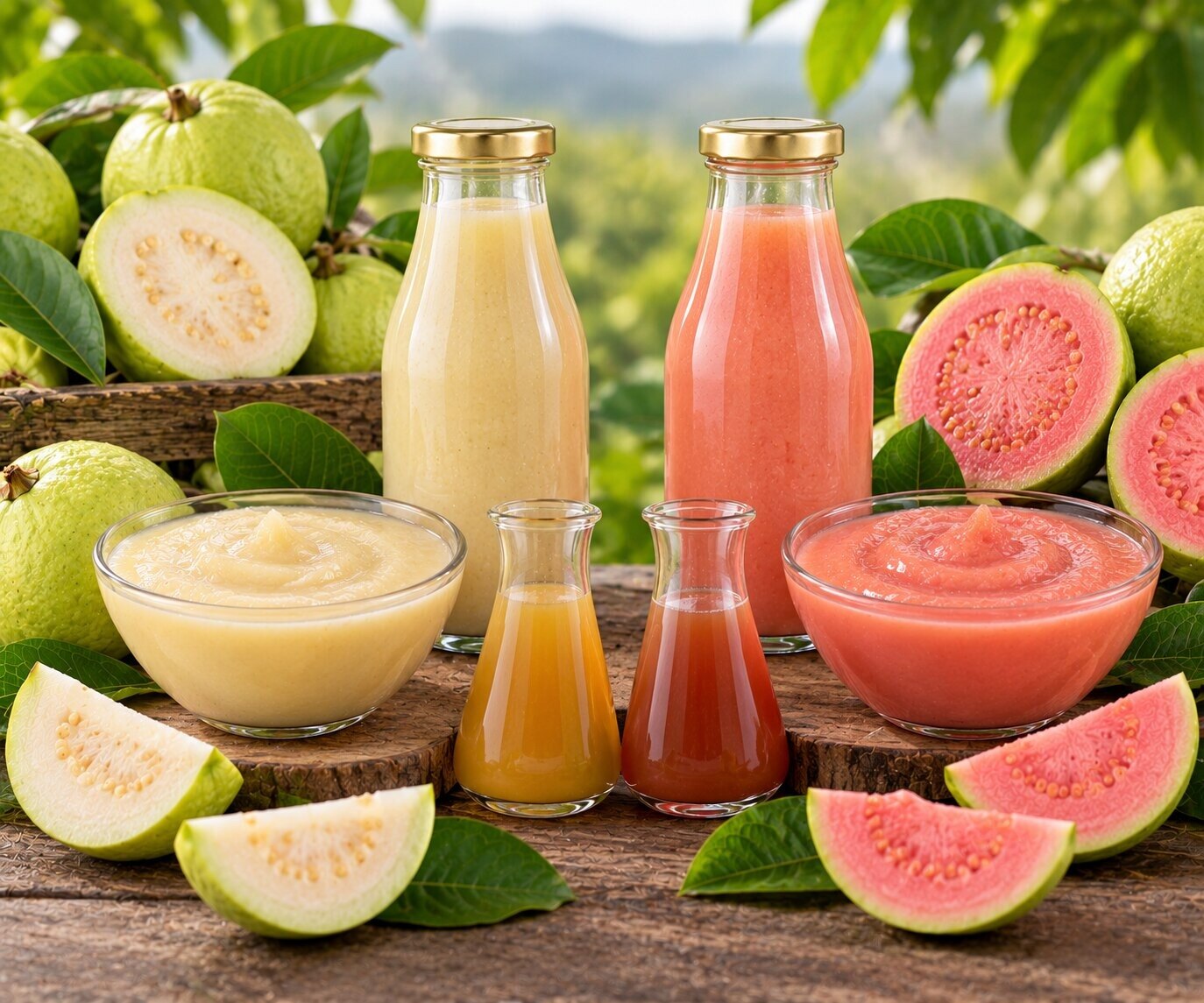
A batch issue is any lot that falls outside the agreed identity, safety, sensory, packaging or composition limits. “White pink guava” is not precise enough: cultivar, maturity, growing region, harvest date, oxygen exposure and heat exposure can shift the puree from white to pink, brown or grey.
| Finding | Investigation focus |
|---|---|
| Colour drift, brown or grey colour | Compare approved photographs or colour coordinates, fruit-to-heat-treatment interval, oxygen control, enzyme-inactivation conditions and actual product temperature. |
| Sour or fermented odour | Check overripe fruit, fermentation, storage temperature and process delay. |
| Thin or excessively thick viscosity, serum separation or sediment | Check pulp, insoluble solids, particle size, pectin, enzyme treatment and storage history. |
| Excessive seeds or fibre | Verify screen or refiner settings and the contracted seed-fragment limit. |
| Mould, swollen aseptic bags or leaking drums | Quarantine immediately and investigate microbiological, seal and handling failures. |
| Inconsistent soluble-solids readings | Confirm sampling source, homogenisation and refractometer method before blaming the supplier. |
Immature fruit can create acidic, less aromatic puree with different body; overripe fruit increases fermentation and colour-deterioration risks. Equal °Brix values do not prove equal consistency when pulp, insoluble solids, particle size, pectin and viscosity differ.
Define colour coordinates or reference photographs, maturity criteria, seed-fragment limits and sensory acceptance terms in the contract. These guava puree batch quality problems deserve supplier review, but browning is not automatically a cultivar defect. Ask for process evidence before reaching that conclusion.
How should you inspect and release each puree lot?
Release a lot only after receiving checks, product testing and document review agree. For guava puree suppliers from India, quality control starts by placing the drum or aseptic bag on hold and checking the seal, lot code, production date, net weight, pallet label, outer-container damage and arrival temperature.
Open a representative sample under hygienic conditions. Record odour, colour, texture, sediment, seed fragments, pH and °Brix. Sample individual bags or drums when non-uniformity is a concern; use a composite only when the specification identifies its source units and preparation.
- Measure pH on a defined, homogenised sample with a calibrated meter.
- Measure °Brix with a calibrated refractometer using the named method, including temperature correction; an ICUMSA-style method is preferable.
- Measure viscosity by Brookfield or another named method, specifying spindle or geometry, temperature, sample preparation and test time.
- Compare results with the signed specification, not the supplier’s general product description.
| Parameter | Release requirement |
|---|---|
| pH, °Brix, viscosity, pulp and colour | Numerical minimum or maximum, method and sampling point |
| Yeast and mould, aerobic colony count, coliforms | Numerical limits using ISO 21527-1, ISO 4833-1 and ISO 4832 |
| Pathogens, preservatives and foreign matter | Destination-appropriate pathogen methods and numerical limits; declared preservative status and zero-tolerance or defined limits |
Request package-integrity results, seal parameters, filling temperature and the scheduled thermal process, including flow, holding time and deviation segregation. A COA alone does not prove commercial sterility. Release only after acceptable results, intact packaging and complete lot records are filed; otherwise quarantine the lot.
What records create reliable guava puree traceability?
Reliable guava puree traceability connects one finished-product complaint to one puree lot, not merely to a supplier name. Request these records and identifiers:
- Batch or lot number, production date, raw-material origin, grower or collection source where available, processing line, shift record and operator record.
- Ingredient statement, allergen declaration, certificate of analysis, microbiological results, pesticide-residue statement and certificate of origin.
- Packaging-material lot, scheduled thermal-process record, warehouse location and dispatch record.
The purchase order, delivery note, pallet label and container number must repeat the same lot identity. A mismatched label breaks the chain.
| Record | What it connects | If missing |
|---|---|---|
| Finished-product code | Customer complaint to factory production records | The affected formulation cannot be isolated |
| Puree lot and retain sample | Factory batch to supplier history | Testing may target the wrong material |
| Packaging and dispatch records | Supplier lot to delivered container | Transport or handling evidence disappears |
A pesticide statement must name the destination regulation or Codex maximum-residue-limit basis, analyte scope, sampling plan, laboratory method and treatment of non-detects. Indian compliance alone does not prove compliance in every export market.
For a complaint, match the finished-product code to production records, the puree lot, retain sample and delivery documents. Preserve unopened customer units and supplier retains from more than one point in the run when practical; one sample can miss start-up material, a filler changeover, stratification or local contamination.
How do you separate a supplier defect from handling or factory failure?
Quarantine the lot immediately after a failed inspection or finished-product complaint. Photograph labels, seals and damage; record arrival temperature, test results and the original test method. Take representative retain samples from more than one production point when practicable, before blending, reworking or disposal.
| Evidence | Supplier-defect signal | Handling or factory-failure signal |
|---|---|---|
| pH and thermal record | Lot-linked deviation or underprocessing | Acceptable release records, then contamination or heat abuse |
| Colour, odour or viscosity | Same fault in unopened retains | Fault appears after opening, dilution or processing |
| Package integrity | Pinholes, seal-channel contamination, weak seals or poor outer-drum fit | Rough handling, temperature expansion or post-receipt damage |
| Microbiology | Positive unopened retain linked to the lot | Negative retain but positive finished product or line sample |
Notify the supplier with the lot number and agree in writing on replacement, credit, rework or disposal. Compare guava puree batch quality problems with transport-temperature history, storage records, thawing cycles, opening time, dilution water, hot-fill conditions, formulation, line sanitation and post-process exposure. Check aseptic packaging for delayed leakage or oxygen ingress, not only visible leaks.
For guava puree traceability, link the complaint to the purchase order, pallet label, delivery record, retain sample and production code. Compare pH measured on the actual batch with thermal-process records to identify whether the defect began before receipt or after release.
Store unopened product within the numeric range on the validated specification. After opening, use clean equipment, reseal or transfer hygienically, refrigerate at the specified range—commonly 0–5°C when validated instructions call for it—and set a documented maximum use time. Keep drums off dirty floors, protect bags from puncture, avoid repeated freeze-thaw cycles and use first-expiry-first-out.
How should you compare white pink guava puree suppliers from India?
Choose the supplier whose records let you reconstruct a lot, not the one offering the widest °Brix range. For white pink guava puree suppliers from India batch issues, request a product specification covering:
- Colour range, pH, °Brix, titratable acidity, pulp content, viscosity method, seed-fragment and foreign-matter limits, sensory criteria, microbiological limits, preservative status, package format and storage conditions.
- Raw-fruit maturity criteria, screen aperture, pulper-refiner settings or inspection method, plus controls for particle size, pectin degradation, enzyme treatment, shear, deaeration and residence time before heat treatment.
Evidence to compare across guava puree suppliers from India quality:
| Supplier evidence | What it must show | Reject if absent |
|---|---|---|
| Aseptic-process file | Validated scheduled process; flow and holding-time controls; minimum and maximum process conditions; aseptic-zone controls; deviation segregation and documented disposition | COA is the only proof offered |
| Lot records | COA tied to a real lot, sampling plan identifying bags, drums or composite samples, retain-sample policy, package-integrity evidence and complaint-response procedure | Results cannot be linked to source units |
| Compliance file | Destination pesticide limits, analyte scope, sampling plan, laboratory method and non-detect treatment | “India compliant” is the entire claim |
Ask Zeus India Enterprise for the same evidence you would demand from any competing supplier. Compare it with your destination rules and receiving tests, then confirm guava puree traceability from purchase order through pallet label, container, retain sample and batch history. Buy only against a specification that states exactly when to reject material.
Related product
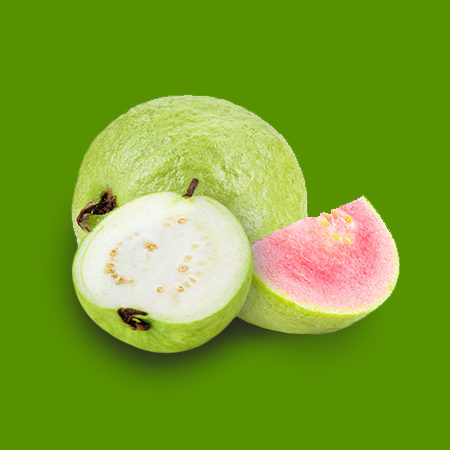 | White and Pink Guava Puree Zeus India is a trusted exporter and supplier of premium White Guava Puree and Pink Guava Puree in India, catering to the growing demands of the... View product → |
Frequently asked questions
Which guava puree batch problems should trigger an investigation?
Investigate any lot outside agreed identity, safety, sensory, packaging or composition limits. Colour changes from white or pink to brown or grey, off-odours, fermentation signs, damaged seals, foreign material, abnormal viscosity and test failures all require documented review.
How should you inspect and release each guava puree lot?
Quarantine the lot first. Check the container, seal, label, batch code and condition, then compare appearance, aroma, texture and laboratory results with the approved specification. Release it only after an authorised reviewer records the decision and supporting results.
What records create reliable guava puree traceability?
Keep the supplier, product code, batch number, harvest or receiving date, processing date, raw-material lot, packaging code, test results, storage conditions, dispatch details and corrective-action history. Link each finished lot to its incoming fruit and production records.
How do you separate a supplier defect from handling or factory failure?
Compare the supplier’s retained sample and certificate of analysis with your receiving sample, storage log, transport conditions and production records. Review temperature exposure, oxygen contact, opening practices, equipment sanitation and time before assigning the cause.
How should you compare white pink guava puree suppliers from India?
Compare written specifications, cultivar and origin details, process controls, lot-level certificates of analysis, retained-sample practice, packaging integrity, traceability depth and response to nonconformities. Ask suppliers to explain colour variation and provide corrective-action evidence.