
Bulk guava puree failures rarely begin when a drum arrives: they begin with weak specifications, uncertain fruit procurement, unplanned production capacity, or incomplete shipping paperwork. By the end, you will know which controls to demand before placing an order and how to verify that the delivered batch can support your production schedule.
Key takeaways
- Request tested °Brix, acidity, colour, pulp, and microbiological results.
- Confirm batch traceability from raw fruit through aseptic filling.
- Compare white and pink guava against your finished product specification.
- Approve packaging, loading, temperature, and delivery records before shipment.
Which bulk guava puree problems can disrupt production?
Bulk guava puree supply problems can stop a beverage, dairy, bakery, sauce, or fruit-preparation line even when the label says “guava puree.” A missed delivery disrupts production schedules; inconsistent colour, variable °Brix or acidity, off-flavour, and excess sediment can force reformulation, rework, or rejection.
| Failure | Likely source | Production consequence |
|---|---|---|
| Colour, flavour, °Brix, or acidity outside limits | Raw-fruit variety, maturity, season, or blending | The finished product changes shade, taste, sweetness, tartness, or stability |
| Excess sediment, seeds, skin, or variable viscosity | Poor fruit grading, screening, pulping, or process control | Filters block, textures change, and separation appears after filling |
| Damaged drums, leaking seals, or punctured aseptic bags | Packaging, handling, storage, or transport | Contamination risk, product loss, and quarantine |
| Short remaining shelf life | Delayed processing, storage, or dispatch | The buyer cannot safely use the full planned inventory |
| Late arrival or customs hold | Shipment scheduling, clearance, or missing documents | Ingredients miss the production window |
| Incomplete invoice, packing list, certificate of origin, or transport record | Documentation failure | Customs cannot release the consignment |
Raw fruit primarily drives natural colour, flavour, acidity, solids, and pulp characteristics. Processing creates additional variation through heat treatment, screening, blending, and filling; packaging, storage, and transport create damage or shelf-life failures.
Treat “guava puree” as a starting name, not a specification. Agree measurable limits for °Brix, pH, titratable acidity, colour, viscosity, particle size, microbiology, packaging condition, shelf life, and shipping documents before ordering. A photograph or verbal description cannot protect supply continuity.
What controls prevent interruptions before the puree is shipped?
Seasonal demand forecasting is the first protection against guava puree supply problems. Share expected volumes early, then agree firm call-off dates and a forecast-change tolerance; without both, a manufacturer can overproduce perishable stock or allocate fruit and capacity elsewhere.
Approved growing or procurement regions, fruit-grade requirements, expected pulp recovery, and a reserve-stock policy add protection when harvest quality changes.
1. Convert the forecast into a raw-fruit plan covering the guava season, approved suppliers, fruit grades, expected yield, and reserve quantity. Spot-market buying alone can shift colour, °Brix, acidity, flavour, pulp recovery, and cost.
2. Reserve packaging, labour, laboratory testing, aseptic filling, and dispatch capacity against the call-off schedule. Ask for normal and peak lead times, maximum monthly output, minimum order quantity, available safety stock, alternate packaging, and lot-release time.
3. Require the supplier to identify whether safety stock is finished puree, packaging, or raw fruit. A “pink guava puree bulk supplier” with no defined reserve cannot promise continuity during a crop shortfall.
4. Keep customer lots segregated by batch and retain samples from each lot. Release product only after documented testing, then schedule shipments with enough time for review of the certificate of analysis and transport documents.
5. Ask how a failed test is contained. Lot segregation, retained samples, and release testing let the manufacturer quarantine one lot, investigate it, and replace or reschedule that shipment without stopping every customer’s supply.
Which specifications and verification records should you require?
Before approving a white guava puree manufacturer or pink guava puree bulk supplier, put measurable limits in the purchase specification. “Guava puree” alone cannot control a batch that is too thin, acidic, dark, seedy, or contaminated.
| Specification | What to require | What to verify |
|---|---|---|
| Soluble solids | °Brix range | Lot test result |
| Acidity | pH and titratable acidity method and range | Lot certificate |
| Appearance | Colour method or approved reference; state whether pink colour is natural or adjusted | Sample comparison |
| Body | Pulp or fibre level and viscosity or consistency at a stated temperature | Same test conditions |
| Particles | Maximum particle size, seed and skin limits | Sieve or visual result |
| Safety | Limits for total plate count, yeast and mould, coliforms, Salmonella, and other agreed organisms | Accredited laboratory result |
| Foreign matter | Zero tolerance and inspection controls for glass, metal, plastic, stones, and insects | Inspection record |
| Pack | Aseptic bag-in-drum format, liner and drum size, net weight | Packaging inspection |
| Additives | Name and maximum level of every permitted additive; state “none” if applicable | Formula declaration |
Assess a white or pink sample at the finished product’s dilution and storage condition. Heat, oxygen, and time can change pink colour, so a sample tested undiluted or freshly chilled can conceal browning, sedimentation, or phase separation.
Require these records before bulk release:
- Product specification sheet and pre-shipment approval sample
- Lot-specific certificate of analysis, batch number, production date, expiry or best-before date, net weight, and retained sample reference
- Raw-material or farm-batch linkage where available
- Allergen declaration and food-safety documentation
- Certificate of origin, commercial invoice, packing list, and transport documents
How should you compare white and pink guava suppliers beyond price?
Compare commercial samples, not catalogue photographs. White and pink guava puree are not interchangeable: cultivar and maturity change colour, aroma, flavour, seed content, pulp texture, processing yield, and finished-product mouthfeel. A white guava puree manufacturer must prove stability through storage, dilution, and your actual process.
A white pink guava puree manufacturer for bulk ingredient buyers in Bengaluru should provide representative lots, not one ideal sample.
| Type | Continuity question | What to check |
|---|---|---|
| White | Does colour and flavour hold? | Oxidation, browning, aroma drift, sedimentation, phase separation, viscosity |
| Pink | Does the colour remain suitable? | Natural colour variation, heat response, seed and skin particles, pulp consistency |
| Both | Will every delivery perform alike? | °Brix, pH, acidity, viscosity, lot-to-lot consistency, retained samples, traceability |
| Supplier | Can it prevent a stoppage? | MOQ, normal and peak lead time, monthly capacity, safety stock, lot-release time, complaint response |
Test each sample at the same dilution, storage condition, and heat treatment used in your beverage, dairy, bakery, sauce, or fruit preparation. Identical °Brix and pH do not guarantee identical viscosity, sieve profile, flavour impact, sedimentation, or colour.
- Is Bengaluru the factory, fruit-procurement region, aseptic warehouse, dispatch point, or only a sales location?
- What happens after a rejected or delayed lot?
- Can an alternate lot, format, or approved source be released?
Evaluate Zeus India Enterprise against those documented answers, not its location or product label. A white guava puree manufacturer with weak traceability and no safety stock remains a continuity risk, even at a low price.
Related product
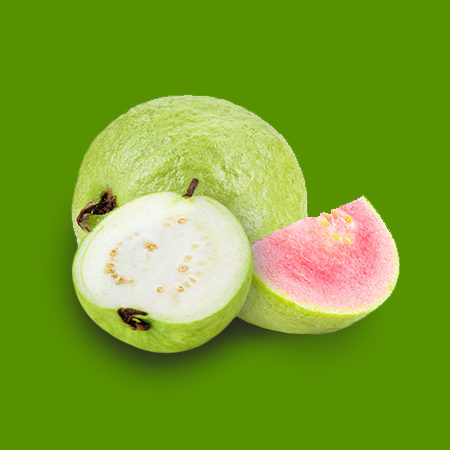 | White and Pink Guava Puree Zeus India is a trusted exporter and supplier of premium White Guava Puree and Pink Guava Puree in India, catering to the growing demands of the... View product → |
What packaging and delivery controls protect the approved batch?
Aseptic bag-in-drum packaging reduces exposure after validated heat treatment: sterile puree enters a sterile liner, and the closed drum limits handling and environmental contact during storage and transport. It does not rescue poor fruit hygiene, inadequate time-temperature processing, weak release testing, or a damaged liner. Packaging controls risk; it does not prove safety.
1. Ask how the supplier validates time-temperature processing, hygienic filling, sterile packaging, seal inspection, and post-fill handling. Request lot-release records and critical-limit results.
2. State drum and liner size, outer-pack requirements, pallet pattern, allowable transit damage, storage temperature, handling orientation, and inspection steps for torn bags, leaking seals, swollen packs, punctures, and damaged drums.
3. Confirm dispatch timing, remaining shelf life, transit conditions, and customs-document review for the commercial invoice, packing list, certificate of origin, and transport documents.
4. Pre-qualify an alternate lot, format, or manufacturing source before guava puree supply problems occur. Test it in your actual beverage, dairy, bakery, sauce, or fruit-preparation process; matching °Brix and pH does not guarantee matching viscosity, colour, flavour, or sieve profile.
5. Quarantine any rejected or delayed lot, record the batch and damage, investigate the cause, and define replacement, rework, or credit terms in writing.
A guava puree manufacturer in Bengaluru can reduce domestic transit time, but location alone does not protect continuity. Confirm whether the site is the factory, aseptic warehouse, or dispatch point, and review each shipment before loading.
Frequently asked questions
Which bulk guava puree problems can disrupt production?
Missed deliveries, inconsistent colour, variable °Brix or acidity, off-flavour, excess sediment, and microbiological or packaging failures can cause reformulation, rework, line stoppages, or rejection.
What controls prevent interruptions before guava puree is shipped?
Require raw-material checks, process controls, aseptic filling records, batch traceability, laboratory testing, retained samples, and a documented release decision before loading.
Which specifications and verification records should you require?
Request the product specification, batch number, production and best-before dates, °Brix, pH or acidity, colour, pulp or sediment limits, microbiological results, certificate of analysis, and traceability records.
How should you compare white and pink guava suppliers beyond price?
Compare colour consistency, flavour, °Brix and acidity control, pulp texture, seed or sediment levels, pack formats, minimum order quantities, lead times, documentation, and complaint response.
What packaging and delivery controls protect the approved batch?
Match the approved batch to the dispatch documents, inspect seals and container condition, record pallet and vehicle details, confirm loading conditions, and verify delivery quantities and batch numbers on receipt.