
Totapuri puree problems rarely come from one cause: fibre, variable maturity, air, heat exposure, poor handling and weak batch controls can all disrupt a production run. By the end, you will know which problems aseptic packaging reduces, which specifications still require verification, and how to receive, open and schedule drums without creating new risks.
Key takeaways
- Inspect the drum, liner, seal and batch code before accepting delivery.
- Specify pH, Brix, microbiology, packaging condition and shelf life on every purchase.
- Use a compatible drum-opening and dispensing setup to prevent bag damage.
- Plan opened-puree storage and use before breaking the aseptic seal.
Which production problems does aseptic packaging actually reduce?
A sterilised bag, controlled filling zone and protective drum reduce the main aseptic bag in drum Totapuri puree production issues: microbial spoilage, post-processing contamination, short unopened shelf life and rejection caused by damaged or inconsistent packs. The packaging works by keeping commercially sterilised puree away from open cooling, transfer and repacking steps.
| Production problem | Packaging control | What it reduces |
|---|---|---|
| Microbial spoilage | Sterilised bag, hygienic filling and intact closure | Growth during ambient storage |
| Post-processing contamination | Closed filling and sealed fitment | Recontamination after heat treatment |
| Short shelf life | Barrier packaging inside a protective drum | Exposure to handling, oxygen and light |
| Batch rejection | Traceable batch code and packaging-integrity checks | Failures linked to leaks, punctures or unidentified lots |
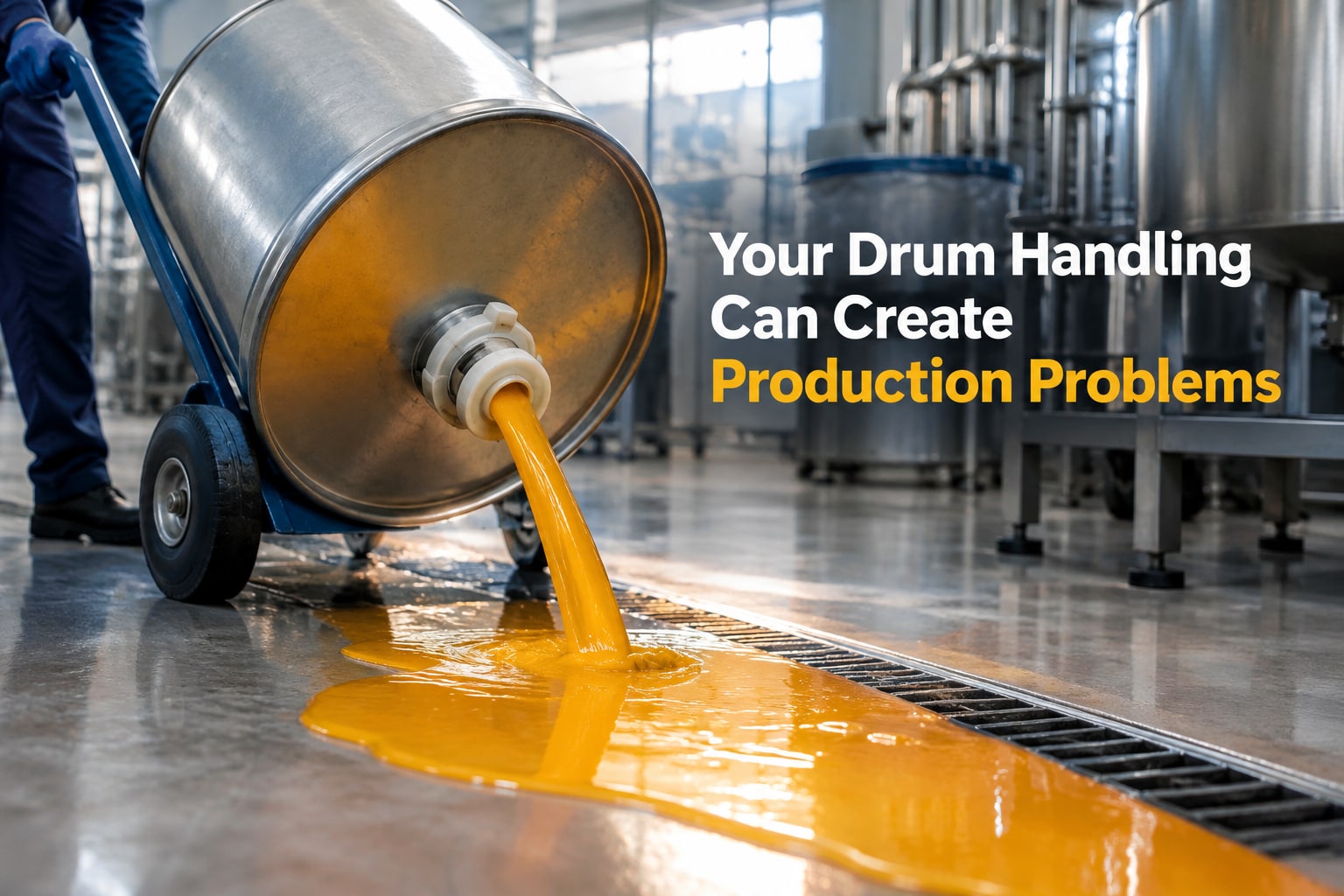
The drum protects the flexible bag during transport and stacking, but a sharp edge, defective seal or contaminated fitment can still compromise the product. Rough handling also creates a leak that turns a sterile unopened pack into a disposal problem.
Packaging does not replace a validated thermal process. Product temperature, residence time, flow pattern, heat-exchanger performance, package sterilisation and filling-zone hygiene must work together to achieve commercial sterility. It also does not correct a recipe that misses its pH, Brix, viscosity, fibre or colour specification.
Confirm those values before accepting a batch; packaging preserves the puree you made, not one that was processed incorrectly.
Why Totapuri puree varies before it reaches the drum
Incoming fruit determines much of the variation in Totapuri puree for processed food. Harvest maturity changes Brix, acidity, colour, fibre and viscosity; bruising and overripe fruit increase browning and separation. These Totapuri puree production issues begin before pulping, so a fixed recipe cannot correct every lot.
1. At receiving, check maturity, Brix, pH or titratable acidity, visible defects and foreign-material limits. Reject loads with excessive spoilage, stones or soil; stone fragments that pass into the line can damage pumps and contaminate the puree.
2. During pulping, worn screens, incorrect clearances or excessive fruit fibre create stringiness and inconsistent texture. Set the pulper for the fruit condition, inspect sieve results and verify that fibre levels match the specification.
3. During transfer, uncontrolled pump suction, leaks and foaming draw air into the puree. Air accelerates browning and flavour loss, promotes separation and makes fill-volume and heat-treatment calculations less predictable; use enclosed piping, steady flow and effective de-aeration.
4. Record Brix, pH, acidity, colour and viscosity after pulping. Maturity and dilution drive Brix and pH variation, while fibre, shear and temperature drive viscosity changes; blend or adjust only against an approved formulation.
5. Validate the thermal process for the measured product, including temperature, residence time, flow pattern and heat-exchanger performance. A lot above pH 4.6 needs a validated low-acid process, and heating that is too severe can worsen browning, separation and colour loss.
How to receive, inspect and dispense a drum without damaging the bag
A disciplined handoff helps prevent aseptic bag in drum totapuri puree production problems in Bengaluru plants. Keep the drum upright and move it gently; a stable pallet, crushed drum, torn wrap, dents, leaks or shifting load can signal bag abrasion or fitment damage.
- Photograph the pallet and drums on arrival, then record the delivery condition. Record product temperature when the purchase specification or receiving procedure requires it.
- Check each drum’s lid, body, liner, seal, fitment, closure and batch code against the delivery documents. Quarantine any missing code, broken seal, wet carton, bulge, leak or visible puncture.
- Store the aseptic bag in drum totapuri puree under the supplier’s stated ambient conditions, off the floor and away from direct sunlight, heaters and rain. Follow the supplier’s stacking and pallet limits.
- Before dispensing, confirm that the pump, hose, clamp, gasket and fitment are compatible with the bag connection. Clean and sanitise the dispensing area; do not cut into the bag or drag it across the drum edge.
- Open the drum as instructed, connect the equipment without twisting the fitment, and transfer the puree into a clean, identified vessel. Stop if the flow pulls, leaks or introduces air.
- After opening, close or cap the connection, record the opening date and batch, protect the remaining bag from contamination and use it within the supplier’s stated handling window. Discard it if the seal, bag or connection is compromised.
Which checks belong on the purchase specification and certificate of analysis?
Your purchase specification must set measurable limits and test methods; the certificate of analysis (COA) must report the result for the supplied lot. For Totapuri mango puree for processed food, do not accept “standard quality” as a substitute for numbers.
| Check | Purchase specification | COA or receipt check |
|---|---|---|
| pH and acidity | pH limit, titratable-acidity range, units and method | Lot results, method and sample date |
| Brix | Minimum or target range and refractometer method | Reported Brix result |
| Viscosity | Range plus instrument, spindle, speed, temperature and sample preparation | Result against that method |
| Colour | Agreed scale or instrument, lighting and sample temperature | Recorded colour result |
| Fibre or sieve | Fibre limit or sieve aperture and pass/fail rule | Fibre or sieve result |
| Microbiology | Named release tests and limits | Release results and analyst or laboratory identification |
| Net weight | Declared weight and permitted tolerance | Weighed lot or drum declaration |
| Traceability | Batch number, manufacturing date and aseptic-process identification | Matching codes on COA, label and drum |
| Packaging | Sealed bag, intact fitment, leak-free closure and undamaged drum | Visual and, where specified, integrity check |
| Storage | Temperature range, light protection and stacking limit | Label instructions and transport condition |
For aseptic bag in drum Totapuri puree, commercial sterility confirms controlled processing and freedom from viable spoilage organisms under the stated test; it does not prove recipe suitability. Your line still needs the right Brix, acidity, colour, viscosity and fibre performance, so investigate a failed formulation even when the drum passes microbiological release.
How should a Bengaluru plant plan drums, suppliers and opened puree?
A drum format is economical only when your line empties it before the opened bag’s validated use window expires. Match drum net weight to hourly puree consumption, batch size, storage capacity, forklift turning space, pallet stacking limits and the number of times operators need to open product each week.
- Calculate weekly demand from actual line throughput, not rated capacity. Compare each supplier’s minimum order quantity with that demand and reject an MOQ that creates slow-moving stock.
- Measure the receiving route from truck bay to cold or ambient storage. Confirm pallet dimensions, drum height, forklift access, maximum stacking, fitment orientation and discharge-equipment compatibility before ordering.
- Ask every supplier for the same documents: pH and titratable acidity, Brix, viscosity with its test method, colour, fibre or sieve result, microbiological release criteria, net weight, batch number, manufacturing date, aseptic-process identification, packaging integrity and storage conditions.
- Set an opening plan based on kilograms consumed per shift. After opening, record the date and time, protect the fitment, prevent air and dirty equipment from contacting the puree, and follow the supplier’s stated opened-bag use limit; discard product that exceeds it or shows leakage, swelling, odour or visible spoilage.
For aseptic bag in drum Totapuri puree production problems in Bengaluru, compare delivery reliability, replacement handling and technical response alongside price. Zeus India Enterprise can be one source to evaluate for Totapuri mango puree for processed food, using the same specification and trial checks as every competing supplier.
Related product
 | Totapuri Mango Puree Zeus India is a trusted exporter and supplier of premium Totapuri Mango Puree in India, offering high-quality fruit-based ingredients for the global... View product → |
Frequently asked questions
Which production problems does aseptic bag-in-drum Totapuri puree reduce?
It reduces exposure to contamination during cooling, transfer and repacking, while lowering the risk of microbial spoilage, short unopened shelf life and damaged-pack rejection.
Why can Totapuri puree vary before it reaches the drum?
Mango maturity, cultivar variation, fruit condition, processing temperature, refining and formulation control can change Brix, pH, colour, viscosity and fibre content.
How should you receive and dispense a drum without damaging the bag?
Check the drum, liner, seal, batch code and leakage before acceptance. Move it upright with suitable equipment, open the closure carefully and use a compatible dispensing connection.
Which checks belong on the purchase specification and certificate of analysis?
Specify and verify identity, Brix, pH, acidity, colour, viscosity or pulp consistency, foreign matter, microbiological limits, fill weight, packaging integrity, batch number and shelf life.
How should a Bengaluru plant plan drums, suppliers and opened puree?
Match drum quantities to production demand, qualify suppliers through specifications and sample testing, reserve clean storage space, and set a documented use-by period after opening.