
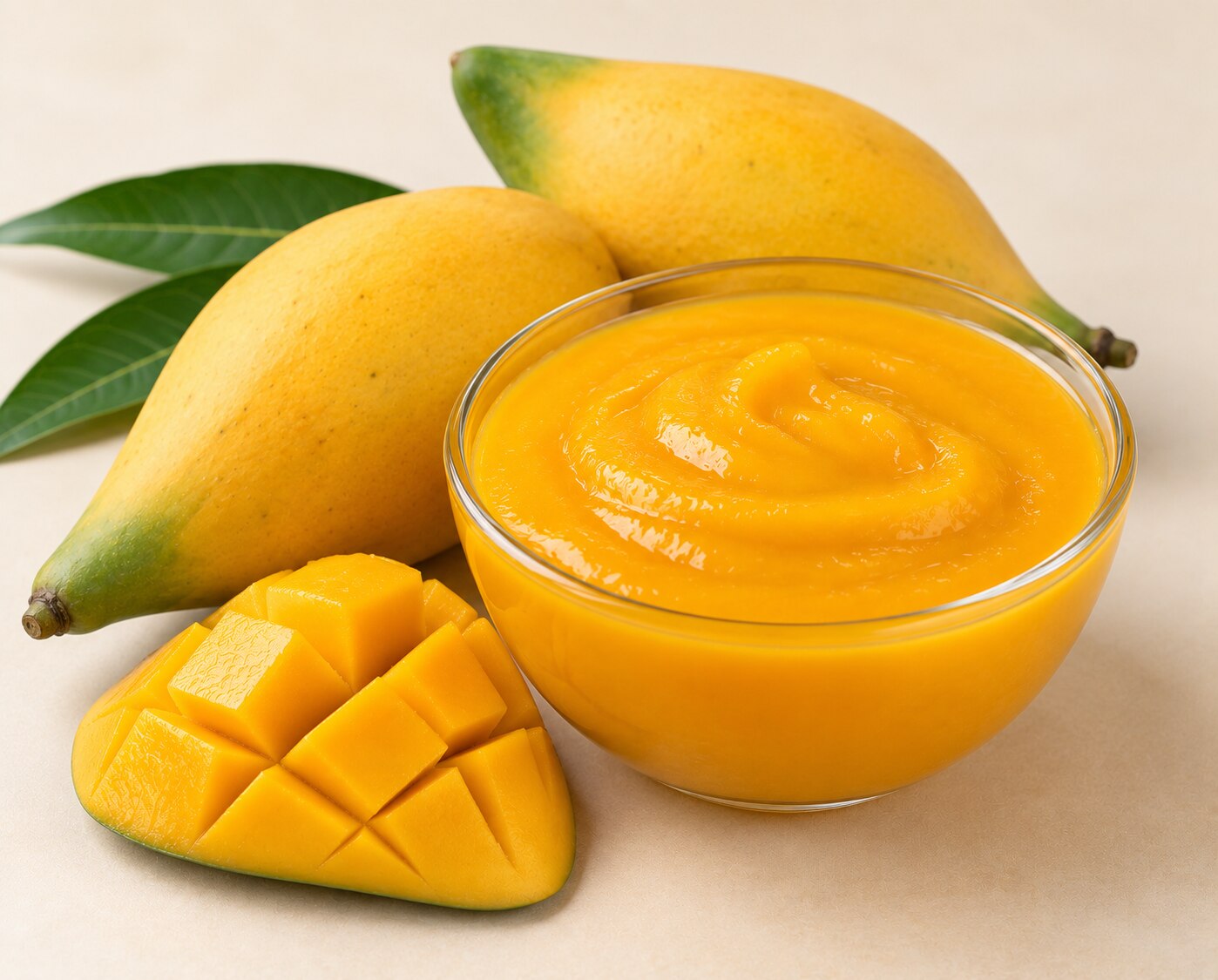
Sediment, fibre, browning, weak flavour, separation and blocked dosing equipment can originate in the fruit, the puree process, the beverage formula, or the export pack. You will be able to isolate each failure, run a controlled production trial, and assemble the records needed to decide whether the cause belongs to the lot, the line, the formulation, or transport.
Key takeaways
- Quarantine the complaint lot and compare unopened packs with retained and approved reference samples.
- Check Brix, pH, viscosity, fibre, colour, flavour, microbiology and packaging before production.
- Correct sediment and separation through formula, homogenisation, heat-treatment and storage trials.
- Require traceability, specifications, test reports and export documentation from your Indian supplier.
How do you identify whether the puree, process or pack caused the failure?
Start by separating the complaint sample from the cause: quarantine the affected lot, preserve unopened packs, and compare them with the supplier’s retained sample and an approved reference lot. High viscosity or fibre alone does not prove adulteration or a processing failure.
1. Confirm incoming variation. Test the complaint lot and reference for °Brix, pH, titratable acidity, colour, insoluble solids, microbiology and viscosity. Record viscosity temperature, spindle or shear rate, and whether the sample was stirred or homogenised; fruit maturity, particle size and storage can change the result.
2. Reproduce the beverage under controlled conditions. Use the same puree percentage, water, sugar, acid, stabiliser, homogenisation, deaeration and heat treatment. If the defect appears before filling, investigate puree or formulation; if it appears only after processing, review shear, oxygen, acidity, temperature and residence time.
3. Check the pack and process record in parallel. Inspect aseptic bags or drums for swelling, leaks, seal or fitment damage, lot code and temperature history. Review the scheduled process, flow rate, holding-tube conditions, filling record and package system; aseptic filling alone does not prove commercial sterility.
4. Test the distribution pathway. Examine retained and returned packs, incubate samples when appropriate, and check transport temperature and handling. A negative result from one pack does not clear an intermittent seal defect or filling contamination.
This defined sequence is the core of Totapuri mango puree troubleshooting and prevents Totapuri puree processing issues from being misassigned to the wrong stage.
What checks should each export puree lot pass before beverage production?
Release mango puree for export beverages only after checking the pack, the product and the beverage trial. Sample drums or aseptic bags from different pallet positions and from the beginning, middle and end of filling, rather than testing one convenient container.
- Record lot code, production date, dispatch conditions and temperature history.
- Reject or quarantine packs with swelling, leakage, damaged seals, failed fitments, abnormal odour or unexpected colour. Investigate microbiology, package integrity, seal inspection and the aseptic filling record in parallel.
- Test °Brix, pH, titratable acidity, viscosity, colour, insoluble solids and microbiology against the signed product specification. Codex gives 13.5 °Brix as a minimum reference for mango purée; state whether your limit applies to original purée, reconstituted product or finished beverage.
- Hold a prepared sample for a defined period and inspect sediment, serum separation, gas formation and flavour change.
- Run the sample through the intended beverage formula, homogenisation, heat treatment and storage check before approval.
Test method matters. Record viscosity temperature, spindle or shear rate, and whether the sample was stirred or homogenised; a fibrous Totapuri lot can vary with maturity and shear without indicating adulteration.
Check the lot against an approved reference lot as follows:
| Check | Acceptance decision | Release action |
|---|---|---|
| Pack condition | No swelling, leakage or seal defect | Quarantine any failure |
| Analytical profile | Within approved limits | Investigate and hold out-of-limit lots |
| Beverage trial | Matches reference for body, colour, aroma and stability | Release only after review |
This sequence catches totapuri mango puree problems in export beverage production before they become filling, shelf-life or customer complaints.
How do you correct sediment, separation, fibre, colour and flavour defects?
Do not add water or stabiliser first. Correct the failure after checking particle-size distribution, shear history, oxygen pickup, acidity, heat exposure and the beverage matrix; these checks make Totapuri mango puree troubleshooting actionable.
- Excessive sediment points to coarse insoluble particles, weak pectin structure or inadequate homogenisation. Measure particle size, then adjust pulping, screen size and homogenisation pressure before changing stabiliser dosage.
- Serum separation or a surface ring indicates incompatible pH, salts, stabiliser hydration or homogenisation. Run a controlled pilot with the intended stabiliser, heat process and storage temperature; excess gum can create a thick, unstable drink.
- A pulpy mouthfeel or fibrous particles require sieve and microscopy checks. Re-screen or refine the puree, and confirm fibre loading before blaming adulteration; high viscosity can reflect maturity, temperature and shear history.
- Brown or dull colour follows oxygen entrainment, enzyme activity, metal contact or excessive heating. Deaerate, shorten the time before thermal treatment, inspect contact surfaces and validate the temperature-time profile separately.
- Weak mango aroma usually comes from dilution, volatile loss or over-processing. Compare the puree-to-water ratio and aroma after the actual pasteurisation or aseptic process, not only in the drum sample.
- Sourness, bitterness or off-notes require pH, titratable acidity and sensory comparison against an approved lot. Correct formulation or reject the lot; do not mask a defect with extra sugar or flavour.
- Blocked dosing or filling equipment signals excessive viscosity, fibre or heat-set solids. Record temperature and the defined viscosity method, spindle or shear rate, sample preparation, then verify flow through the actual line.
These controls address Totapuri puree processing issues without treating every thick or separated lot as a process failure.
How should Totapuri puree be trialled in different export beverage formulas?
Use the finished beverage, not a water dilution, to trial mango puree for export beverages. Prepare a representative bench sample and a pilot batch in the formula you will actually sell:
- Nectar
- Juice drink
- Dairy drink
- Smoothie
- Fruit blend
Treat totapuri mango puree for problems export beverage production as a formulation question, not a fixed “30% puree” recipe. Record the puree’s temperature-corrected °Brix, pH, titratable acidity, viscosity, colour and fibre, then calculate the puree, water and concentrate masses against the target finished-beverage °Brix.
State whether each °Brix result refers to the original puree or the finished drink; soluble solids are not the same as sugar.
Keep the bench and pilot conditions identical to production. Hydrate the specified stabiliser for the required time and temperature, then compare the intended dose with a controlled alternative. Record homogenisation pressure and passes, because inadequate shear leaves sediment while excessive shear can damage texture.
Deaerate before heating and note dissolved-air effects on colour, foam and aroma. Apply the planned pasteurisation or aseptic process, including hold temperature and residence time; excessive heat can brown Totapuri, while insufficient treatment can compromise stability.
Hold samples at the intended storage temperature and inspect sediment, serum separation, ring formation, viscosity, colour, aroma and taste against an approved reference lot. A puree that passes drum testing but fails after processing needs a formula or process correction, not automatic extra stabiliser.
What should you require from an industrial mango puree supplier in India?
Require an industrial mango puree supplier in India to contract against a reproducible lot profile, not a product name alone. Put variety identity, minimum °Brix, pH and titratable-acidity ranges, colour limits, viscosity method and temperature, fibre or screen requirement, permitted additives, pack format, storage conditions and sampling plan into the purchase specification.
1. Request a traceability dossier linking orchard or collection centre, raw-material lot, pulping date, heat-treatment record, filling line, pack codes and dispatch. Include pesticide-residue, contaminant, foreign-material and microbiological controls; a °Brix-and-pH certificate is not an export-release file.
2. Make release depend on representative drum or aseptic-bag samples tested for °Brix, pH, titratable acidity, viscosity, colour, insoluble solids and microbiology. State whether °Brix refers to original puree, reconstituted product or finished beverage, and compare results with an approved reference lot.
3. Define the viscosity test precisely: sample temperature, spindle or shear rate, hold time, and whether the puree is stirred or homogenised. This prevents a naturally fibrous, high-viscosity lot from being rejected—or a weak lot from passing—because of inconsistent testing.
4. Require a nonconformance procedure covering quarantine, investigation, disposition, corrective action and replacement or credit. For recurring totapuri puree processing issues, Zeus India Enterprise would need to show corrective records and subsequent lot results against the same profile, not simply issue a new certificate.
Related product
 | Totapuri Mango Puree Zeus India is a trusted exporter and supplier of premium Totapuri Mango Puree in India, offering high-quality fruit-based ingredients for the global... View product → |
Frequently asked questions
How do you identify whether Totapuri puree, processing or packaging caused a failure?
Quarantine the affected lot, preserve unopened packs, and compare them with the supplier’s retained sample and an approved reference lot. Check the puree, beverage process and pack integrity separately.
What checks should each export puree lot pass before beverage production?
Confirm the agreed Brix, pH, viscosity, fibre, colour, flavour, microbiological limits, foreign-matter status, batch traceability and pack condition before release.
How do you correct sediment, separation, fibre, colour and flavour defects?
Match the correction to the defect: review fruit and screening for fibre, adjust homogenisation and stabilisation for separation, and investigate heat exposure, oxidation, storage and formulation for colour or flavour changes.
How should Totapuri puree be trialled in different export beverage formulas?
Run controlled trials at the intended dosage and process conditions, then compare sediment, separation, mouthfeel, colour, flavour, shelf stability and pack performance across formulas.
What should you require from an industrial mango puree supplier in India?
Request a product specification, batch certificate of analysis, ingredient and additive declaration, processing details, traceability records, microbiological results, pack information and export documents.