
Dessert manufacturers need fruit ingredients that move through filling, heating, blending and portioning without creating avoidable cold-storage, labour or contamination problems. By the end, you will know how to test Totapuri puree in your recipes, compare pack formats and calculate whether a drum improves your total batch cost.
Key takeaways
- Reduce frozen storage and small-pack handling with aseptic drums.
- Check colour, Brix, acidity, texture and batch documentation before approval.
- Compare thawing, waste, labour and storage costs—not just the puree price.
- Run a line trial to confirm pumping, dosing and formulation performance.
What does a bag-in-drum format solve on a dessert production line?
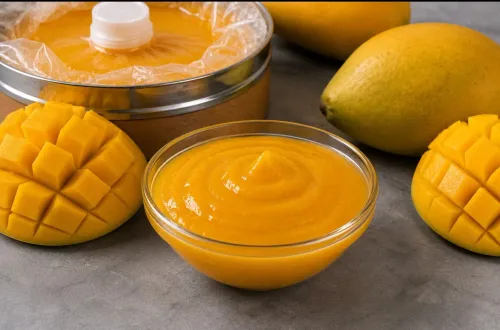
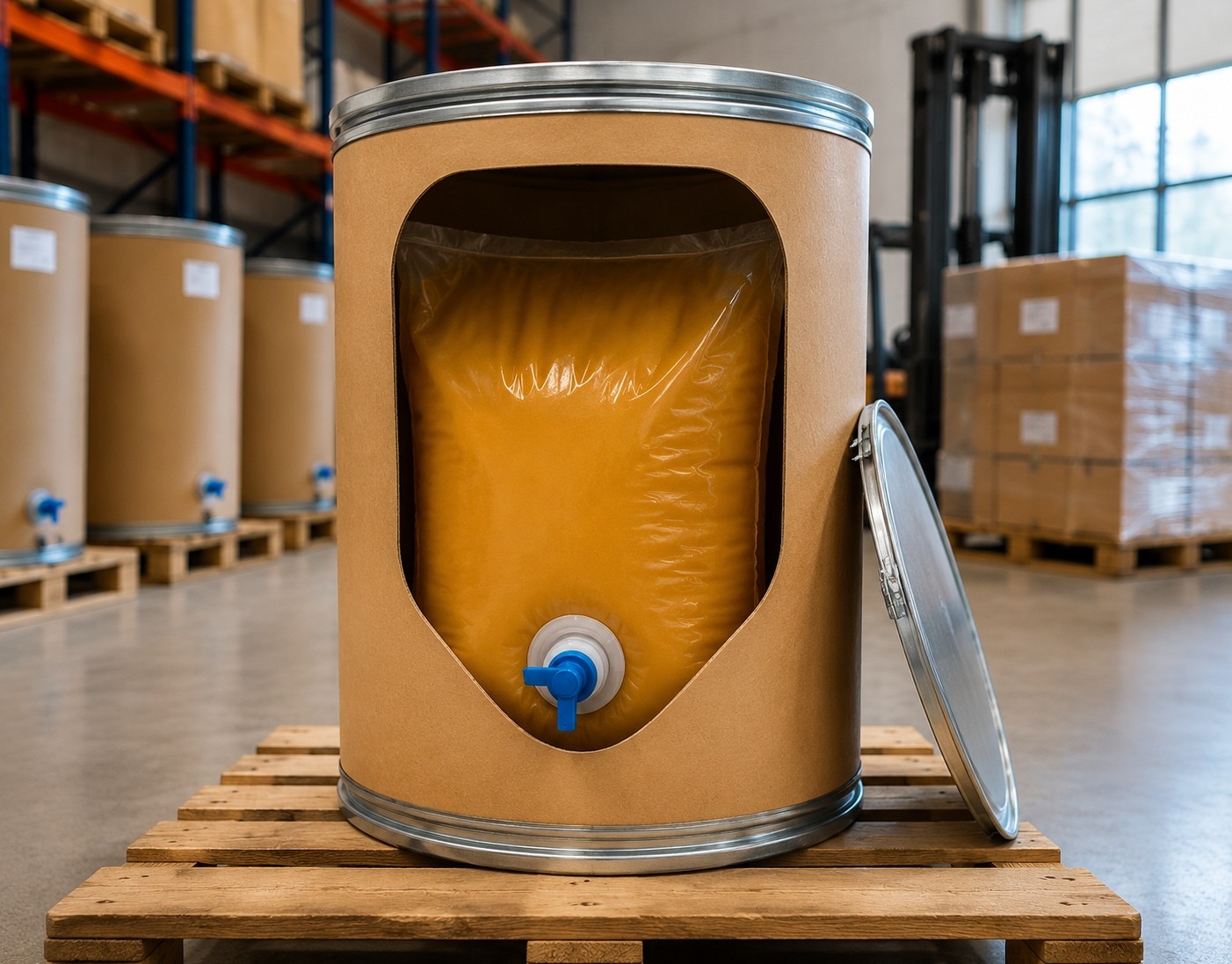
It solves two line problems at once: bulk handling and frozen-storage dependence. Aseptic bag in drum Totapuri mango puree gives dessert plants a practical feedstock for fillings, mousses, ice creams, sorbets, sauces, fruit preparations, jellies and confectionery centres, without staging many small packs.
- Condition or thaw the drum according to the supplier’s instructions. Do not freeze it, overheat it or use rough handling to loosen the puree.
- Inspect the drum, bag, seal and fitment for leaks, swelling, punctures, crushing and matching lot identification.
- Open the aseptic fitment in a hygienic area using clean, sanitised equipment. The pre-sterilised inner bag is the product-contact and microbiological barrier; the drum supplies mechanical protection, stacking strength and handling convenience.
- Transfer the puree into the receiving vessel, then screen it if the recipe requires a smoother texture or removal of fibres and particles.
- Blend in sugar, dairy ingredients, chocolate, hydrocolloids or other recipe components at the specified order, temperature and shear.
- Heat the mixture when the formulation or process requires it, then portion it into moulds, containers, shells or depositing equipment.
Totapuri puree packaging works because unopened commercial sterility comes from a validated thermal process, aseptic filling and container-integrity controls—not from the drum. After opening, use hygienic transfer, refrigerated holding and a documented use-by, reclosure or disposal procedure; ambient shelf life no longer applies.
How does Totapuri puree behave in dessert formulations?
Totapuri usually works well in mango puree for confectionery and dairy desserts: expect yellow-to-golden colour, mild mango character and useful pulp recovery. Crop, maturity, orchard source and processing can shift flavour, fibre, acidity and colour, so do not approve it from cultivar name alone.
- Read Brix with pH, titratable acidity, viscosity, fibre and colour. Brix alone cannot predict sweetness, body or heating behaviour.
- Adjust sugar against measured fruit solids and acidity. Do not replace single-strength puree with concentrate by weight; the water, sweetness, viscosity and finished yield will change.
- Add puree to sugar syrup, chocolate, cream or milk-protein systems in a controlled sequence. Introduce it gradually under moderate shear and controlled temperature; direct low-pH contact can curdle proteins or thin the mix.
- Hydrate pectin, gelatin, starch and stabilisers under their specified heat and shear conditions, then combine puree at the point that preserves their intended texture. Excess heat can dull colour and flavour.
- Check the finished sauce or filling after heating and chilling. Record sweetness, separation, mouthfeel, viscosity and consistency at the intended use temperature.
Acidic puree can shift hydrocolloid performance as well as dairy stability; pH 4.6 is a useful process boundary, not a substitute for a validated heat treatment.
A well-matched lot gives a smooth fruit body and consistent filling flow, while excessive fibre can make a mousse or coating feel coarse, and low viscosity can increase separation in cream, milk or chocolate systems.
How does an aseptic drum compare with frozen puree and smaller packs?
A totapuri mango puree aseptic drum trades freezer demand for stricter post-opening control. Unopened bulk aseptic mango puree can occupy ambient warehouse space under the processor’s specified temperature limits, while frozen puree needs freezer capacity, controlled thawing and time to become pumpable.
| Format | Plant impact | Best fit |
|---|---|---|
| Aseptic drum | High usable volume, few containers to stage, low packaging waste; residual heel depends on outlet, viscosity and pump | Large, regular batches |
| Frozen puree | Requires freezer space, thawing control and thaw-planning; smaller units limit exposure after opening | Small or intermittent users |
| Pouches or cans | More opening labour, containers and disposal; easier lot segregation | Short runs or multiple recipes |
| Bag-in-box | Less rigid protection and recovery depends on tap design; moderate handling effort | Medium-volume production |
| Retail-size packs | Highest container count, labour and packaging waste; simple portion control | Trials or very low demand |
A drum reduces weighing and opening steps for a large batch, but it concentrates risk: one damaged bag, wrong lot release or off-spec ingredient can disrupt far more production. Inspect the inner bag, fitment and lot before staging it. The outer drum provides stacking strength, not the aseptic barrier.
After opening, the puree needs clean dispensing equipment, refrigerated holding and a written reclosure or disposal procedure. Do not treat “shelf-stable unopened” as shelf-stable after opening. A large drum left open for several days can create more contamination exposure and waste than frozen puree in smaller units.
What should you verify before approving a drum for production?
Approve an aseptic bag in drum Totapuri mango puree only against a written specification, not a drum label or appearance alone. Your purchasing specification should state:
- Net weight and tolerance, drum dimensions, bag film, closure design, fitment or outlet, aseptic filling process and validated thermal schedule.
- Filling records, lot and batch identification, ingredient declaration, country of origin, shelf-life evidence and storage limits.
- Technical targets for Brix, pH, titratable acidity, viscosity or consistency, colour, pulp and fibre limits, microbiological criteria and allergen status.
- The required certificate of analysis, traceability records and retained-sample arrangement. Totapuri puree packaging must also define the dispensing method, because a nominal drum weight is not the same as usable yield.
At goods-in, quarantine the drum until you complete this release sequence:
- Inspect the outer drum, bag seal and fitment for damage, leakage, swelling, distortion or contamination.
- Match the lot and batch identity to the delivery documents, check storage history where specified and retain an agreed sample.
- Test pH and Brix against the agreed limits, then complete sensory checks for colour, flavour, odour and visible defects. Apply the agreed microbiological tests; visual inspection cannot replace them.
Run a bench trial before production approval. Hold puree percentage constant, record transferred yield, measure Brix and pH, assess colour and flavour after heating, check separation after chilling or freezing, and review texture at the intended shelf-life point. Reject the drum if results fall outside the formulation’s agreed limits.
How do you calculate whether bulk aseptic puree suits your plant?
Use usable puree transferred into the batch, not the drum’s net weight, as your cost denominator. Total batch ingredient cost equals (landed puree cost + handling and storage cost + expected waste and post-opening cost) divided by usable puree transferred into the batch.
Build the calculation from these inputs:
- Purchase volume and invoice price for the bulk aseptic mango puree
- Freight, customs, import duty and delivery charges where applicable
- Warehouse space, ambient storage limits and drum movement
- Drum handling, opening equipment, dispensing labour and screening labour
- Screening losses, unrecovered puree left in the bag, and any reformulation needed to correct Brix, acidity or texture
- Drum disposal or return charges
- Refrigerated storage, clean equipment, labour and product disposal after opening
Aseptic stock earns its higher processing and packaging cost when unopened drums occupy ambient space, avoid freezer capacity and support year-round scheduling. That advantage disappears if a drum stays open for weeks: refrigerated management, contamination controls and residual waste can make the usable kilogram expensive.
Frozen puree is safer economically for a low-volume or intermittent user that opens only a few kilograms at a time. Compare its freezer, thawing and handling costs against the aseptic option’s opening exposure rather than comparing list prices.
Evaluate Zeus India Enterprise against the same Totapuri specification, certificate of analysis, traceability documents, trial results, packaging controls and landed-cost model. For mango puree for confectionery, approve the format only after your trial measures actual transfer yield and post-opening loss.
Related product
 | Totapuri Mango Puree Zeus India is a trusted exporter and supplier of premium Totapuri Mango Puree in India, offering high-quality fruit-based ingredients for the global... View product → |
Frequently asked questions
What does a bag-in-drum format solve on a dessert production line?
It supplies bulk puree in a sealed aseptic bag inside a rigid drum, reducing frozen-storage dependence, pack staging, manual opening and packaging waste. Confirm that your plant has suitable drum handling, bag-emptying and transfer equipment.
How does Totapuri puree behave in dessert formulations?
Totapuri puree contributes mango flavour, colour, soluble solids and fruit acidity to fillings, mousses, ice creams, sorbets, sauces, jellies and confectionery centres. Test Brix, pH, acidity, viscosity, fibre level and heat exposure in the finished recipe because these affect sweetness, gel strength, pumping and sensory balance.
How does an aseptic drum compare with frozen puree and smaller packs?
An aseptic drum avoids frozen storage and thawing, while frozen puree can suit plants with established cold rooms and smaller packs suit low-volume or frequent flavour changes. Compare storage, labour, thawing time, residual product, packaging disposal and minimum order requirements.
What should you verify before approving a drum for production?
Request the product specification, ingredient statement, allergen declaration, batch number, production and best-before dates, certificate of analysis, packaging details and traceability records. Check Brix, pH, acidity, colour, microbiological results, seal integrity and aseptic processing information, then complete a plant trial.
How do you calculate whether bulk aseptic puree suits your plant?
Add puree cost, freight, drum handling, storage, labour, transfer losses, disposal and quality-control costs. Compare that total with frozen or small-pack alternatives, then divide by usable kilograms after line losses to calculate your real cost per kilogram.