
A reliable supply starts with more than choosing a fruit name and a nominal drum size. You need a measurable puree specification, a validated package-and-process combination, compatible receiving equipment, and a receiving procedure that stops damaged or mismatched lots before production.
Key takeaways
- Specify colour, Brix, acidity, texture, pack size, and storage conditions.
- Confirm your pump, fittings, drum handling, and thawing process before ordering.
- Quarantine drums until seals, labels, temperature, and documents pass inspection.
- Choose aseptic drums when bulk shelf life and lower cold-chain dependence matter.
Understand What the Aseptic Bag-in-Drum System Actually Protects
The system protects the puree in stages: the thermal process controls microorganisms, the aseptic filling head prevents recontamination, the bag contains the product, the closure preserves the seal, and the drum prevents physical damage.
- Bag: A sterile, multilayer food-contact bag holds the guava puree and provides the barrier against oxygen, moisture loss, light, and contamination. Specify film construction, thickness, oxygen-barrier performance, seal strength, and fitment compatibility; “food-grade polyethylene” is not enough.
- Drum: The rigid outer drum supplies mechanical protection during storage and transport. It does not sterilise an underprocessed puree or repair a punctured bag. Do not roll, drag, stack beyond the approved pattern, or lift the drum by its fitment.
- Filling head: The aseptic filling head transfers commercially sterile puree into the sterile bag while protecting the product-contact path from environmental contamination. Its design must match the bag fitment and validated filling temperature.
- Closure: The cap, plug, or sealed fitment maintains aseptic integrity after filling and during shipment. A loose closure, damaged seal, or incompatible connection turns a sound process into a leakage and contamination risk.
- Thermal process: The validated heat treatment achieves the required commercial sterility for the puree and its target shelf life. It does not sterilise a contaminated bag or replace hygienic handling after opening.
Guava puree aseptic packaging remains protected only while the bag is unopened and intact. Once connected or pierced, define a refrigerated holding temperature, use window, hygienic connection method, and sanitation procedure for the pump, hose, and receiving vessel.
Turn “White Pink Guava” Into a Purchase Specification
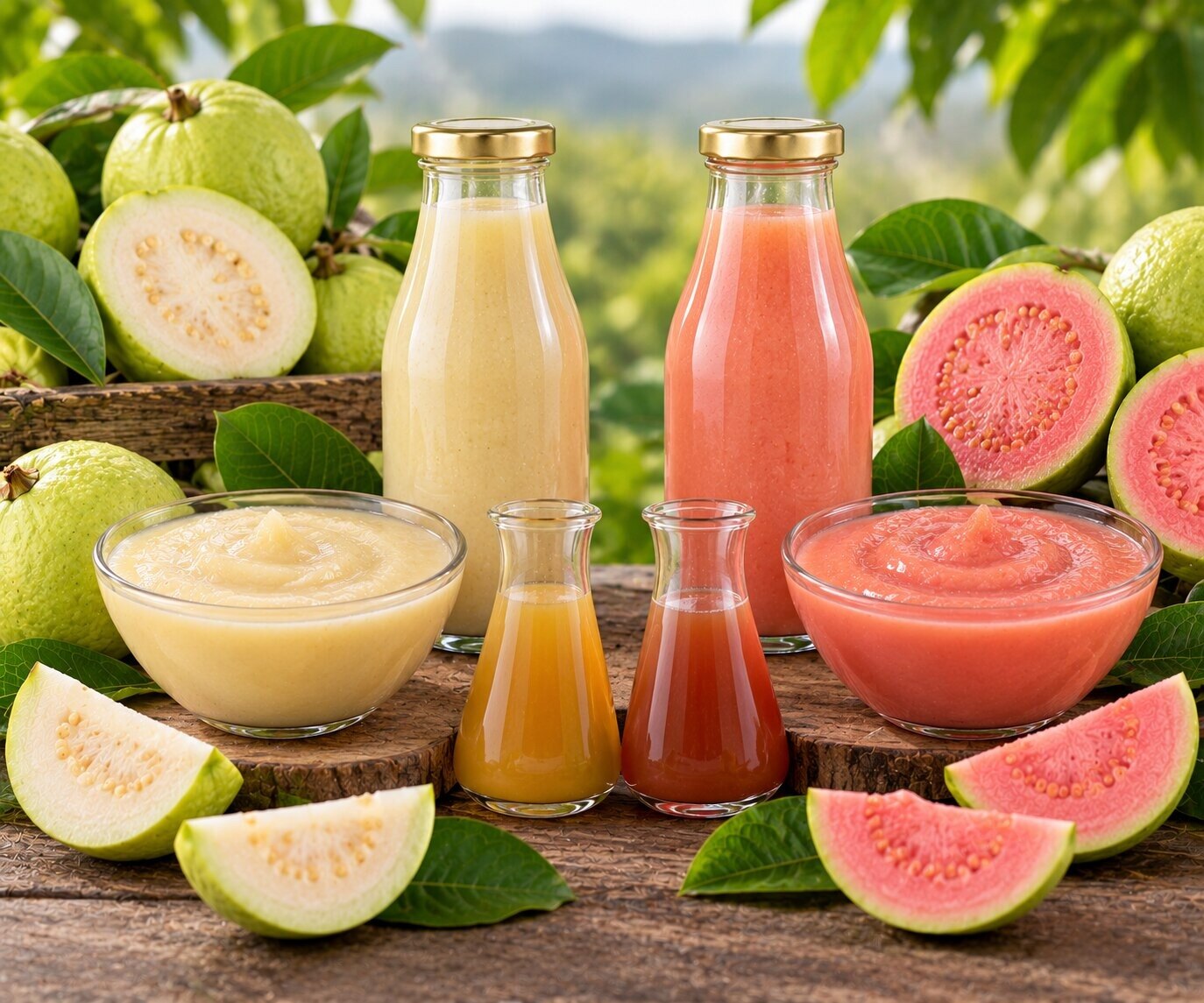
Write “white pink guava puree aseptic bag in drum” as a measurable product specification, not a colour description. State the destination market and intended use, because U.S. acidified-food filing, additive, labelling, and microbiological requirements differ from those in other markets.
Request a retained production sample and test it after the stated storage period, or under an agreed accelerated-aging programme, before approval.
- Product: guava cultivar and puree type; target °Brix; pH and titratable acidity; L*a*b* colour or reference standard; viscosity at a named temperature and test method; sieve or particle size; seed and stone limits; preservative status; net mass.
- Process: scheduled process for the actual formulation and equipment, including equilibrium pH, water activity where relevant, viscosity, particle size, minimum and maximum fill volume, product temperature, holding time, and process authority documentation. A process for guava juice does not validate high-pulp puree.
- Package: multilayer bag construction, product-contact material, sterilisation method, fitment and closure, drum type, orientation, dimensions, pallet pattern, net weight, and leakage criteria.
- Microbiology: numerical limits for total plate count, yeast and mould, coliforms, and specified pathogens, with sampling and test methods named.
| Specification area | Record in the quotation | Why omission causes trouble |
|---|---|---|
| Product | °Brix, pH, acidity, colour, viscosity, particles | Raw-fruit and dilution variation changes performance |
| Process | Scheduled process and records | pH 4.6 separates U.S. acid from low-acid classification; it does not validate safety |
| Package | Bag, closure, drum, fill mass | The drum protects mechanically; it cannot correct contamination |
| Evidence | Sample, ageing results, certificate of analysis | Shelf life belongs to the package-and-process combination |
Compare Drum Formats With Frozen, Refrigerated, and Smaller Packs
Aseptic bag in drum guava puree usually reduces freezer and refrigerated-space demand, but it does not automatically reduce total cost. Compare net product weight, storage temperature, pallet footprint, handling equipment, opening losses, and disposal charges rather than comparing the drum price alone.
| Option | Logistics | Waste and operational trade-off |
|---|---|---|
| Aseptic bag in drum | Store under the supplier’s validated temperature range; protect from freezing, heat, sunlight, punctures, and rough handling. Confirm net weight, tare, drum dimensions, pallet pattern, and gross-weight limit. | No thawing energy and less secondary handling. The bag, fitment, closure, and drum still create disposal streams; leakage can waste an entire opened unit. |
| Frozen drum | Requires frozen storage, temperature monitoring, freezer capacity, and controlled thawing before pumping. Thaw time can delay production. | Frozen product can preserve supply flexibility, but freezer energy and thawing losses increase cost. Do not assume its formulation or sensory profile matches aseptic product. |
| Refrigerated tote | Needs continuous chilled transport and storage, compatible connections, and rapid use after opening. A temperature excursion can shorten usable life. | Larger reusable equipment reduces small-pack waste, but cleaning, return freight, and residual product remain. |
| Cans or pails | Easier manual portioning, but many units increase receiving, pallet, and warehouse handling. | More lids, labels, liners, and residual product create higher packaging waste; smaller packs suit intermittent demand. |
For bulk guava puree packaging, retain a production sample and compare pH, °Brix, colour, viscosity, sensory quality, leakage, and microbiology after the stated storage period. Treat shelf life as a process-and-package claim, not a fruit characteristic.
Check Your Line Before Ordering a Full Aseptic Shipment
A full drum will run only if your receiving line can open, connect, transfer, and clean the product without exposing the remaining puree to uncontrolled contamination. Test the retained sample at the supplier’s stated storage temperature and through the actual line before approving guava puree aseptic packaging.
1. Confirm that the receiving area has a drum lifter or safe tipping method, a clean hopper or vessel, a sanitary hose, and a screened inlet if your recipe permits screening. Check the bag fitment dimensions against your connector; a mismatch can force cutting, splash the product, and destroy the aseptic barrier.
2. Use a documented hygienic connection procedure. Prefer a compatible sanitary connector, such as a tri-clamp arrangement, with sanitised tools and capped hose ends. Do not improvise with an open funnel or reuse an uncleaned transfer hose.
3. Size the pump from a measured trial, not the drum label. High-pulp guava can thicken as it cools and resist flow, so test the intended positive-displacement pump at the planned product temperature, flow rate, pressure, screen size, and hose length. Gravity discharge is not proof that the production line will empty the bag.
4. Provide temperature control where the trial requires it: a jacketed hopper, warmed hose, or controlled receiving vessel. Record the puree temperature at the fitment, pump inlet, and filler.
5. Set the post-opening rule before delivery: refrigerate the connected bag and remaining puree at 0–4°C, use it within a written time window, and clean and sanitise the pump, hose, hopper, and vessel immediately after the run.
Inspect, Quarantine, and Release Every Incoming Drum
Release an incoming drum only after its identity, condition, temperature, and records match the purchase order. For bulk guava puree packaging, record these details on the receiving log:
- Supplier, product name, white or pink variety, lot number, drum number, net weight, and arrival date
- Pallet condition, drum dents, punctures, rust, crushed edges, and evidence of rolling or dragging
- Bag fitment, cap, seal, leakage, swelling, and any dried puree around the closure
- Product temperature and storage location
- Matching bag, drum, label, lot, and purchase-order details
Quarantine the drum immediately if the drum is punctured, swollen, leaking, severely dented, exposed to freezing or excessive heat, or missing its label. Do not roll it, lift it by the fitment, open the bag, or sample through a damaged closure.
Missing a certificate of analysis, lot traceability, or process record also means quarantine; release it only after the supplier supplies complete records and your quality team approves them.
For aseptic bag in drum guava puree, request evidence that supports the specific lot and package:
- Certificate of analysis covering pH, °Brix, colour, viscosity, and microbiological results
- Lot-level thermal-process and aseptic-filling records
- Bag, fitment, and closure specifications, including film construction and seal integrity
- Validated storage conditions, shelf-life basis, and transport limits
- Packaging compatibility evidence for acidity, filling temperature, storage duration, and intended use
Ask Zeus India Enterprise for this evidence before accepting a shipment, not after production is waiting.
Related product
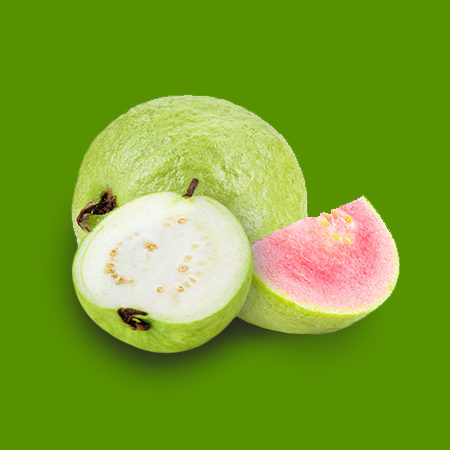 | White and Pink Guava Puree Zeus India is a trusted exporter and supplier of premium White Guava Puree and Pink Guava Puree in India, catering to the growing demands of the... View product → |
Frequently asked questions
What does an aseptic bag-in-drum system protect?
Thermal processing controls microorganisms, aseptic filling prevents recontamination, the bag and closure preserve product integrity, and the drum protects against handling damage.
What should a white pink guava puree purchase specification include?
State the required colour, Brix, acidity or pH, viscosity or texture, seed and fibre limits, processing status, bag and drum size, storage conditions, shelf life, and certificate-of-analysis requirements.
How does aseptic bag-in-drum guava puree compare with frozen or refrigerated packs?
Aseptic drums reduce cold-chain dependence and suit bulk processing, while frozen and refrigerated formats may fit smaller orders or lines already built for chilled handling. Compare storage, thawing time, equipment, and total handling cost.
What checks should you complete before releasing an incoming drum?
Quarantine the drum, inspect its label and batch number, check the drum and bag for damage, verify the closure and seal, review temperature and transport records, and match the certificate of analysis to your specification.