
Choosing a tomato paste for dairy or confectionery production requires more than comparing °Brix and drum prices. By the end, you will be able to define the specification, calculate the correct dosage, test formulation performance, and assess whether a supplier can support compliant delivery into a London manufacturing site.
Key takeaways
- Specify viscosity, colour, acidity, salt and particle size—not only °Brix.
- Compare dosage and delivered solids before choosing a concentration.
- Test heat stability, flavour, colour and separation in your finished recipe.
- Request specifications, certificates, batch records and delivery conditions before ordering.
Which tomato paste specification fits your product?
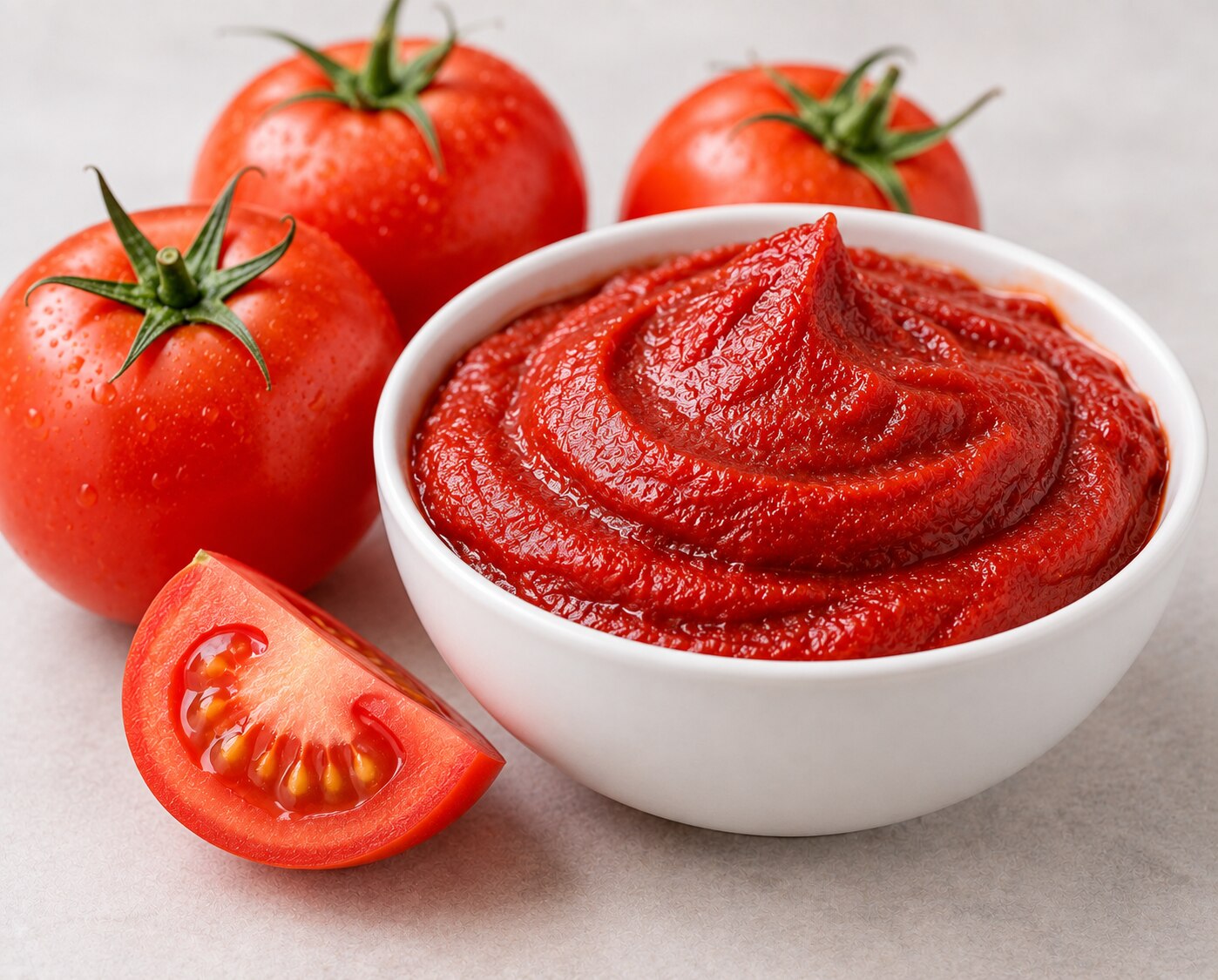
A °Brix figure alone cannot establish whether a paste will work in your dairy sauce, filled food or confectionery filling. It measures soluble solids, not viscosity, colour, acidity, salt, particles or the proportion of added ingredients. For industrial tomato paste, UK buyers should define the grade before requesting samples.
| Codex distinction | Natural total soluble solids | Buying implication |
|---|---|---|
| Tomato concentrate | 7% or more | A broad category, not automatically paste |
| Tomato paste | 24% or more | Specify this minimum explicitly |
| Commercial double concentrate | About 28–30 °Brix | Confirm the exact target |
| Commercial triple concentrate | About 36–38 °Brix | Confirm the exact target |
Ask a tomato paste ingredient supplier to state:
- Natural soluble solids and °Brix; pH; titratable acidity; Bostwick flow or a defined rheology method; viscosity; colour; salt; seed and skin particle limits; and defect limits.
- Aerobic count, yeast and mould, and agreed pathogen criteria, with the testing method and acceptance limit.
- Whether processing used hot-break or cold-break, plus the full ingredient declaration, including salt, citric acid and any permitted processing aids.
Hot-break paste generally gives greater body and suspension, while cold-break paste gives a thinner, more pourable result. Two samples at the same °Brix can therefore behave differently in a cheese product or tomato-flavoured filling. State the required flow, colour and particle limits rather than approving a vague “tomato paste” grade.
How do concentration and processing change cost and dosage?
A drum of 36 °Brix paste is not directly comparable with a drum of 24 °Brix paste: the stronger grade delivers more tomato solids per kilogram, so compare cost per usable solids, dosage and logistics.
| Grade | Practical meaning | Effect on purchasing |
|---|---|---|
| 24 °Brix | Single-strength tomato paste | Highest recipe mass, transport weight and storage volume |
| Approximately 28–30 °Brix | Double-concentrated paste | Lower dosage and warehouse demand than 24 °Brix |
| Approximately 36–38 °Brix | Triple-concentrated paste | Lowest dosage, transport weight and storage space per unit of solids |
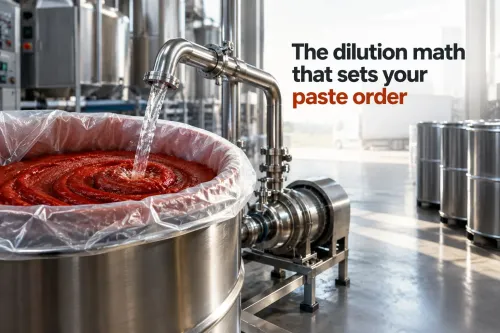
Calculate required paste mass as target tomato-solids mass divided by supplier °Brix expressed as a decimal. For example, 1 kg of 36 °Brix paste supplies about the same soluble-solids mass as 1.5 kg of 24 °Brix paste.
A buyer of bulk tomato paste for manufacturers should therefore compare the supplier’s price per kilogram of usable solids, then check whether the smaller quantity improves pallet, warehouse and handling costs.
Higher concentration does not automatically produce the same result in a recipe. Recalculate the paste weight, water balance and finished viscosity during trials; otherwise a triple concentrate can make a dairy sauce or filling too dense, dark or acidic.
Ask for the break process as well as °Brix. Hot-break paste supports body and suspension, while cold-break paste gives a thinner, more pourable result and can suit a fresher tomato profile. Two grades at the same °Brix can therefore have different yields in use, and the supplier must disclose whether processing was hot-break or cold-break.
What should trials test in dairy and confectionery formulations?
Approve the paste in the finished food, not from a certificate alone. A tomato paste supplier London businesses shortlist should provide a representative sample from the proposed grade and lot for this work.
1. Build trials in each intended matrix: savoury dairy products, cheese products, sauces, filled foods, prepared meals, coatings, compound products and tomato-flavoured confectionery fillings. Match the planned paste dosage, dilution, salt level and other ingredients; hot-break paste can behave differently from cold-break paste even at the same °Brix.
2. Measure pH and titratable acidity, then assess protein stability, curdling and emulsion performance before and after the planned heat process. Record viscosity, suspension, colour, flavour intensity and final taste.
Dairy proteins can destabilise when acidity and ionic composition shift, while tomato solids can settle, split an emulsion or thicken a sauce beyond the intended texture.
3. Check the finished product after processing and storage, not only immediately after mixing. A paste below pH 4.6 is not automatically shelf-stable: pH alone does not establish process lethality or control yeast and mould. Use the product’s validated heat process and microbiological checks to support the shelf-life decision.
Reject or reformulate the paste when strong acidity causes curdling, vivid red colour dominates a pale coating, viscosity prevents clean filling, suspension fails, or savoury notes overwhelm a delicate confectionery filling. Final approval belongs to the complete formulation, including taste and process performance.
What must a London supplier provide before you place an order?
Before approving a tomato paste supplier for London dairy confectionery businesses, send a written request for quotation and keep the response in an approval file. Do not release an order from an invoice, brochure or exporter status alone.
1. Request a lot-specific certificate of analysis showing identity, °Brix, pH, titratable acidity, consistency as viscosity or Bostwick flow, colour, salt where relevant, foreign matter, aerobic count, yeast and mould, and agreed pathogen criteria.
2. Request pesticide-residue and contaminant evidence linked to the offered lot or harvest. Ask for the allergen matrix, shared-equipment and cross-contact controls, complete ingredient declaration, country of origin, crop year and lot code. Zeus India Enterprise is one tomato paste ingredient supplier a London buyer could ask to document these points.
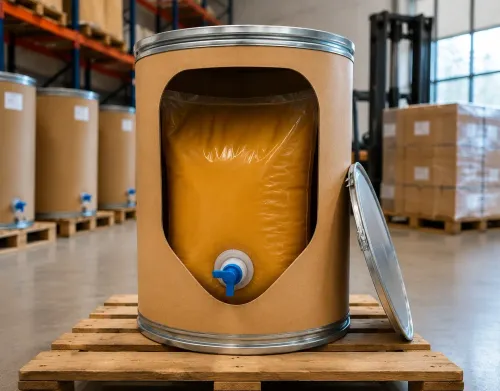
3. Fix the delivery terms in writing: drum or aseptic-bag size, pallet pattern, minimum remaining shelf life on arrival, storage-temperature limits, and whether delivery is ambient or temperature-controlled. Missing these details can leave you with unusable stock or insufficient warehouse capacity.
4. Compare the ingredient declaration with the finished product’s GB label before approval. Tomato is not one of the 14 allergens requiring emphasis, but celery, mustard, sulphites or dairy ingredients in the paste must be declared where present; shared-equipment cross-contact also needs assessment under your HACCP system.
Retain the purchase order, certificate, delivery record and downstream batch allocation for traceability.
Related product
 | Tomato Paste Zeus India is a trusted exporter and supplier of premium Tomato Paste in India, delivering high-quality tomato-based ingredients to the global food... View product → |
How should you receive, store and trace bulk tomato paste?
A compliant specification can still fail at the loading bay: a dented drum, torn aseptic bag or warm delivery can turn approved bulk tomato paste for manufacturers into a site deviation. Use the receiving procedure in your HACCP plan.
1. Inspect each drum and pallet before acceptance. Reject or quarantine leaking, swollen, badly dented or wet containers; check the aseptic bag, seals and outer liner for punctures or broken closures. Record the lot code, container count, delivery temperature, container condition and remaining best-before or use-by life.
2. Match the lot code and product identity to the purchase order and certificate of analysis. Check that the delivered drum or bag size, pallet configuration, storage limit and ambient or temperature-controlled delivery match the agreed specification. Buyers comparing industrial tomato paste UK supply should record any temperature excursion, not merely sign the carrier’s note.
3. Store unopened aseptic paste without refrigeration only within the supplier’s stated temperature, humidity and light conditions. Keep it off the floor, segregated from chemicals and materials carrying allergen risks, and retain its original lot identity.
4. Treat opening as the loss of commercial sterility. Train operators to clean and inspect connection points, use controlled utensils and transfer equipment, prevent foreign material and allergen cross-contact, and place opened paste in chilled storage where specified. Set a written post-opening use period; unopened shelf life no longer applies.
5. Review these controls in HACCP for foreign material, allergen cross-contact and spoilage from yeast, mould or bacteria. Retain the purchase order, lot code, delivery record, lot-specific certificate of analysis and every allocation to a customer order or production batch.
Frequently asked questions
Which tomato paste specification fits dairy and confectionery products?
Define °Brix alongside viscosity, colour, pH or acidity, salt, particle size, added ingredients and packaging format. Dairy sauces need heat and emulsion performance; confectionery fillings need controlled flavour, colour and texture.
How do concentration and processing affect tomato paste cost and dosage?
Higher °Brix paste contains more tomato solids per kilogram, so you need less material for the same solids contribution. Compare cost per kilogram of tomato solids, then account for viscosity, processing method, transport and recipe changes.
What should product trials test before approval?
Test flavour, colour, viscosity, pH, separation, heat stability, water activity where relevant, particle perception and performance through the product’s full process and shelf-life conditions.
What should a London tomato paste supplier provide before an order?
Request a current product specification, certificate of analysis, allergen statement, ingredient declaration, microbiological limits, country-of-origin details, packaging information, shelf life, batch identification and delivery documentation.