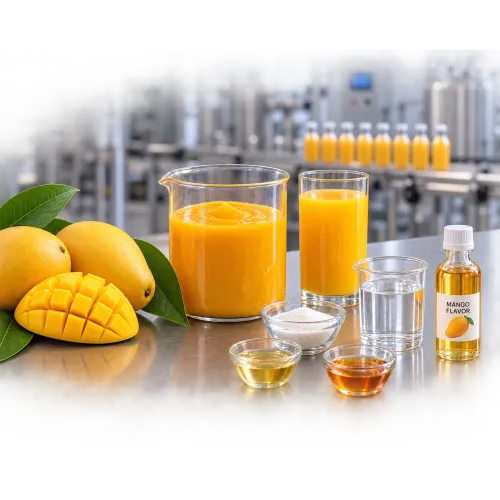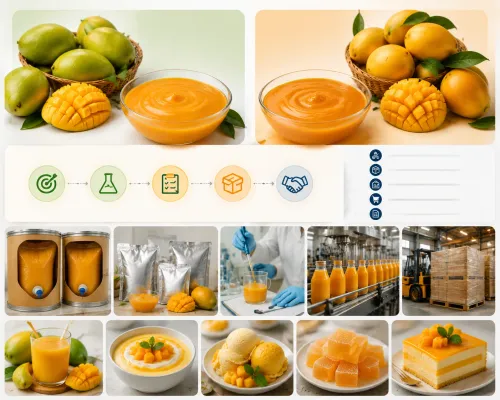


Mango puree plays a foundational role in the global food processing industry, especially in categories like beverages, dairy-based products, bakery fillings, jams, baby food formulations, and frozen desserts. For food manufacturers sourcing ingredients from India, particularly from industrial hubs like Bengaluru, Karnataka, understanding how mango puree is processed and packed is essential for ensuring product consistency, safety, and export compliance.
The production journey begins at the sourcing stage, where mango varieties such as Totapuri and Alphonso Mangoes are Carefully harvested without much manual handling , ensure the mangoes are reaches Processing unit on the same day .
Totapuri mangoes are widely preferred in industrial processing because they offer higher pulp yield, stable acidity, and cost efficiency. Alphonso mangoes, on the other hand, are chosen for premium applications due to their naturally rich aroma, deep golden color, and superior sweetness profile.
Once the raw fruit arrives at the processing facility, Stored in Perforated plastic crates for controlled ripening in ripening chambers. The advantages of ripening mangoes in controlled chambers are for uniform ripening.
On the 5th day the fruits are ripened . After inspection once the fruits are fully ripened , fruits are fed into belt conveyers, All raw , rotten or improper fruits are removed manually. Then to 2 stage agitated fruit washer.
1st stage fruit washer water dozed with 20-50 ppm Chlorine and 2nd fruit washer is plain treated water with pressurized water spray on the conveyer to ensure through fruit wash. Next stage the washed fruit passed through belt conveyer . All the fruit tips are trimmed manually .
The next stage is refining, where the pulp is filtered to remove fibrous ps and achieve a consistent viscosity. This is critical for manufacturers who require standardized input material for large-scale production. After refining, the puree is subjected to controlled heat treatment. This step is known as pasteurization and is designed to eliminate harmful microorganisms while preserving the natural flavor, color, and nutritional profile of the mango.
Temperature control is extremely important here—too much heat can degrade flavor, while insufficient heating can compromise safety. Modern processing units in Bengaluru’s food manufacturing ecosystem rely on automated systems to maintain precise thermal balance.
After pasteurization, the puree is rapidly cooled under hygienic conditions to prevent any post-process contamination. This is where aseptic packaging technology becomes crucial.
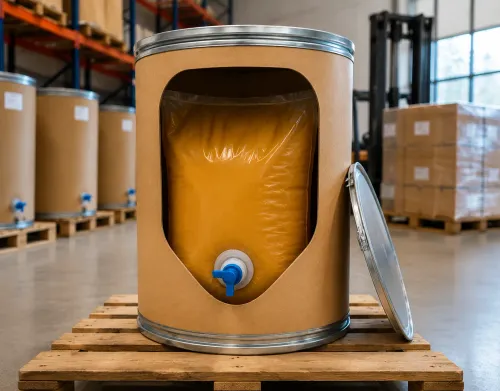
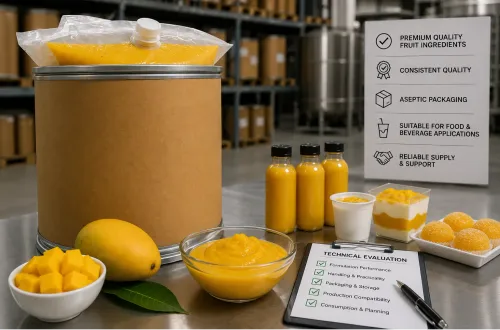
The aseptic bag in drum system is one of the most widely used formats for bulk fruit puree supply. In this system, the sterilized puree is filled into multilayer aseptic bags inside a completely sterile environment. These bags are then sealed and placed inside strong, Trimmed fruits fall into Destoner , where peel and skins are removed and mango crush will be passed through refiner . In refiner Bigger fiber (more than 0.8 mm Thick ) are removed.
The next stage is Preheating through tubular heat exchanger - Centrifuge Decanter or Separator ( to remove minute black & brown skin particles ) - Passed through metal detector & magnetic separator - Vacuum deaerator ( to remove air bubbles if any in Puree ) - Sterilizer ( heating at 106 C)- Holding for 180 sec - precooling - Chilling ( below room temp - Filling in to aseptic bags in drums automatically in a closed-circuit system .
Aseptic Bag in drum packaging method offers multiple industrial advantages:
Extended shelf life without refrigeration
Zero requirement for preservatives
Reduced risk of microbial contamination
Safe long-distance transportation for export markets
Efficient handling using forklifts and pallet systems
In Bengaluru, companies such as Zeus India Enterprise contribute to supplying processed fruit ingredients like mango puree to food manufacturers and exporters. Their role becomes especially important in ensuring that production standards align with international food safety expectations.
In Bengaluru, companies such as Zeus India Enterprise contribute to supplying processed fruit ingredients like mango puree to food manufacturers and exporters. Their role becomes especially important in ensuring that production standards align with international food safety expectations.
Another major advantage of aseptic drums is operational efficiency. Empty drums are often reusable in importing countries, reducing packaging waste and improving sustainability in global supply chains. For large-scale food manufacturers, this translates into lower logistical complexity and improved cost control.
Industries that benefit from this format include beverage manufacturers producing mango drinks, dairy companies making flavored yogurts, confectionery producers developing fruit bars, and bakeries creating fillings and toppings.
In conclusion, understanding the full manufacturing and packaging process behind mango puree helps food businesses make informed sourcing decisions. It ensures that the ingredient used in final products meets quality, safety, and performance expectations across both domestic and international markets.