
The right guava puree depends on the finished product’s color, acidity, texture, processing conditions, and label requirements—not on the fruit name alone. By the end, you will be able to compare white and pink guava puree, write a usable purchasing specification, calculate inclusion rates, and approve a bulk ingredient through trials rather than appearance alone.
Key takeaways
- Choose white guava puree for pale products and pink guava puree for visible fruit colour.
- Specify Brix, acidity, particle size, packaging, microbiology, and shelf life before comparing prices.
- Calculate inclusion from soluble solids, acidity, colour, and fruit content—not puree weight alone.
- Run bench, pilot, and shelf-life trials before approving a bulk guava ingredient supplier.
Match the Guava Puree to the Finished Product
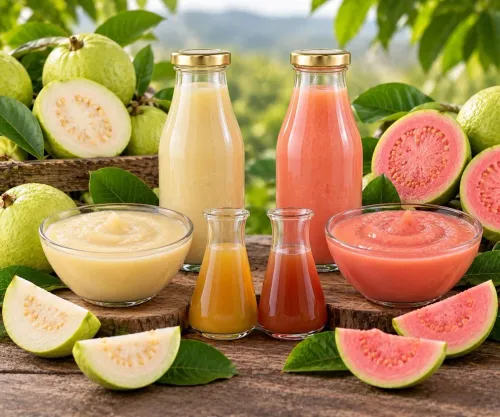
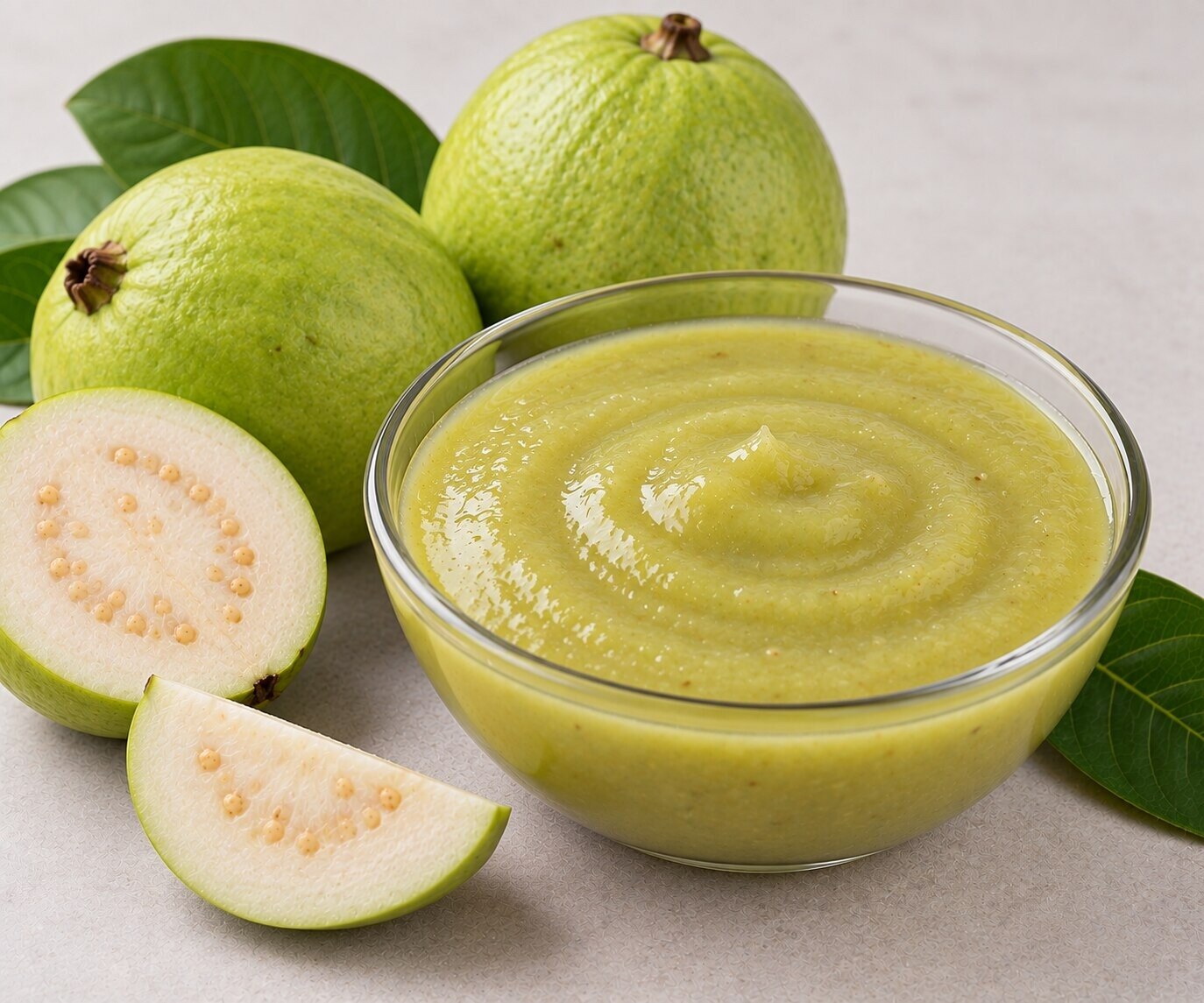
Choose white guava puree when the finished product needs a cream, pale yellow, or off-white appearance. Choose pink guava puree when it needs a visible salmon, pink, or pink-red fruit identity.
| Option | Best fit | Finished-product check |
|---|---|---|
| White guava puree | Vanilla yogurt, light dessert fillings, sauces, and neutral smoothies | Confirm it does not darken during heat processing |
| Pink guava puree | Beverages, yogurt, nectars, smoothies, desserts, and confectionery | Confirm the color remains visible after dilution, heating, or dairy blending |
Color does not predict flavor strength, sweetness, acidity, or viscosity. Cultivar, maturity, growing conditions, oxygen exposure, and heat history affect those properties separately. A pink puree can look muted in opaque dairy, while a white puree can darken in a heat-processed sauce.
Compare samples in the actual formulation base, not only in water. Assess fresh guava aroma, flavor intensity, seed or fiber perception, suspended pulp, and final appearance after processing.
Before requesting quotations for guava puree for processed foods, define whether you need a clear fruit note, fresh guava aroma, spoonable body, visible pulp, or a smooth texture. A guava puree that looks attractive in the sample container can fail once diluted, homogenized, heated, or stored.
Know What You Are Buying: Puree, Juice, Concentrate, or Flavor
Guava puree is the right bulk guava ingredient when your formulation needs body and fruit solids. It carries fruit water, soluble sugars, acids, pulp, aroma, color, and insoluble material, making it suitable for spoonable fillings and pulp-forward smoothies.
- Guava juice is more fluid and filtered. Use it for a lighter beverage profile, not a thick filling or textured smoothie.
- Guava concentrate removes water, reducing freight and storage volume. You must reconstitute it, and concentration can produce cooked notes or reduce fresh aroma.
- Guava pulp can mean a coarser, less-refined material with stronger particulate perception. Confirm the screen size, seed-removal method, and allowable seed fragments.
- A guava-flavored preparation or natural guava flavor mainly supplies volatile aroma. It may contribute little fruit, sugar, acid, or color, so it cannot replace meaningful guava content when the label, sensory target, or formula requires it.
Ask whether the material is single-strength or reconstituted, clarified or depectinized, and blended with sugar, acid, water, or carriers. These details affect solids, texture, dilution, and label declarations.
Write a Bulk Guava Ingredient Specification Before You Compare Prices
Set a minimum °Brix before requesting quotations, and approve the bulk guava ingredient against measured results rather than the fruit name. °Brix measures soluble solids, not aroma, acidity, pulp, or flavor intensity. Request a certificate of analysis and sample specification with test methods and sample temperature.
| Measure | Specify | Why it matters |
|---|---|---|
| °Brix | Minimum value and measurement temperature | Controls soluble solids |
| pH and titratable acidity | Separate limits, methods, and sample temperature | pH measures hydrogen-ion activity; titratable acidity measures acid quantity and predicts acid adjustment |
| Viscosity | Temperature, spindle or shear rate, and method | Purees at identical °Brix can flow differently |
| Texture | Fine, coarse, or double-refined; seed-fragment and insoluble-particle limits | Screens affect grit, yield, and blockage |
| Pulp and color | Pulp percentage; L*, a*, b* values or a physical standard | Controls body and lot-to-lot appearance |
| Microbiology | Named organisms and numerical limits | Defines release safety and process compatibility |
For pink guava puree and white guava puree, reject words such as “bright” or “natural” as sole color criteria. Add these purchasing requirements to the specification:
- Allergen status, permitted additives such as ascorbic acid or citric acid, and processing aids
- Package integrity, net-weight tolerance, storage temperature, and remaining shelf life at receipt
- Maximum time after opening and whether partial-bag use is permitted
A certificate reporting only °Brix and microbiology cannot distinguish a smooth, pale puree from a seed-bearing, strongly colored lot.
Calculate Inclusion Rate and Recheck the Formula After Processing
Set the target soluble guava solids in the finished food before choosing an inclusion rate. For guava puree for processed foods, calculate puree weight as required soluble fruit solids divided by the supplier’s measured °Brix expressed as a decimal.
1. If the formula needs 2 kilograms of soluble fruit solids and the guava puree tests at 10 °Brix, use 2 ÷ 0.10 = 20 kilograms of puree before process losses. Add the puree’s water to the water balance, its natural sugars to total sugar, and its titratable acidity to the acid balance.
2. Recalculate sweetness after dilution and check whether added sugar masks guava aroma. Confirm equilibrium pH after every ingredient is combined. In the United States, acidified-food controls require a finished equilibrium pH of 4.6 or below; above 4.6, low-acid canned-food controls apply.
Match the scheduled thermal process to the formulation, container, fill condition, and validated process.
3. Test guava puree in the finished process, not only in water. In yogurt and other dairy products, check acidity, pectin, minerals, and pulp for protein destabilization, serum separation, and sedimentation. In beverages, measure dilution, homogenization pressure, cloud stability, and settling; in fillings and sauces, check heating, shear, viscosity, and water migration.
4. Do not treat enzyme-treated puree as untreated puree. Pectinase can reduce viscosity and body, so record enzyme treatment and retest the finished texture.
Compare Aseptic, Frozen, and Refrigerated Formats by Your Production Constraints
Choose aseptic guava puree when ambient transport, long unopened storage, and scheduled bulk production matter. Choose frozen puree for smaller quantities used intermittently, and refrigerated puree when short transport and rapid plant use fit your schedule.
| Option | Choose it when | Verify before release |
|---|---|---|
| Aseptic | Ambient logistics and planned bulk production | Package type, validated commercial-sterility process, storage conditions, fill parameters, and remaining shelf life |
| Frozen | Intermittent production needs smaller preserved quantities | Frozen-storage capacity, controlled thawing time, and texture after thawing |
| Refrigerated | Transport is short and use follows delivery quickly | Temperature range, delivery monitoring, and maximum time after opening |
Aseptic processing is not a quality grade: heat can reduce fresh aroma or darken color. Evaluate the actual lot. Record temperature history and inspect seals before releasing any format.
Compare drums, aseptic bags, bag-in-box systems, and frozen packs for:
- Unloading equipment, minimum order quantity, residual heel, oxygen exposure, and partial-container waste.
- Whether partial-bag use is permitted, how long opened guava puree remains usable, and how the container is resealed.
Add the storage temperature, net-weight tolerance, package-integrity standard, and remaining shelf life to the bulk guava ingredient specification. A package that cannot be emptied, resealed, or used within its permitted time can cost more than its quoted ingredient price.
Approve the Supplier Through Bench Trials, Pilot Processing, and Shelf-Life Checks
Approve a supplier only after its bulk guava ingredient survives the recipe, the process, and storage. Test guava puree for processed foods in the finished formula, not only after dilution in water.
1. Start with a representative lot and compare its certificate and test results with your specification: °Brix at a stated temperature, pH, titratable acidity, L*, a*, and b* color, viscosity or flow, particle and seed condition, odor, package integrity, and microbiological limits.
2. Run bench trials at the proposed inclusion rate plus low and high rates. Record dilution, sweetness, acid balance, color, texture, sediment, and flavor strength. Test pectin stability and protein compatibility in dairy products.
3. Process the best formula through the intended homogenization, heat treatment, filling equipment, and package. Judge guava identity, cooked notes, redness or yellowing, serum separation, graininess, viscosity, and flavor immediately and during storage.
4. Check the finished product at planned shelf-life points, adding credible temperature-abuse conditions. Approve a supplier lot range, not one attractive sample. Zeus India Enterprise belongs in the comparison when its lot-specific documentation and trial performance fit your process.
Related product
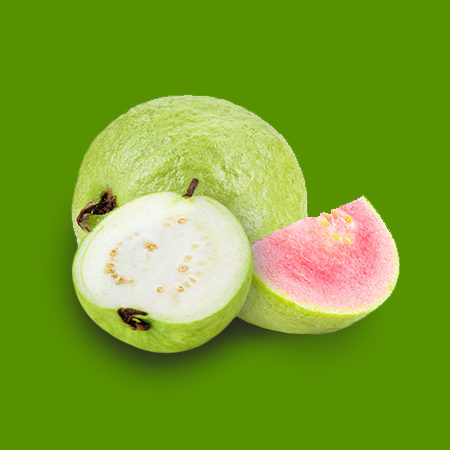 | White and Pink Guava Puree Zeus India is a trusted exporter and supplier of premium White Guava Puree and Pink Guava Puree in India, catering to the growing demands of the... View product → |
Frequently asked questions
How do I choose between white guava puree and pink guava puree?
Choose white guava puree when the finished product needs a cream, pale yellow, or off-white appearance. Choose pink guava puree when it needs a visible salmon, pink, or pink-red fruit identity. Confirm the choice in the finished formula because dairy, heat, pH, and other ingredients can change colour.
What should a bulk guava ingredient specification include?
Specify the guava variety or colour type, puree form, soluble solids or Brix, pH, titratable acidity, texture, particle size, seeds, added ingredients, microbiological limits, packaging, storage temperature, shelf life, lot identification, and required certificates or test reports.
How is guava puree different from guava juice, concentrate, and flavor?
Guava puree contains finely processed fruit pulp and contributes body, colour, flavour, and soluble solids. Juice is filtered for a lighter texture, concentrate has water removed and requires reconstitution, and flavor supplies aroma without replacing the body or fruit solids of puree.
Which guava puree format should I choose for production?
Choose aseptic puree when you need ambient storage and a longer production window without frozen handling. Choose frozen puree when cold-chain storage is available and smaller production lots suit your process. Choose refrigerated puree when you can use it quickly and maintain continuous chilled storage. Compare thawing, warehouse space, packaging waste, and microbial controls.
How should I approve a guava puree supplier?
Run a bench trial in the target recipe, then test the puree through pilot-scale mixing, heating, filling, or other production steps. Check colour, flavour, viscosity, separation, sediment, pH, Brix, and yield after processing. Use retained samples and shelf-life checks to confirm performance through the intended storage period.