
A dairy buyer needs more than a price per kilogram: the same “guava puree” label can describe different soluble-solids levels, particle sizes, packaging systems, and added ingredients. By the end, you will know how to specify the material, test it in your dairy formula, compare exporters, and assemble the import file.
Key takeaways
- Specify single-strength puree, concentrate, or formulated fruit preparation.
- Match Brix, acidity, particle size, and microbiological limits to your dairy formula.
- Compare white and pink guava using colour, flavour, seeds, and processing performance.
- Request batch records, certificates, licences, and samples before approving an exporter.
Define the Guava Ingredient Before You Request a Quote
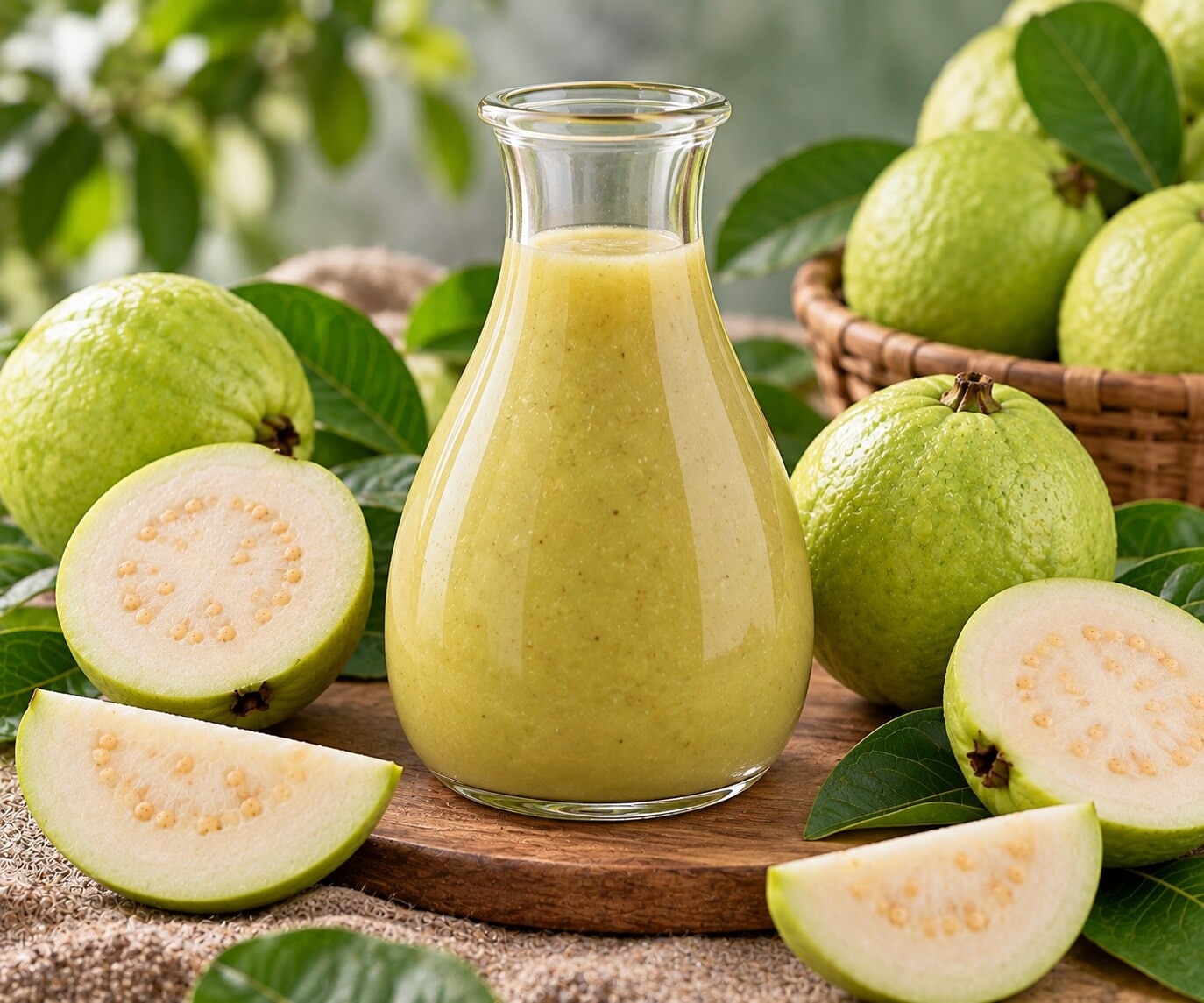
Do not request “guava puree” as a complete buying specification. For guava puree for dairy manufacturers, identify the fruit material, concentration, and point of addition first: single-strength puree, guava concentrate for dilution, or a formulated fruit preparation containing sugar, acid, stabilizers, or permitted preservatives. These options are not interchangeable.
| Application | Preferred material | Delivery format and use |
|---|---|---|
| Yogurt | Single-strength puree or fruit preparation | Aseptic for post-fermentation dosing; add before heat treatment only after testing protein stability |
| Drinking yogurt | Single-strength puree with the target particle size | Aseptic; dose after base stabilization and check serum separation |
| Cultured desserts | Puree or formulated preparation | Aseptic post-culture addition limits acid shock; validate viscosity |
| Smoothies and milkshakes | Single-strength puree or concentrate | Frozen for flexible batch use; aseptic for high-throughput production |
| Ice cream | Concentrate or puree matched to overrun and sweetness | Frozen or aseptic; test freeze-thaw texture and flavor |
| Fruit preparations | Formulated preparation with defined sugar, acid, and stabilizer system | Aseptic bulk pack for fruit-layer or ripple dosing |
Choose aseptic puree when you need ambient storage, longer scheduling flexibility, and no frozen warehouse. Choose frozen puree when you want a simpler ingredient profile or seasonal purchasing, but budget cold storage, thawing space, and shorter handling time after opening.
Get °Brix, pH, titratable acidity, viscosity, pulp and seed limits, particle size, guava variety, permitted additives, and pack size before comparing quotes. A water dilution is not enough: approve the material in the finished dairy formula.
Build a Specification That Matches the Dairy Formula
A puree specification must describe its performance in the finished dairy matrix, not just its °Brix. Two purees with similar soluble solids can produce different acidity, viscosity, pulp perception, serum separation, and flavor intensity.
Request a signed specification and a recent certificate of analysis covering:
- Single-strength puree or concentrate, concentration ratio, and dilution basis
- Soluble solids in °Brix, pH, and titratable acidity
- Guava variety, pink or white flesh, color value, and retained reference sample
- Viscosity or consistency method, test temperature, and acceptance range
- Pulp, seed, stone-cell, skin-fragment, and fiber limits
- Sieve or mesh size, with foreign matter defined separately from natural fruit particles
- Permitted additives, including sugar, acidulants, preservatives, and stabilizers
- Yeast, mold, total plate count, coliform, and pathogen results
- Processing date, packing date, lot code, and shelf life at arrival
Trial the puree in the actual yogurt, drinking yogurt, cultured dessert, ice cream, or fruit-preparation formula. Test at the intended fruit dosage and adjust sweetness after accounting for the puree’s °Brix. Record pH drift, serum separation, sedimentation, viscosity loss, color change through pasteurization, aroma loss, and grittiness after storage.
Run the trial with the planned stabilizer system; pectin, starch, gelatin, and gums can alter fruit dispersion and mouthfeel. Evaluate samples immediately after processing and throughout the stated shelf life, including freeze-thaw testing for frozen desserts. Approve only a defined color range and sensory profile, not a cultivar name alone.
Choose Between White and Pink Guava for Processing Performance
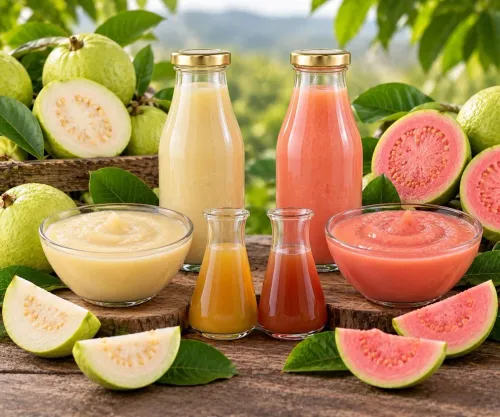
Choose the color that survives your actual dairy process, not the cultivar name. Approve a retained white or pink reference sample after testing the puree in the finished yogurt, drinking yogurt, cultured dessert, ice cream, or milkshake formula.
| Dimension | White guava | Pink guava |
|---|---|---|
| Color | Pale cream to greenish; offers a clean base for added colors. | Pink to salmon; heat, oxygen, and light can reduce intensity. |
| Flavor | Mild, fresh, and less visually dominant. | More aromatic; heat treatment can strip delicate notes. |
| Pulp and seeds | Check stone-cell grit, mesh size, and seed-removal efficiency. | Check the same controls; darker particles show more clearly. |
| Heat treatment | Usually easier to keep visually consistent. | Test color change and flavor loss after pasteurization. |
| Fermentation | Test pH drift, protein destabilization, viscosity loss, and serum separation. | Run the same trial; acidity and aroma can alter cultured flavor. |
| Freezing | Measure thawed viscosity, sedimentation, and ice-crystal separation. | Check thawed color and particle distribution as well. |
| Shelf life | Monitor browning, separation, and flavor decline. | Monitor fading, oxidation, and pigment migration. |
Add acidic puree before fermentation or heat treatment only after the trial proves protein stability. Adding it after the dairy base is stabilized reduces processing risk but demands tighter microbiological and aseptic control.
For a bulk guava puree export purchase, specify the target color range, pulp and seed limits, process point, and frozen or aseptic handling conditions.
Compare Indian Exporters on Evidence, Not Marketing Claims
A quote is not comparable until every guava puree exporter from India answers the same evidence request. Ask for a product specification and a recent certificate of analysis; °Brix alone cannot predict dairy performance because acidity, pulp, viscosity, and serum separation can differ at the same soluble-solids level.
| Evidence | Compare | Reject or investigate |
|---|---|---|
| Batch consistency | COAs for several recent lots showing °Brix, pH, titratable acidity, color, viscosity or consistency, particle or mesh size, foreign matter, and microbiological results | Large unexplained swings or missing lot numbers |
| Food safety | Microbiology, pesticide-residue and contaminant results, allergen statement, HACCP or food-safety certification, and traceability from lot to finished drum | A supplier certificate without verification records |
| Documentation | Product specification, ingredient and additive declaration, country-of-origin and health documents, lot traceability, shelf life, and storage instructions | “Guava puree” without single-strength or concentrate status |
| Packaging | Net weight, aseptic bag and drum construction, filling date, lot code, palletization, storage temperature, and confirmation of ambient aseptic or frozen distribution | Packaging that cannot match your warehouse and production schedule |
| Delivered cost | EXW, FOB, or CIF basis, plus freight, insurance, export documents, port charges, brokerage, sampling, testing, demurrage, and loss exposure | A low kilogram price with charges left unspecified |
Send this identical request to suppliers such as Zeus India Enterprise, then compare documents rather than sales language. For a United States importer, treat the supplier COA as one input to Foreign Supplier Verification Program verification, not as the complete system.
Confirm tariff classification, additive rules, labeling, pesticide limits, contaminants, and required import documents before purchase.
Related product
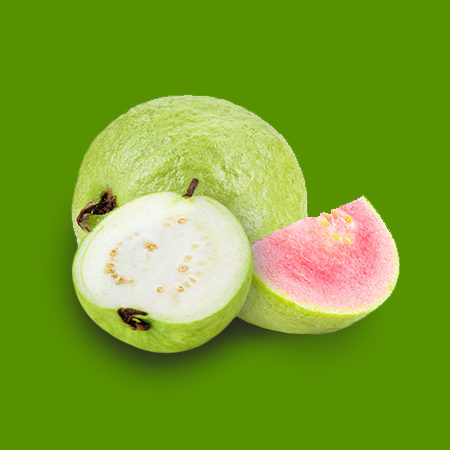 | White and Pink Guava Puree Zeus India is a trusted exporter and supplier of premium White Guava Puree and Pink Guava Puree in India, catering to the growing demands of the... View product → |
Complete the Import File and Control Each Incoming Lot
Do not release a shipment into production until its import file and lot results agree with the approved specification. Require the guava puree import supplier to state the Incoterm—EXW, FOB, CIF, or another basis—and identify responsibility for freight, insurance, customs brokerage, port charges, sampling, testing, and demurrage.
| Control | Evidence or action | Failure consequence |
|---|---|---|
| Shipment file | Signed specification, allergen statement, lot-specific certificate of analysis, batch traceability, processing and packing dates, country-of-origin document, bill of lading, and agreed shelf-life-at-arrival | A missing record weakens recall, customs clearance, or shelf-life decisions |
| Destination market | Check tariff classification, food-additive permissions, label rules, pesticide maximum residue levels, contaminant limits, and required health or origin documents with the importing authority | Indian export paperwork does not prove destination-market compliance |
| Receiving release | Hold each lot pending package and seal inspection, temperature review, Brix, pH, titratable acidity, color, viscosity or consistency, particle size, foreign matter, and microbiological results | A lot can pass Brix yet cause serum separation, viscosity loss, or contamination |
| Process fit | Confirm performance in the target yogurt, fermented milk, dessert, smoothie, ice-cream, or fruit-preparation formula after the planned heat treatment and through shelf-life testing | A water dilution can look acceptable while the dairy matrix fails |
| Change control | Obtain advance written notice and approval for changes to cultivar, formulation, additives, processing line, packaging material, or manufacturing site | Unapproved changes can shift color, viscosity, flavor, and protein stability |
Record lot numbers against finished-product batches so a complaint reaches the affected shipment quickly.
Frequently asked questions
What should you define before requesting a guava puree quote?
Define the fruit material, concentration, ingredients, and point of addition. State whether you need single-strength puree, guava concentrate for dilution, or a formulated fruit preparation with sugar, acid, stabilizers, or permitted preservatives.
How do dairy manufacturers write a guava puree specification?
Set target Brix, pH or titratable acidity, colour, particle size, viscosity, microbiological limits, packaging format, shelf life, storage temperature, and allergen or additive requirements. Tie each limit to the dairy formula and process.
Should dairy producers choose white or pink guava puree?
Choose white guava for a lighter appearance and a milder profile, or pink guava for stronger colour and flavour impact. Confirm the variety, colour range, seed and fibre content, viscosity, and heat-process performance through a sample trial.
How can buyers compare guava puree exporters from India?
Ask each exporter for a product specification, representative sample, certificate of analysis, traceability records, food-business licence details, process description, packaging information, and export documentation. Compare evidence against the same specification instead of relying on marketing claims.