
Weak fruit character, thin mouthfeel, excessive sweetness and unstable pulp can force repeated beverage reformulation. By the end, you will know when white guava puree is the right tool, how to calculate and process it, and how to test suppliers and formats before committing to a commercial batch.
Key takeaways
- Use guava puree to add fruit solids, flavour and mouthfeel without relying solely on sugar.
- Hydrate stabilisers fully and control shear to reduce settling, rings and filler deposits.
- Measure viscosity, sediment, pH, Brix and sensory performance during every commercial trial.
- Compare suppliers on specifications, cold-chain control, documentation and batch consistency before ordering bulk puree.
Which beverage problems can white guava puree solve?
White guava puree for beverages helps solve weak fruit character and thin mouthfeel by adding suspended fruit solids, soluble pectin, flavour and body. The drink feels fuller without relying only on sugar or added thickeners. That same fruit material can create settling, sediment rings and filler deposits if mixing and stabilisation are inadequate.
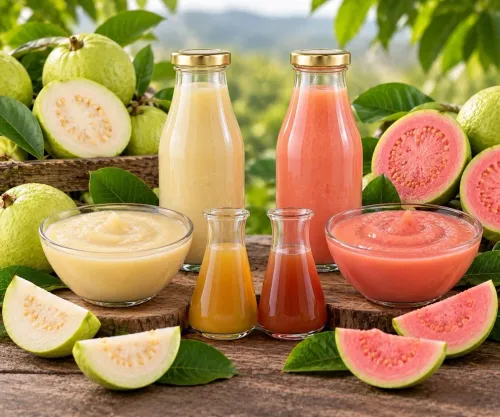
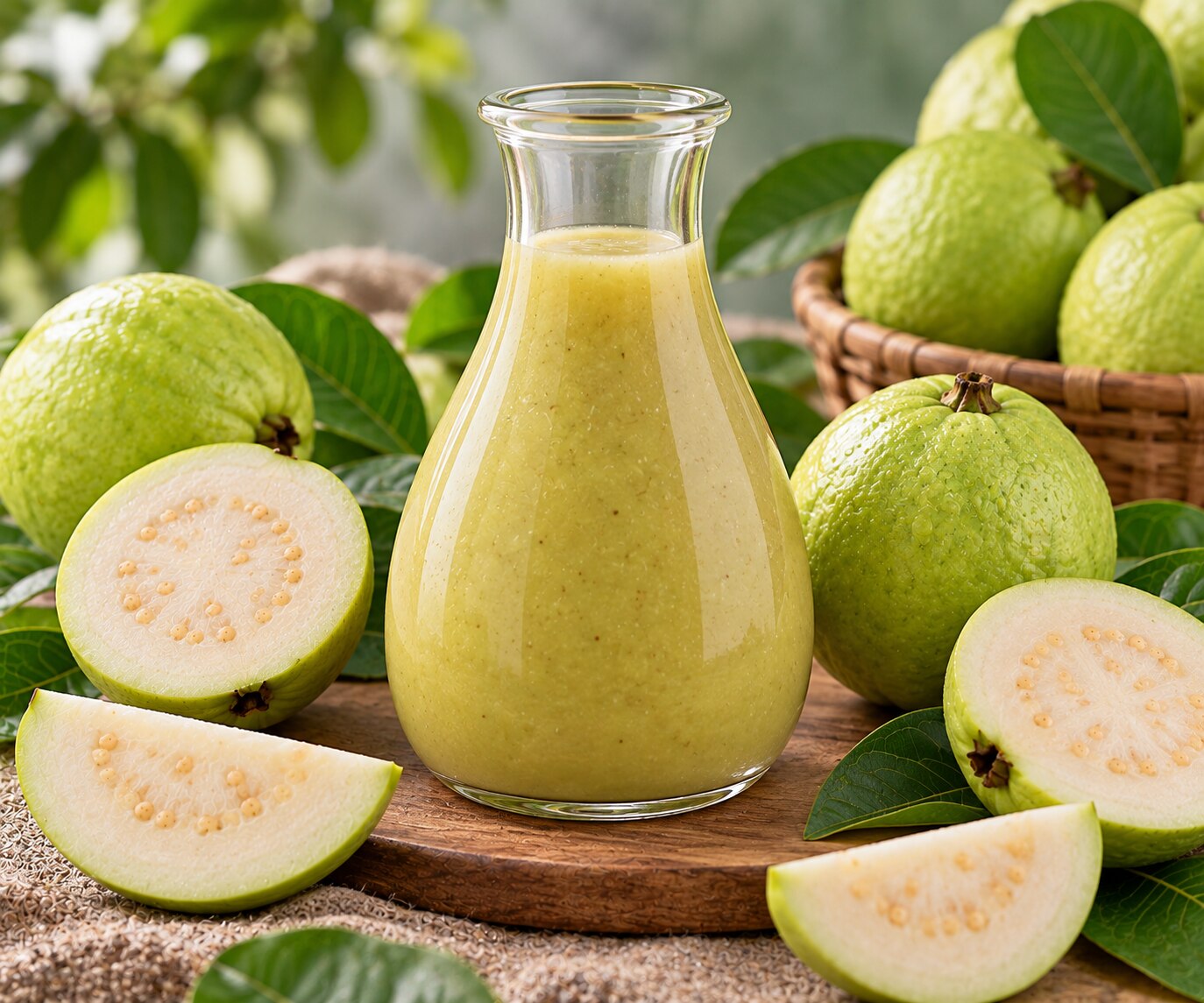
White guava puree is not colourless. Commercial puree can look cream, off-white, yellowish or slightly green, depending on cultivar, maturity and processing. It creates less pink or red impact than pink guava puree, so it can reduce reliance on artificial colour but cannot reproduce pink guava’s visual cue.
| Option | Finished-drink effect | Best fit |
|---|---|---|
| White guava puree | Pale fruit appearance, body and mild natural colour | Dairy-style drinks, plant-based beverages, lemonades and translucent systems |
| Pink guava puree | Stronger pink colour cue and tropical positioning | Drinks where visible fruit colour supports the product promise |
| Juice or concentrate | Lower viscosity and fewer suspended solids | Light, pourable drinks |
| Flavouring | Clearer appearance with less body | Colour-sensitive formulas |
| Fruit preparation | Particulate fruit inclusions | Products designed to show pieces or pulp |
Choose white guava puree when how white guava puree for helps solve beverage formulation problems includes body and pale visual consistency. Check oxygen exposure, headspace and accelerated storage because natural colour can darken.
It is the wrong choice for clear drinks, sediment-intolerant formulas or very high-speed lines where pulp raises pressure drop, fouling and filling risk.
How do you build a guava puree beverage formula?
1. Set the fruit and solids targets for the product: juice drinks, smoothies, nectar-style beverages, dairy drinks, plant-based drinks or cocktails. Use puree at about 5–20% as a starting trial, with soluble solids around 8–14 °Brix for many fruit drinks. Validate every range against the puree specification, beverage category and process.
2. Disperse the stabiliser in part of the water or sugar phase and let it fully hydrate. Do not add puree before hydration; the pulp can trap dry powder and create fish-eyes, lumps or uneven viscosity. Add the remaining water after hydration.
3. Blend in the puree under controlled shear, then add sugar or syrup. Adjust acidity with the chosen acid. A starting titratable-acidity range is 0.2–0.6% as citric acid equivalent, with pH commonly around 3.2–4.2. Set viscosity for the drink style and filling equipment, not by a universal number.
4. Check pH, °Brix, titratable acidity, viscosity and flavour before final homogenisation. pH determines the preservation strategy; titratable acidity and sugar determine perceived sharpness, sweetness and guava character. Calculate sugar to reach final °Brix rather than guessing by volume, because puree pulp affects refractometer readings.
5. Calculate puree percentage as target fruit contribution divided by the puree’s fruit-solids or formulation basis. Use the lot-specific °Brix and density, and state whether your specification follows puree, fruit-solids or another Codex-aligned basis. A guava puree formulation needs pilot validation before production.
How do you prevent settling, separation and processing failures?
Dilution can accelerate sedimentation: it lowers continuous-phase viscosity while leaving insoluble guava pulp and fibre suspended. Trial the complete beverage with:
- High-shear mixing to disperse pulp evenly
- Homogenisation to reduce separation and particle size
- Pectin, gellan, CMC or xanthan selected for the finished formula
Too much hydrocolloid creates slimy texture, gel formation, poor pourability or filling inaccuracies. Calcium, acid, sugar and heat can change hydrocolloid performance, so test every combination rather than dosing the puree automatically.
A successful bench blend does not prove line performance. Run it through the actual pump, pipework, heat exchanger, homogeniser, nozzle and filler; pulp can increase pressure drop and deposit on equipment.
| Puree format | Main advantage | Control required |
|---|---|---|
| Aseptic | Reduces frozen transport and warehouse demand for bulk guava puree UK | Define refrigerated opened-pack life |
| Chilled | Ready for use without thawing | Maintain cold chain and use quickly |
| Frozen | Long-term storage option | Provide freezer space, controlled thawing and no repeated freeze-thaw cycles |
Treat unopened puree handling separately from finished-drink safety. Opened puree rework needs documented time, temperature and microbiological limits. Pasteurisation or hot-fill can extend shelf life but may reduce aroma, darken colour, soften or alter texture. The processor and pack-system supplier must validate the scheduled process for the chosen drink and pack.
What should a commercial guava puree trial measure?
1. Build a bench matrix with at least two puree doses, two sugar levels and two acidity levels. For each sample, record the puree lot’s °Brix, pH, titratable acidity, viscosity, colour and fruit-solids loading. Do not treat °Brix as dissolved sugar alone: pulp affects the reading.
2. Use a defined tasting panel and fixed score sheet for aroma, guava intensity, sweetness, tartness, mouthfeel, colour and aftertaste. Do not change pH without tasting the revised formula; two samples at the same pH can taste different because acidity and flavour intensity differ.
3. Check stability after blending and standing. Record sediment height at fixed intervals, then repeat the observation after centrifuging to expose weak suspension. Measure viscosity at a stated temperature, using a named spindle and rotational viscometer method, or the selected instrument’s documented procedure.
4. Run pasteurisation or hot-fill in the intended pack. After accelerated storage, repeat sensory, pH, °Brix, viscosity and separation checks. On the line, check foam, nozzle deposits, filler accuracy, pressure drop and cleanability; kitchen blending does not reveal shear, heat-transfer or residence-time risks.
5. Run a pilot batch before production approval. Treat every puree lot as a specification-controlled input, not a visually interchangeable ingredient. Record the actual pump, pipework and filler performance before scale-up.
How should you compare a UK guava puree supplier before ordering bulk?
Request the full technical file before approving a bulk guava puree UK order. Compare a pink guava puree supplier London with a white-guava option on specification and traceability, not colour alone.
| Supplier evidence | Check before ordering |
|---|---|
| Product identity | Cultivar or fruit description, colour range, flavour intensity and consistency across lots |
| Technical specification | Aseptic bag format, net weight, °Brix and pH ranges, titratable acidity, viscosity method, particle or sieve data, seed and fibre controls |
| Safety and records | Microbiological limits, allergen statement, country of origin, lot coding and a lot-specific certificate of analysis |
| Handling | Shelf life, storage temperature, transport conditions and defined refrigerated opened-pack life |
Also confirm these commercial points:
- Minimum order quantity, production lead time, shipping route and customs responsibility
- London and wider UK delivery coverage, plus warehouse capacity for ambient, chilled or frozen stock
- Thawing equipment for frozen packs, or aseptic opening and transfer equipment
- Stock-holding cost and the labour needed for sampling, testing and release
Ask for a retained sample and approve it against your production specification. Record °Brix, pH, titratable acidity, viscosity, colour and sediment after blending and storage; a nominal fruit percentage cannot replace lot-specific data.
Zeus India Enterprise is one supplier option to investigate, but request its full technical file, lot-specific certificate of analysis, delivery terms and sample approval before placing a bulk order.
Related product
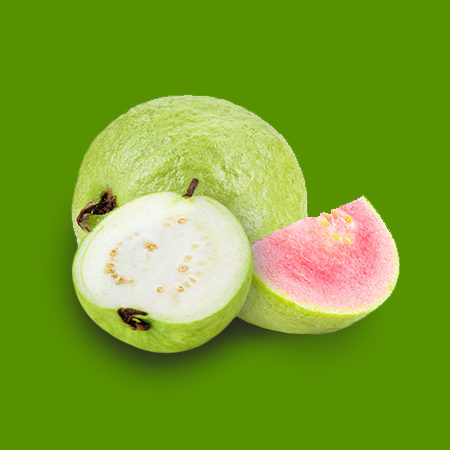 | White and Pink Guava Puree Zeus India is a trusted exporter and supplier of premium White Guava Puree and Pink Guava Puree in India, catering to the growing demands of the... View product → |
Frequently asked questions
Which beverage problems can white guava puree solve?
White guava puree can strengthen weak fruit character, improve thin mouthfeel and add suspended fruit solids, soluble pectin, flavour and body. It does not automatically prevent settling or separation.
How do you build a guava puree beverage formula?
Define the target Brix, acidity, puree percentage, viscosity and serving format first. Disperse puree and stabilisers under controlled mixing, then adjust sugar, acid and water after measuring the blend.
How do you prevent settling, separation and processing failures?
Use adequate agitation, fully hydrate stabilisers, control particle size and test the formula through its intended heat treatment and filling process. Check for sediment rings, phase separation, sieve blockage and filler deposits.
What should a commercial guava puree trial measure?
Record Brix, pH, titratable acidity, viscosity, puree dose, colour, sensory scores, sediment, separation, fill performance and pack stability at defined storage temperatures.
How should you compare a UK guava puree supplier before ordering bulk?
Compare the product specification, puree concentration, Brix range, pH, microbiological limits, allergen statement, origin, traceability, batch documentation, packaging, lead time and cold-chain arrangements.