
The right guava puree depends on the colour, acidity, texture and sensory profile your finished product must deliver—not on whether a sample looks attractive in a catalogue. By the end, you will have a practical method for choosing white or pink puree, writing a purchase specification, evaluating suppliers and releasing each incoming lot.
Key takeaways
- Choose white puree for pale colour and pink puree for visible guava colour.
- Specify colour, Brix, acidity, texture, pack size and microbiological limits before quoting.
- Compare batch records, certificates, traceability documents and delivery conditions—not price alone.
- Check seals, batch codes and storage temperature before opening aseptic puree.
Choose by finished-product effect, not guava name alone
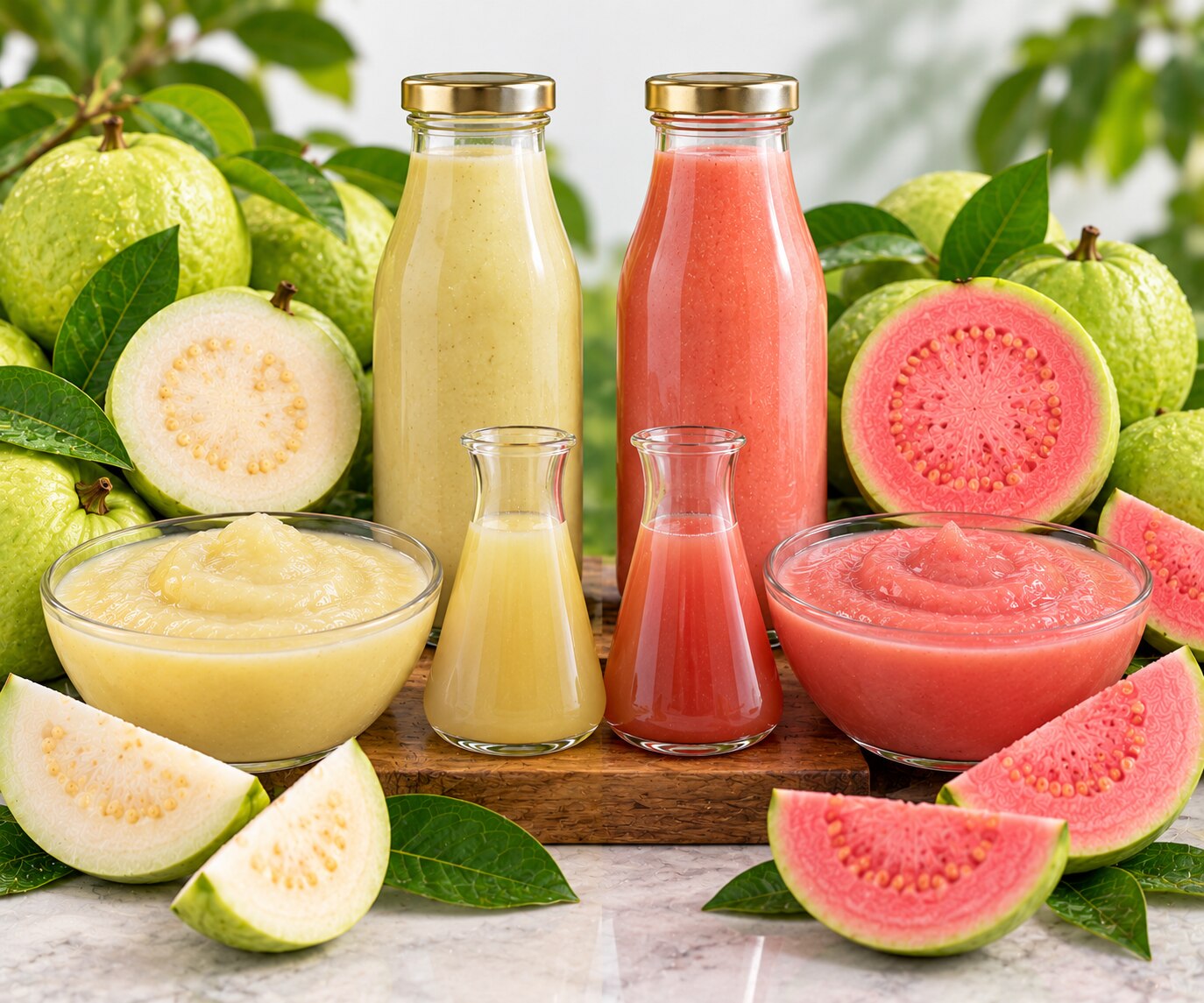
Choose white guava puree for a pale, neutral-colour product; choose pink guava puree when the guava colour should be visible in the finished food or drink. The right choice in white or pink guava puree for ingredient buyers in Bengaluru depends on the consumer’s expected colour, flavour and mouthfeel, not the catalogue name.
| Option | Finished-product effect | Better fit |
|---|---|---|
| White guava puree | Pale cream to light green appearance, clean guava flavour and less visual colour interference | Light-coloured nectar, yoghurt, ice cream, dessert bases, fillings and sauces |
| Pink guava puree | Pink to salmon tone, more visibly fruit-led appearance and stronger sensory identity | Smoothies, pink beverages, sorbet, coloured nectar, yoghurt and fruit desserts |
| Either type | Pulp body, aroma, acidity and seed or particle perception depend on cultivar, maturity, refining and heat exposure | Use only after testing the actual product process |
Do not approve either puree from a photograph. Request the cultivar or source region, lot-specific L*a*b* values, a retained sample and a production-equivalent sample processed through your beverage or food line. Deaeration, thermal treatment, refining and storage can dull pink colour, reduce aroma or change viscosity.
Check °Brix, pH, titratable acidity, viscosity and sieve or particle-size results together. °Brix measures soluble solids, not guava content; two purees at the same reading can produce different flavour and pulp body. Set receipt and end-of-shelf-life limits for colour, flavour and viscosity.
Set the technical specification before requesting a quote
Put the trial specification on one page before asking for a price. State whether you need single-strength or concentrated puree, then define the target soluble solids, pH, titratable acidity, viscosity, screen aperture or maximum particle size, packaging format, and permitted additives.
| Specification | White guava puree | Pink guava puree |
|---|---|---|
| Colour | Pale, neutral appearance; require lot-specific L*a*b* limits | Pink or salmon appearance; require lot-specific L*a*b* limits |
| Finished product | Suitable when colour must remain light | Suitable when guava colour should be visible |
| Particle control | Confirm refined or screened texture | Confirm pulp and seed-residue limits |
| Reference | Approve a retained sensory sample | Approve a retained sensory sample |
Do not use a catalogue photograph as the colour standard. Ask for the cultivar or source region, objective colour values, and a retained sample; maturity and heat exposure can shift flesh colour, aroma and viscosity.
Remember that °Brix measures soluble solids, not guava content, so match the trial against the reference sample rather than °Brix alone.
For guava puree for bulk buyers, make the incoming-release documents part of the quote:
- Lot-specific certificate of analysis showing production date, best-before date, batch number, net weight, °Brix, pH, acidity, appearance or colour, viscosity where relevant, microbiology, packaging integrity and fruit-lot traceability.
- Ingredient declaration stating guava and every permitted additive, including preservatives, sugar or acidulants.
- Packaging details naming aseptic bag type, drum size, seal format and storage conditions.
Set acceptance limits for flavour, colour and viscosity at receipt and near intended shelf life; acceptable microbiology does not prove that the puree has avoided browning or flavour loss.
Compare suppliers on lot control, documents and Bengaluru delivery
A dependable supplier proves that the approved puree will recur in production: it links colour, test results, packaging and dispatch to a named lot. A promising sample proves only that one container looked acceptable.
Whether you are assessing a white guava puree supplier in Bengaluru or a pink guava puree supplier in Bengaluru, request evidence tied to the production batch:
- Cultivar or source region, lot-specific L*a*b* values, and a retained sample.
- A production-equivalent approval sample, tested in your beverage, yoghurt, filling or sauce process. Thermal treatment, deaeration, refining and storage can alter pink colour, aroma and viscosity.
- A certificate of analysis showing pH, titratable acidity, soluble solids and viscosity. Measure pH on each relevant lot; pH 4.6 is the low-acid control dividing point used in U.S. canned-food regulation.
- Scheduled-process or aseptic-processing documentation, plus label, additive and food-category records aligned with Food Safety and Standards Authority of India requirements.
- Dispatch location, pack size, minimum order quantity, remaining shelf life, transport temperature, Bengaluru lead time and the plan for rejected or temperature-abused lots.
| Check | Sample-led seller | Controlled supplier |
|---|---|---|
| Colour | Catalogue photograph | Lot-specific L*a*b* result and retained sample |
| Traceability | Generic certificate | Batch number matching drum, certificate and sample |
| Approval | Laboratory container | Production-equivalent batch trial |
| Delivery | “Available in Bengaluru” | Stated dispatch point and contingency plan |
Zeus India Enterprise belongs in your comparison only after it supplies these records for the lot you will receive, not merely a favourable product description.
Related product
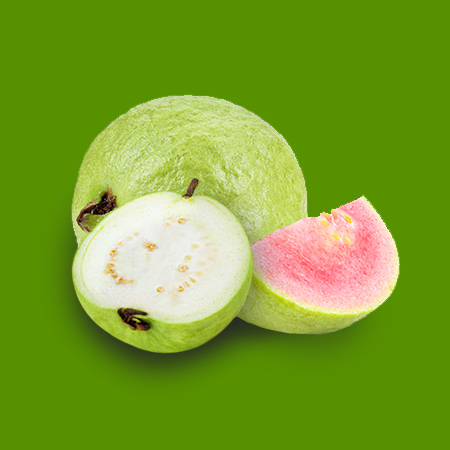 | White and Pink Guava Puree Zeus India is a trusted exporter and supplier of premium White Guava Puree and Pink Guava Puree in India, catering to the growing demands of the... View product → |
Inspect, store and open aseptic guava puree correctly
At arrival, quarantine the drum until its identity, seal and documentation pass inspection. Aseptic packaging protects the puree only while the bag, liner and closure remain intact.
1. Check the drum for leaks, swelling, punctures, rust, damaged seams and a broken closure. Match the label to the purchase order, including product type, net weight, batch or lot number, production date and best-before date.
2. Request the lot-specific certificate of analysis for guava puree for bulk buyers. It should report °Brix, pH, acidity, colour or appearance, viscosity where relevant, microbiology, packaging integrity and traceability to the fruit lot. Compare colour against the agreed L*a*b* values or retained sample, not a catalogue photograph.
3. Store unopened drums under the supplier’s stated temperature, away from sunlight, heat and freezing. Record the received condition and sample the puree for aroma, browning, flavour, viscosity and coarse particles; acceptable microbiology does not prove that quality has not drifted.
4. Before opening, clean and sanitise the drum exterior, tools and connection point. Open it in a clean processing area, use the puree promptly, and prevent air, dirty utensils and splash-back from entering the pack.
Once opened, refrigerate it at the supplier’s specified temperature and finish it within the stated maximum-use time; never treat “aseptic” as permission for indefinite ambient storage.
Avoid the purchasing mistakes that appear during scale-up
A production trial can pass and the first commercial batch still drift if the approved sample was not production-equivalent. Thermal treatment, deaeration, refining and storage alter pink colour, aroma and viscosity, so approve a batch-identified sample through your actual beverage or food process.
| Mistake | What fails at scale | Control |
|---|---|---|
| Choosing by catalogue colour | Cultivar, maturity and heat exposure shift the finished shade | Request cultivar or source region, lot-specific L*a*b* values and a retained sample |
| Matching °Brix alone | Equal soluble solids do not guarantee equal aroma, acidity, pulp body or dilution history | Set pH, titratable acidity, viscosity, particle size and sensory limits |
| Approving a laboratory sample | The commercial line produces different colour, mouthfeel or flavour | Test a production-equivalent sample in the intended process |
| Checking microbiology only | Aseptic puree can remain microbiologically acceptable while browning or losing flavour | Define colour, flavour and viscosity limits at receipt and near intended shelf-life end |
| Assuming Bengaluru stock means local supply | A delayed or temperature-abused lot arrives with inadequate remaining shelf life | Confirm dispatch location, transport condition, lead time, minimum order and rejection contingency |
For white or pink guava puree for ingredient buyers in Bengaluru, record the approved lot, packaging format, single-strength or concentrate status, permitted additives and storage conditions on the purchase order. Do not accept “pink guava” or “white guava” as the complete specification.
Frequently asked questions
How do you choose between white and pink guava puree?
Choose white guava puree when the finished product needs a pale, neutral appearance. Choose pink guava puree when visible guava colour is part of the product effect. Compare flavour, mouthfeel and colour after processing, not only the puree name.
What should you specify when buying guava puree in bulk?
Set the required colour, soluble solids or Brix, acidity or pH, texture, seed and fibre tolerance, pack format, shelf life, microbiological limits and delivery conditions before requesting a quote.
How should you compare a guava puree supplier in Bengaluru?
Review lot-control practices, batch identification, certificates of analysis, traceability records, food-licence documents, aseptic packaging details and delivery arrangements to your Bengaluru facility.
How should aseptic guava puree be inspected and stored?
Check the outer pack, seal, batch code and visible damage on receipt. Store it under the supplier’s stated temperature conditions, keep the pack clean, and refrigerate or otherwise protect opened puree according to the agreed handling procedure.
What purchasing mistakes cause problems during scale-up?
Common failures include approving colour from a small sample, omitting Brix or acidity limits, accepting inconsistent lot documentation, ignoring opening and storage procedures, and scaling a formula without confirming the puree’s texture and process performance.