
A sauce manufacturer is not buying a generic fruit ingredient: the route from harvested guava to an aseptic bag determines colour, particle size, acidity, viscosity, shelf life, and production risk. By the end, you will know which specifications to request, how to formulate with white or pink puree, and how to assess a supplier’s delivery and quality controls.
Key takeaways
- Check maturity, pulp texture, colour, Brix, acidity, and microbiological limits.
- Match white guava puree to pale recipes and pink guava puree to coloured sauces.
- Define heat treatment, packaging, storage, and batch documentation before buying.
- Use pilot trials to confirm flavour, viscosity, colour, and process performance.
From harvested guava to an aseptic delivery
Guava moves from farm to factory through a controlled chain: harvest, sorting, pulping, refining, heat treatment, aseptic filling, and ambient distribution. Fruit is picked at the processor’s required maturity, then inspected for damage, foreign material, colour, and ripeness before processing.
- Sorting removes underripe, overripe, mouldy, and damaged fruit; poor raw material can create weak flavour, dark colour, or unstable texture.
- Pulping separates flesh from peel, seeds, and fibrous tissue. Refining then controls particle size, because surviving seed fragments can block a narrow filling nozzle or fail a consumer strainer even when the puree looks smooth in a spoon.
- The processor checks soluble solids, acidity, colour, viscosity, and hard-particle or seed-fragment limits against the purchase specification. “Puree” alone does not identify the Brix or fruit-equivalent content.
- A validated heat process treats the puree. For an acidified product, pH alone does not prove commercial sterility; the process authority must account for viscosity, particle size, holding time, fill temperature, container dimensions, and the package’s coldest point.
- The hot product enters a sterilized flexible bag, which is sealed inside a drum, tote, or box. The intact aseptic pack then travels through storage, export, and delivery without refrigeration under the processor’s validated conditions.
- At the sauce or recipe manufacturer, inspect the bag, seal, lot code, and retained sample before opening. Once opened, guava puree for sauce and recipe manufacturers becomes a perishable ingredient and needs hygienic handling, controlled refrigeration, and a defined use-by period.
The purchase specification behind the word puree
A supplier quote for “guava puree” is not comparable until you define what the word means in your recipe. Puree, pulp, nectar base, and concentrate are different purchasing categories, and suppliers can adjust soluble solids by blending fruit lots, water, or concentrate.
1. Specify the fruit identity and appearance: pink or white flesh, cultivar or fruit type where known, instrumental colour target or visual reference, aroma, and flavour profile. “Pink guava” does not guarantee one colour intensity, and white guava can still produce a coloured puree.
2. Set composition limits: declared soluble solids in degrees Brix with a tolerance, pH and titratable acidity, viscosity at a named test temperature, finisher or screen size, and limits for seeds, fibre, and stone-like particles. State whether pH means the finished product’s equilibrium pH; above 4.6, with water activity above 0.85, changes U.S. thermal-process controls.
3. Define the delivery condition: aseptic, frozen, or refrigerated; package size; and sterilized flexible bag, drum, tote, or box format. For aseptic material, require an intact seal and validated shelf-life conditions rather than assuming ambient storage from the product name.
4. Calculate fruit-equivalent content before replacing another fruit ingredient. Compare the actual Brix-to-acid ratio, not nominal puree weight, then run a retained-sample trial through your production heat and shear process. A laboratory match can fail after cooking when particle size, viscosity, or heat history differs.
How to formulate guava puree into sauces and recipes
Set a fruit-equivalent target before changing the formula. Guava puree is not a fixed-strength ingredient: calculate contribution from its declared Brix, then reduce other fruit, water, and sugar to preserve the intended solids and sweetness. Do not replace another puree gram for gram by product name alone.
1. Weigh the puree into a pilot batch and subtract its water contribution from the recipe’s added water. Recheck total soluble solids after blending; a higher-Brix puree needs more water, while a dilute puree needs less.
2. Adjust sugar against measured Brix and sensory sweetness, not colour or aroma. Guava’s fragrance can make a sauce taste sweeter than its analysis suggests.
3. Set acidity on the finished, cooked sauce. Measure equilibrium pH and titratable acidity, then add citric, malic, or another specified acid in controlled increments. Keep the validated process in view: pH 4.6 is the key boundary for acidified versus low-acid controls.
4. Rebalance salt, chilli, ginger, garlic, and other seasonings after the guava addition. Fruit aroma can soften spice impact, while extra acid can sharpen salt and heat.
5. Measure viscosity at the serving temperature after the real cook, cooling, and shear cycle. Guava puree for sauce manufacturers may supply body through pulp and fibre, so reduce starch, pectin, or gum before adding more; verify hydration order and prevent lumps.
Run the trial with the approved puree, retain a sample, and compare fruit content, Brix, pH, viscosity, colour, and flavour after processing. A laboratory blend can fail in production.
Choosing white or pink guava for the finished product
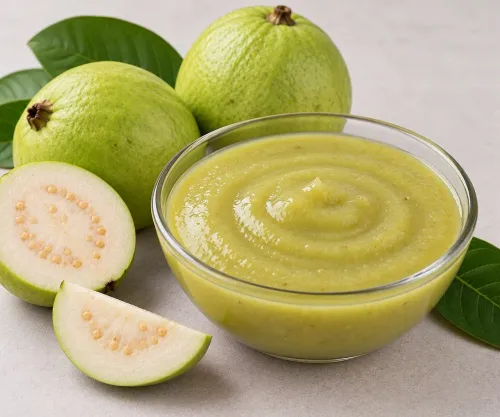
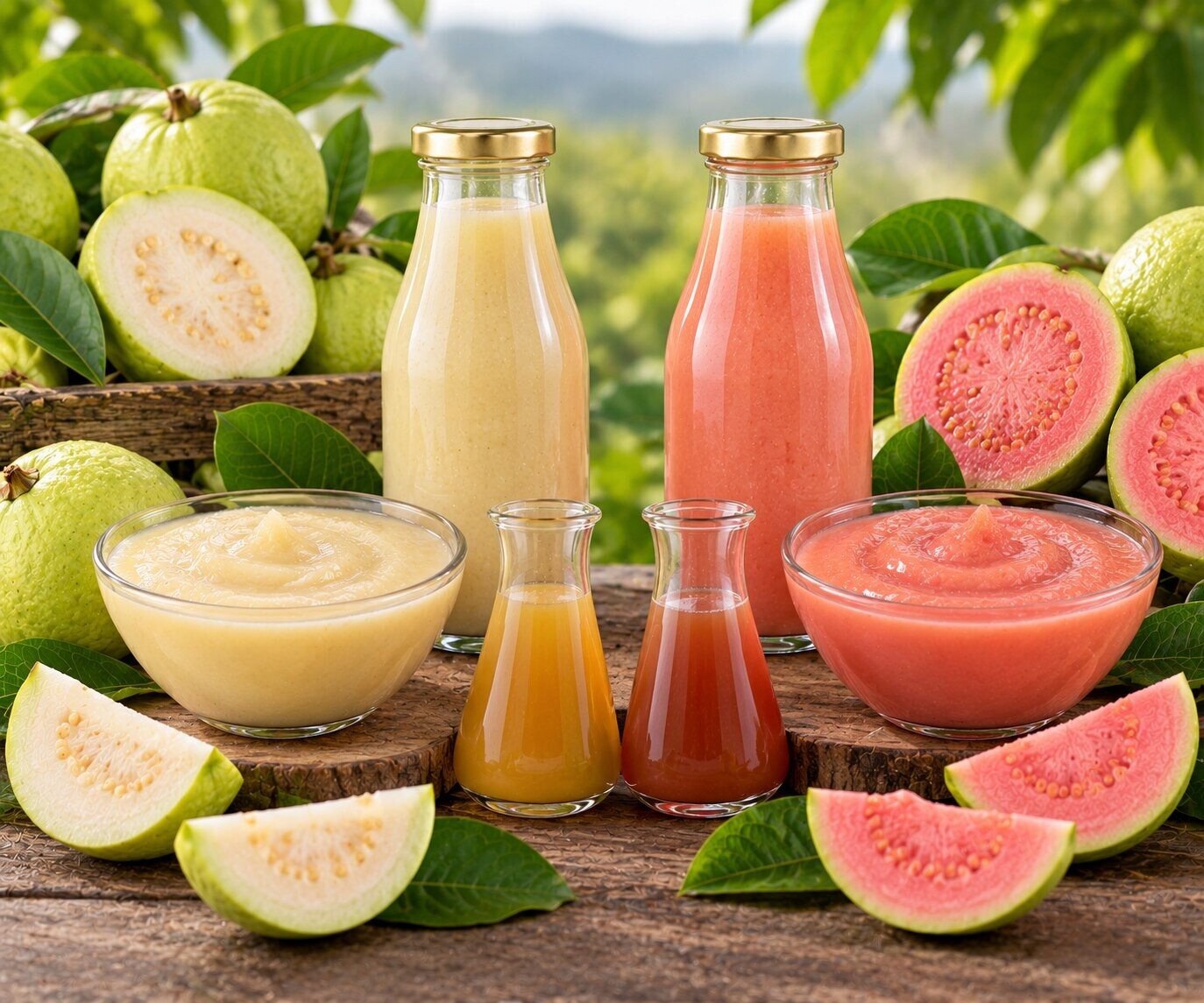
White guava puree for recipes performs better when the finished product needs a pale base, restrained colour contribution, or a delicate guava aroma. It suits creamy dressings, light dessert fillings, beverage bases, and recipes where pink colour would make the product look unintended.
Pink guava puree for sauces creates the stronger visual and flavour statement when a pink-to-red appearance and characteristic guava taste should remain obvious after cooking.
| Option | What it contributes | When it applies |
|---|---|---|
| White guava | Pale colour, softer visual impact, often a lighter aromatic profile | Use in pale sauces, fillings, dressings, and mixed recipes where other ingredients must retain their colour |
| Pink guava | Pink-to-red colour and more recognisable guava character | Use in barbecue sauces, dipping sauces, chutneys, and dessert sauces where fruit identity must stand out |
Do not approve either choice by colour name alone. “Pink guava” does not define one fixed colour or flavour intensity, and white flesh can still produce a noticeably coloured puree after ripening, oxidation, heat exposure, or storage.
Specify the fruit type or cultivar when possible, then add an instrumental colour target, a retained visual reference, or both.
Compare samples in the finished sauce, not only in the delivery bag. Cooking, acidity, spices, and thickeners can shift the final shade and hide delicate aroma; a colour target and flavour description prevent a supplier from meeting the label while changing the product on the plate.
Turning a puree specification into a dependable supply
Approve a supplier against a written specification, not the word “puree.” Set a Brix tolerance, fruit-equivalent target, viscosity range, colour description, particle-size limit, acidity, and finished-equilibrium pH requirement. State whether you are buying puree, pulp, nectar base, or concentrate.
Request these records and samples before release:
- A certificate of analysis for each lot, including Brix, pH, viscosity, and microbiological results
- A retained sample from the approved lot for colour, aroma, texture, and cooking comparison
- Aseptic-process and package specifications for the sterilized bag, drum, tote, or box
- Process-authority documentation for any acidified finished sauce, including particle size, fill temperature, holding time, container dimensions, and cold-spot validation
Run the retained sample through your actual cooker, mixer, pump, and filling line. A different Brix-to-acid ratio, fibre level, or heat history can change viscosity and flavour after processing. Record the approved source, lot, and specification revision; require a new application trial before accepting a material change.
For an acidified sauce, do not treat a low incoming-puree pH as proof of safety. Confirm the finished equilibrium pH and scheduled process; pH above 4.6 with water activity above 0.85 triggers low-acid controls in the United States.
Inspect every aseptic bag for swelling, leaks, wet cartons, and broken seals. After opening, refrigerate the puree under hygienic controls and follow the supplier’s stated post-opening hold time—not the unopened shelf life.
A buyer comparing Zeus India Enterprise with another source should apply these same tests to both, rather than award approval on origin or product name.
Related product
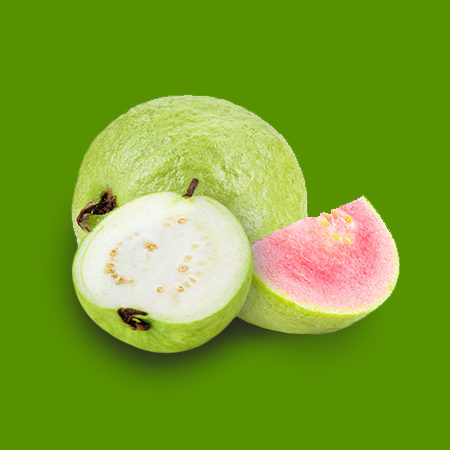 | White and Pink Guava Puree Zeus India is a trusted exporter and supplier of premium White Guava Puree and Pink Guava Puree in India, catering to the growing demands of the... View product → |
Frequently asked questions
How does guava become an aseptic puree delivery?
Processors harvest guava at the required maturity, sort it, remove foreign material and damaged fruit, pulp and refine it, apply heat treatment, then fill the puree aseptically for ambient distribution.
What should a guava puree purchase specification include?
Specify fruit variety or colour, Brix, acidity or pH, pulp texture, colour, flavour, seed and fibre limits, microbiological criteria, packaging format, shelf life, storage conditions, and batch documentation.
How do you formulate guava puree into sauces and recipes?
Run pilot batches to balance puree with water, sugar, acid, salt, spices, stabilisers, or other ingredients, then verify viscosity, flavour, colour, pH, thermal process, and finished-pack stability.
When should you choose white or pink guava puree?
Choose white guava puree for pale sauces, fillings, beverages, and recipes where a light appearance matters. Choose pink guava puree when you want a stronger pink colour and more visible guava identity.