
A drum marked “white pink guava puree” does not define the solids, acidity, particle size, colour tolerance, or handling method your production line will receive. By the end, you will know how to specify the puree, inspect the aseptic pack, store and discharge it safely, and compare a supplier’s documentation before placing a bulk order.
Key takeaways
- Attach a signed specification covering colour, cultivar, Brix, acidity, and microbiological limits.
- Confirm the aseptic bag, drum, closure, seals, and identification label before accepting delivery.
- Store drums under the supplier’s stated conditions and inspect seals before opening.
- Choose white or pink guava puree by colour, flavour, texture, and finished-product requirements.
Define the puree before comparing drums
Attach a signed product specification to the order; “white” or “pink” alone is not an acceptance standard. “White pink guava” describes a commercial colour or cultivar, not a globally uniform composition.
1. State the product identity: white guava puree, pink guava puree, single-strength puree, concentrated puree, or a formulation adjusted with sugar, water, or another permitted ingredient.
2. Set soluble solids in °Brix and name the test method and measurement temperature. °Brix is not fruit percentage, so specify both the puree’s fruit content and any permitted added ingredients.
3. Define acidity using pH and, where relevant, titratable acidity. Add the acceptable colour range using an instrumental method such as L*, a*, and b* values or an approved physical reference standard.
4. Describe the sensory profile: guava aroma, flavour intensity, sweetness, colour tone, viscosity, and acceptable separation. Specify seed, stone, skin, and other insoluble-particle limits, including the screening method and tolerance.
5. List allergens, additives, preservatives, and microbiological criteria, then identify the intended use if particle size or screening affects the formulation.
For white guava puree bulk packaging, keep the product specification separate from the pack specification. The purchase document should state net weight, aseptic liner and drum format, fitment type, and the required batch and shelf-life information; those details prevent a visually suitable puree from arriving in equipment your line cannot open or discharge.
For a white pink guava puree aseptic bag in drum order, make every range an acceptance criterion and require the supplier to confirm it on the batch certificate. Reject colour names without measured limits.
What the aseptic bag-in-drum system must include
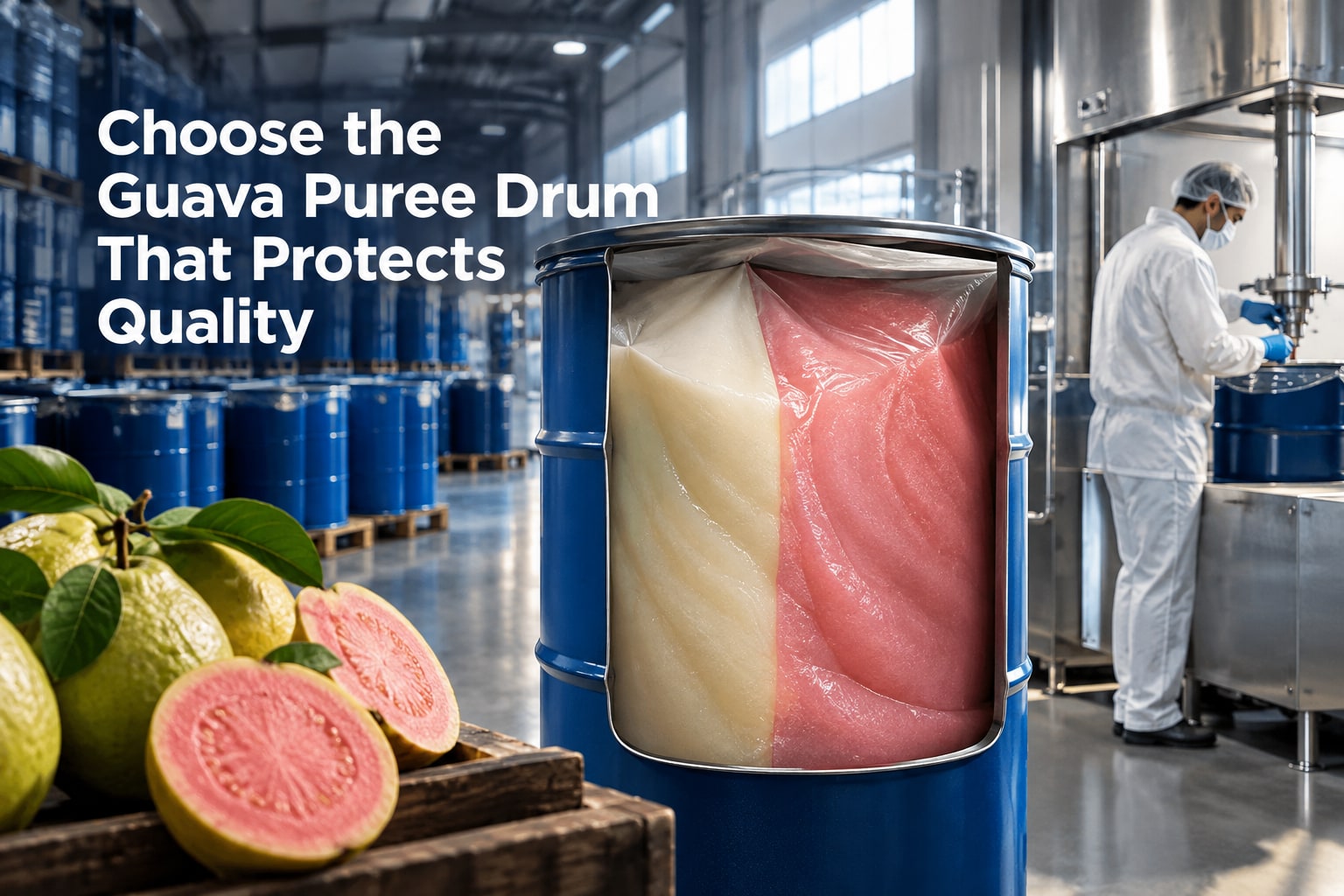
A guava puree aseptic bag drum is safe only when processing, filling, sealing, identification, and transport protection work as one validated system. The puree receives a scheduled commercial-sterilisation treatment, then controlled cooling before entering a pre-sterilised bag.
The filler makes a hermetic seal; an intact drum alone cannot correct a failed heat process or contaminated fitment.
For aseptic guava puree packaging, confirm these items before accepting a shipment:
- A documented time-temperature schedule based on the puree’s actual equilibrium pH and formulation. Do not assume guava is an acid food: a finished pH above 4.6 triggers U.S. low-acid canned-food controls, while acidified products at or below pH 4.6 follow a separate process.
- A food-contact bag specification stating liner materials, barrier construction, sterilisation method, seal design, and fitment type.
- A connector and outlet diameter that match your unloading equipment, with a written aseptic-opening procedure. Confirm whether discharge uses gravity, air pressure, or a sanitary pump.
- A rigid, clean transport drum that supports stacking and shields the liner from punctures, corner impact, and fitment damage. Record drum capacity, net weight, dimensions, pallet pattern, and handling limits.
- A permanent lot code, production date, best-before date, and traceability record on both bag and drum.
- Seal and fitment inspection results, plus validated storage and transport limits. Heat exposure can darken puree, alter flavour and viscosity, and weaken packaging without visible spoilage.
Receiving, storing, and opening a drum without compromising it
Treat every guava puree aseptic bag drum as unreleased until its identity, condition, and connection method match the purchase specification. A clean-looking drum does not prove that the aseptic guava puree packaging remained sterile.
1. Match the drum label to the purchase order and batch documents. Check product variant, lot number, net weight, production date, use-by date, storage instruction, and seal or closure identification.
2. Inspect the drum before moving it to production. Reject or quarantine units with bulging, dents at the fitment area, wetness, puree residue, broken seals, punctures, torn outer packaging, damaged corners, or scrape marks showing that the drum was dragged or dropped.
3. Confirm that transport and warehouse records show compliance with the processor’s validated storage range. Keep drums dry, protected from direct heat and sunlight, upright as specified, and within the approved pallet-stacking pattern. Do not freeze unless the product specification explicitly permits it.
4. Verify the outlet fitment, diameter, connector material, gasket, and cap against the receiving line. Confirm whether discharge uses gravity, air pressure, or a sanitary pump; a mismatched connector can damage the liner or introduce contamination.
5. Before opening, clean and sanitise the work area and external fitment. Remove the cap without touching the sterile outlet, follow the supplier’s aseptic-opening sequence, and connect only a verified sanitary hose or pump.
Record the opening time and batch number. Use the liner within the stated post-opening window, then isolate and dispose of the empty bag under your site’s food-contact waste procedure.
Match white and pink guava puree to the finished product
Choose the puree by the finished product’s colour target, aroma, and flow requirement, not by the cultivar name alone. “White” and “pink” are commercial descriptions, so set an instrumental colour range or approved reference sample before ordering.
| Option | Colour and flavour | Texture and screening | Best-fit formulations |
|---|---|---|---|
| White guava puree | Cream to pale yellow; delicate, floral guava aroma with a clean, mild finish | Usually smooth when refined, but seeds and fibre still require a defined screen and residue limit | Clear or lightly coloured beverages, drinking yoghurt, ice cream, custards, pale sauces, and fillings where colour control matters |
| Pink guava puree | Pink to salmon; more visibly fruity and aromatic, with colour that can shift during heat, oxygen exposure, or storage | The pigment does not remove seed or fibre risk; specify screen size, visible-particle tolerance, and viscosity | Smoothies, nectars, flavoured milk, yoghurt, desserts, bakery fillings, fruit sauces, and products designed to show guava colour |
Compare samples at the intended dilution and processing temperature. A puree that pours well from a drum can become too thick in a beverage base or too loose in a filling; record viscosity or flow behaviour alongside °Brix, acidity, and equilibrium pH.
For white guava puree bulk packaging, confirm that the pale colour will not expose dark specks or coarse fibre. For a pink guava puree industrial drum, test colour retention after pasteurisation and storage before approving the finished formula.
If a sauce, dairy product, or dessert needs a uniform appearance, use the same screen and blending conditions in the sample trial.
Use documentation to choose the right bulk supplier
Choose the supplier whose paperwork lets you connect each pink guava puree industrial drum to a defined product, process, and claim.
| Document or confirmation | What to check | Why it matters |
|---|---|---|
| Certificate pack | HACCP and ISO 22000, FSSC 22000, or BRCGS certificate; verify site scope, issuing body, and expiry date | A certificate for another factory does not validate your drum |
| Batch records | Commercial-sterilisation time and temperature, cooling record, aseptic-fill record, seal or integrity check, batch code, and microbiological release result | A sealed bag can still spoil if processing or filling failed |
| Product specification | °Brix, pH, titratable acidity, viscosity, colour method or instrumental range, flavour, odour, foreign matter, seed or fibre limit, and sampling method | “White pink” is not a globally uniform grade |
| Pack specification | Bag material and capacity, drum material, net weight, dimensions, pallet pattern, fitment type, outlet diameter, connector material, and opening instructions | An incompatible connector can stop a sanitary unloading line |
| Commercial terms | Minimum order quantity, lead time, shelf life at dispatch, storage temperature, Incoterm, payment terms, freight responsibility, and claim window | Short remaining shelf life can erase the apparent price advantage |
Request a representative sample in the proposed pack specification, then test colour, flow, screening residue, flavour, and performance in your actual beverage, dairy, sauce, or filling process. Ask whether discharge uses gravity, air pressure, or a sanitary pump.
Before ordering a white pink guava puree aseptic bag in drum from Zeus India Enterprise, require a signed specification, recent batch COA, sample approval record, and a written fitment confirmation. Reject any offer that cannot identify the manufacturing site, batch, seal controls, or transit-damage claim procedure.
Related product
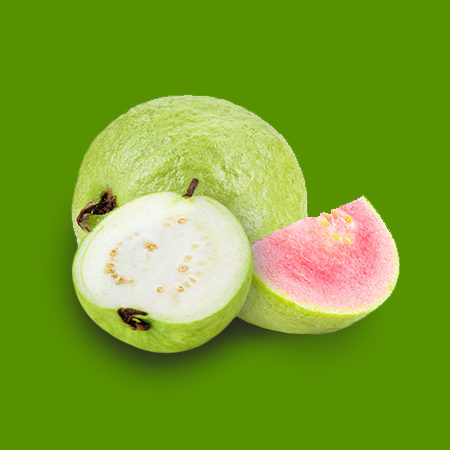 | White and Pink Guava Puree Zeus India is a trusted exporter and supplier of premium White Guava Puree and Pink Guava Puree in India, catering to the growing demands of the... View product → |
Frequently asked questions
What should a buyer define before comparing guava puree drums?
Define the guava type, colour range, Brix, acidity, texture, seeds, microbiological limits, processing requirements, and pack size in a signed product specification.
What must an aseptic guava puree bag-in-drum system include?
Check for a food-contact aseptic bag, compatible drum, secure closure, intact tamper evidence, batch identification, net weight, production date, and storage instructions.
How should you receive and store a drum of guava puree?
Inspect the drum, bag connection, seals, label, and visible damage at receipt. Store it under the supplier’s stated temperature and handling conditions, then clean the opening area before use.
How do white and pink guava puree differ in finished products?
Compare their colour, aroma, flavour intensity, acidity, texture, and appearance after processing against the requirements of the beverage, dessert, sauce, or other finished product.
Which documents should you request from a bulk guava puree supplier?
Request the signed product specification, certificate of analysis, batch or lot traceability, allergen statement, ingredient declaration, food-safety documentation, and transport or storage records.