
A London beverage plant receives Alphonso puree through a controlled chain: seasonal fruit processing in India, aseptic packing, international freight, UK import clearance and final delivery to the production site. By the end, you will know what arrives, how to verify it, how much to use in a drink and which documents and specifications to demand before approving a shipment.
Key takeaways
- Plan inventory around India’s seasonal Alphonso harvest.
- Store unopened aseptic packs cool, dry and protected from damage.
- Calculate puree by finished-drink percentage and target fruit content.
- Check batch, shelf-life, origin and import documents before clearance.
From seasonal Indian fruit to a London beverage plant
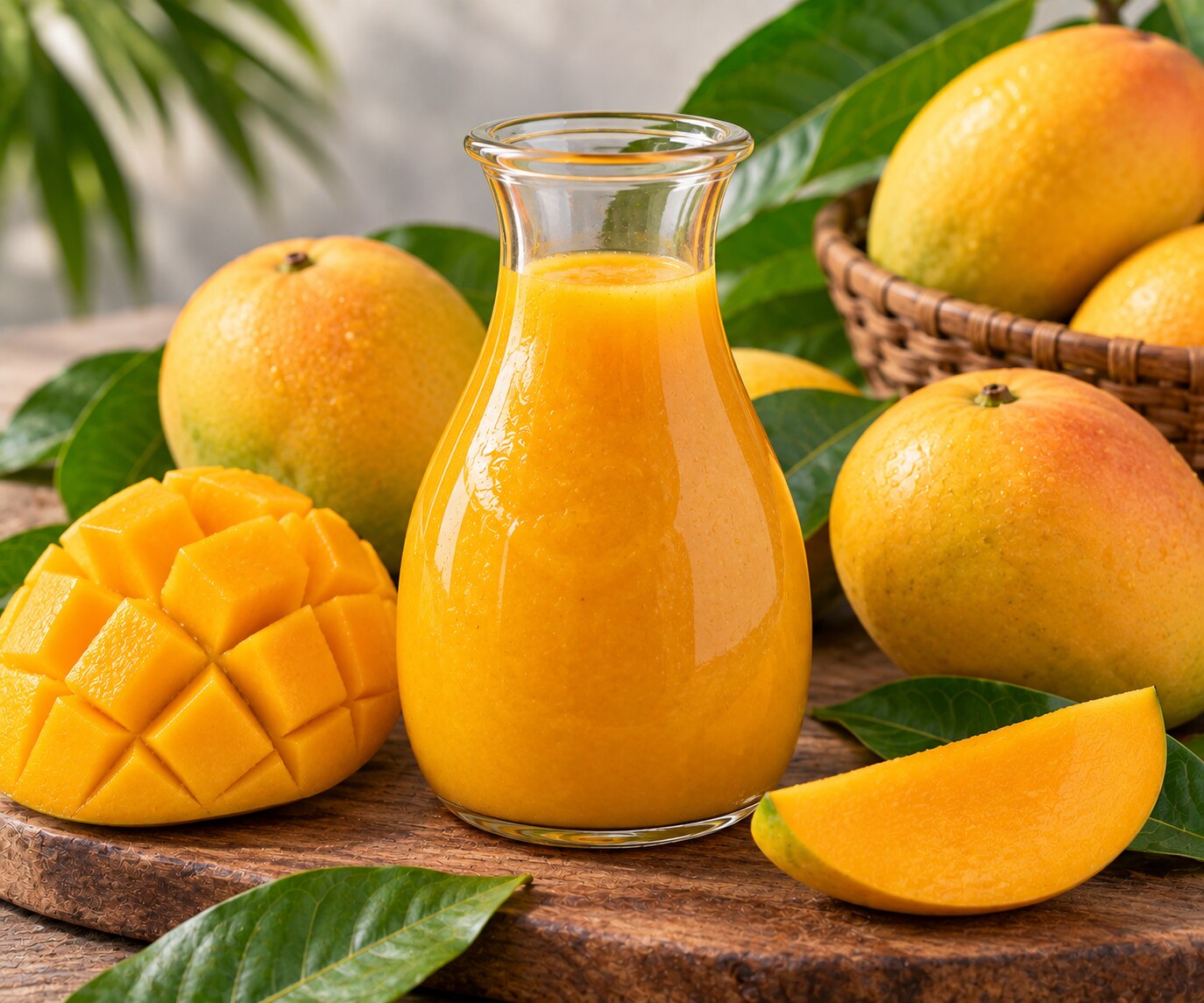
Indian Alphonso fruit is harvested during a concentrated spring season, so a year-round mango puree supply London programme depends on processing, aseptic packing, inventory planning and reserved batches—not a continuous flow of freshly picked mangoes.
1. The producer sorts and prepares ripe Alphonso mangoes, removes the skin and stone, and finely comminutes the edible flesh into puree. The product is then commercially sterilised or aseptically processed and filled into sterile bags inside drums or boxes.
2. The exporter prepares the commercial invoice, packing list, transport documents, product specification, batch records and certificates requested by the buyer. The specification must state shelf life, storage conditions, Brix, acidity, pH, preservative status and ingredient declaration.
3. The sealed ambient-stable packs travel by ocean freight for planned replenishment or by air freight when production timing demands it. Frozen transport is unnecessary while the validated aseptic package remains unopened and within its stated conditions.
4. At the UK border, the importer checks the commodity classification, customs entry, food documentation and any applicable controls. Do not assume that processed puree follows fresh-mango plant-health rules; verify current Great Britain guidance for the product’s processing and presentation.
5. The importer remains legally responsible for compliance with Great Britain food law, even when the overseas processor supplies export or private-quality certificates. After clearance, a haulier delivers the batch to the London beverage plant, where the team checks seals, batch identity and condition before release to formulation.
A beverage manufacturer buys puree for dilution or blending, not as a ready-to-drink base. An Alphonso mango puree supplier for London beverage producers must therefore support a specification that works with the plant’s pumps, dosing system and finished recipe.
What arrives in the aseptic pack—and how you store it
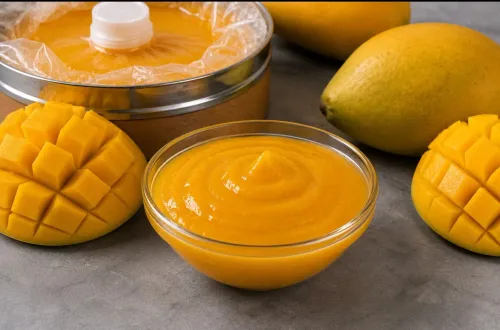
A sealed aseptic bag keeps commercially sterilised Alphonso puree stable during ambient transport, provided it remains unopened and the shipment follows the supplier’s validated storage specification. The bag sits inside a food-grade drum or corrugated case; the outer container protects it from puncture, crushing and light.
At receipt, place the consignment on hold until you complete these checks:
- Match the product name, lot number, net weight and best-before date with the purchase order and certificate of analysis.
- Inspect the drum or box for dents, wet patches, swelling, broken closures or torn seams.
- Confirm that the inner bag and aseptic fitment are intact; reject or quarantine any leaking or tampered unit.
- Record the lot, quantity, receiving date and warehouse location for traceability.
Store unopened packs in a clean, dry warehouse at the temperature stated on the product specification. Keep them off the floor, away from direct sunlight, heat sources, chemicals and pest-prone areas. Use lot rotation rather than opening a newer batch while an older one remains available.
Aseptic protection ends when the bag is opened. Before production, agree the post-opening life, refrigeration requirement and dispensing procedure in writing. Refrigerate opened puree if the specification requires it, use sanitised equipment, minimise air exposure and label the bag with its opening time.
For bulk alphonso puree uk receipts, quarantine any shipment whose storage condition, seal or lot identity cannot be verified. Do not return an opened bag to ambient storage.
How to calculate puree for juice drinks, smoothies and RTD products
Use the finished batch size, not the number of retail packs, as your starting point. For 10,000 litres of drink at 15% mango fruit content, the first estimate is 1,500 litres of puree, adjusted for density and production loss.
1. Calculate fruit content: puree required = finished batch mass × target fruit percentage. If the specification says 20% mango by weight in a 5,000 kg batch, weigh 1,000 kg of Alphonso puree. Add a measured process allowance, such as 2%, for line hold-up and transfer loss.
2. Check Brix separately. For a puree at 18°Brix and a drink target of 12°Brix, the puree-only dilution estimate is 12 ÷ 18 = 0.667; 667 kg of puree and 333 kg of water produce about 1,000 kg before sugar, acids and other ingredients.
Recalculate after adding sugar or fruit concentrates because their soluble solids raise final Brix.
3. Balance acidity by mass, not pH alone. Required acid = target titratable acidity in the finished batch minus the acidity contributed by puree and other acidic ingredients. Confirm the result with a calibrated pH and titratable-acidity test; pH controls microbial and sensory performance, while acidity measures acid quantity.
4. Convert the batch to packs: sellable units = finished litres ÷ fill volume. A 250 ml serving yields 40,000 nominal servings from 10,000 litres before losses.
Alphonso mango puree for beverage manufacturers is thicker and more fibrous than mango juice. Validate pumps, dosing accuracy and sedimentation before approving alphonso puree for commercial drinks.
How Alphonso compares with concentrate, Totapuri and mango preparations
Alphonso mango puree for beverage manufacturers is the strongest fit when ripe mango aroma, colour and a fuller mouthfeel matter more than maximum soluble solids. It is not a ready-to-drink base: its fibre and suspended tissue require suitable pumps, controlled dosing and a recipe check for sedimentation.
| Option | Flavour and solids | Dilution and processing | Label impact |
|---|---|---|---|
| Alphonso puree | Distinctive sweet aroma; viscous, fibre-containing solids | Add water, sweetener and acid; check pumps, filtration and settling | Verify added sugar, acidulants, preservatives, colour and flavour |
| Mango concentrate | More soluble solids per kilogram; flavour can be less fresh after concentration | Requires greater dilution; heat history and target Brix need checking | Ingredient declaration reflects the concentrate and any additions |
| Totapuri puree | Firmer, more acidic profile with less pronounced Alphonso aroma | Useful in economical blends; fibre and viscosity still affect dosing | Usually a simpler fruit ingredient, subject to its specification |
| Mango preparation | Formulated blend containing ingredients such as sugar, acid, stabiliser or flavour | Fastest route to a defined texture or sweetness; fewer formulation steps | Adds declaration and claim consequences for every included component |
Choose concentrate when freight efficiency and high-solids dosing dominate. Choose Totapuri for cost-controlled mango character, and a preparation when consistency or texture outweighs a short ingredient list. Choose Alphonso puree for a premium sensory profile, then validate pH, Brix, thermal process, preservative effectiveness and sedimentation in the finished drink.
“Natural” and “no added sugar” claims require documentary confirmation, not the fruit name alone.
The London buyer’s specification and import-clearance checklist
Do not release a drum on the certificate of analysis alone. Match the lot number, production date, best-before date, pack count and seal number across the supplier file and freight documents before booking the ingredient into production.
| Document or check | What to reconcile | Release failure |
|---|---|---|
| Supplier records | Specification, signed CoA, allergen statement, ingredient declaration, process and shelf-life record | Brix, pH, additives or storage conditions differ from the approved specification |
| Shipment records | Commercial invoice, packing list, bill of lading or air waybill, lot numbers and seal records | Quantity, identity or traceability cannot be proved |
| UK import file | GB EORI, commodity code, customs declaration on CDS, origin evidence and duty calculation | The entry cannot be matched to the physical shipment |
| Food-law checks | Importer-of-record review, traceability contact and any IPAFFS, health-certificate or border-control requirement triggered by the classification | Clearance or legal compliance remains unresolved |
Complete these checks before release:
- Confirm the overseas processor’s legal name, site address, batch record, recall contact and one-step-back traceability.
- Verify that the aseptic pack is intact, dry and undamaged, with legible lot and best-before markings.
- Test or review Brix, pH, acidity, colour, viscosity and sensory results against agreed limits.
- Confirm “no added sugar” and “natural” claims only after checking sugar, acidulants, preservatives, colour, flavour and processing aids.
- Reserve the batch against finished-product records so mango puree supply London remains traceable into every drink run.
Zeus India Enterprise can be assessed as an Alphonso mango puree supplier for London beverage producers by asking for this complete evidence pack, not by relying on marketing claims. That discipline matters when planning bulk Alphonso puree UK volumes around a seasonal crop.
Related product
 | Alphonso Mango Puree Zeus India is a trusted exporter and supplier of premium Alphonso Mango Puree in India, known for delivering rich taste, natural aroma, vibrant... View product → |
Frequently asked questions
How does Alphonso mango puree reach London beverage producers?
Indian Alphonso mangoes are processed during the seasonal harvest, packed aseptically, shipped to the UK and released into production against planned inventory and reserved batches.
How should aseptic Alphonso mango puree be stored?
Keep unopened aseptic packs in a cool, dry warehouse away from direct sunlight, freezing temperatures, heat sources and pallet damage. Follow the supplier’s stated storage temperature and use-by date.
How much Alphonso puree is needed for a commercial drink?
Calculate the quantity from the finished beverage volume and the specified puree percentage. For example, a 10% puree formula requires 100 litres of puree for 1,000 litres of finished drink before process losses.
How does Alphonso compare with mango concentrate and Totapuri?
Puree retains mango pulp and requires less dilution than concentrate. Alphonso is selected for its distinctive aroma and flavour, while Totapuri is commonly assessed for cost, acidity, colour and formulation performance.
What should London buyers check before importing Alphonso puree?
Request the product specification, certificate of analysis, batch and lot details, shelf-life statement, country-of-origin information, commercial invoice, packing list and transport documents. Confirm the UK import and food-safety requirements for the product and shipment.