
Batch inconsistency starts before pulping: cultivar, maturity, harvest delay and fruit sorting all change colour, acidity, solids and texture. By the end, you will have a practical framework for receiving fruit, controlling the process, comparing supplier records and locating the point where batches begin to diverge.
Key takeaways
- Define limits for colour, pH, soluble solids, viscosity and microbiology.
- Sample each fruit lot using a documented, representative sampling plan.
- Record heat, time, pulp, particle size and storage conditions by batch.
- Trend results by lot, line and storage history to catch process drift.
Define consistency before trying to control it
Guava puree batch consistency means every lot stays within agreed limits for colour, flavour, pH, soluble solids, viscosity, pulp, particle size and microbiological results. Set each limit against a reference batch, because a white pink guava puree manufacturer cannot control a product defined only as “pink” or “smooth.”
| Measure | Practical specification | Control point |
|---|---|---|
| Soluble solids | Target °Brix ±0.5 | Calibrate the refractometer and measure a mixed sample |
| pH | Target ±0.10 | Use the same temperature and electrode procedure |
| Colour | L*, a*, b* targets; ΔE no greater than 3 | Standardise dilution, lighting and instrument |
| Viscosity | Target ±15% | Specify spindle, speed, temperature and test time |
| Pulp and particles | Pulp target ±10%; maximum particle size in millimetres | Use a defined sieve or image method |
| Microbiology | Validated process and package-release limits; pathogens absent in the specified test portion | Do not substitute one finished-sample result for process control |
The largest raw-material differences come from cultivar identity and the ratio of white- to pink-fleshed fruit. Maturity changes °Brix, acidity, aroma, colour and softening; weather, harvest date, field sorting, seed load, peel carryover and the delay before pulping change yield and texture. Record lot identity, maturity, defects and harvest-to-processing time.
Mixing cultivars or maturity stages without a fixed formulation can produce different colour and viscosity even when °Brix matches.
Control the fruit lot and take representative samples
A white pink guava puree manufacturer for reducing batch inconsistency must treat each incoming fruit lot as a controlled identity, not merely a delivery. Define the lot by supplier, cultivar, origin, harvest date, delivery date and storage history. Keep white- and pink-fleshed fruit separate unless a documented blend ratio has been validated.
Hold the lot until receiving checks confirm:
- Maturity or ripeness, minimum and target °Brix, pH or titratable acidity
- Flesh colour, aroma, firmness and absence of fermentation
- Defect levels, mould, bruising, foreign material and decay
- Seed load, peel condition and the maximum time from harvest to processing
A °Brix-only acceptance test will let fruit with different flavour, acidity and texture enter the same formulation. Reject or segregate fruit outside the limits, then record the decision against the raw-material lot.
Sample from randomly selected bins or pallets at the front, middle and rear of the delivery, taking increments from different depths rather than only the surface. Inspect increments separately for defects; combine equal portions into a composite sample for °Brix, pH, acidity, colour and texture testing, while retaining extreme samples for investigation.
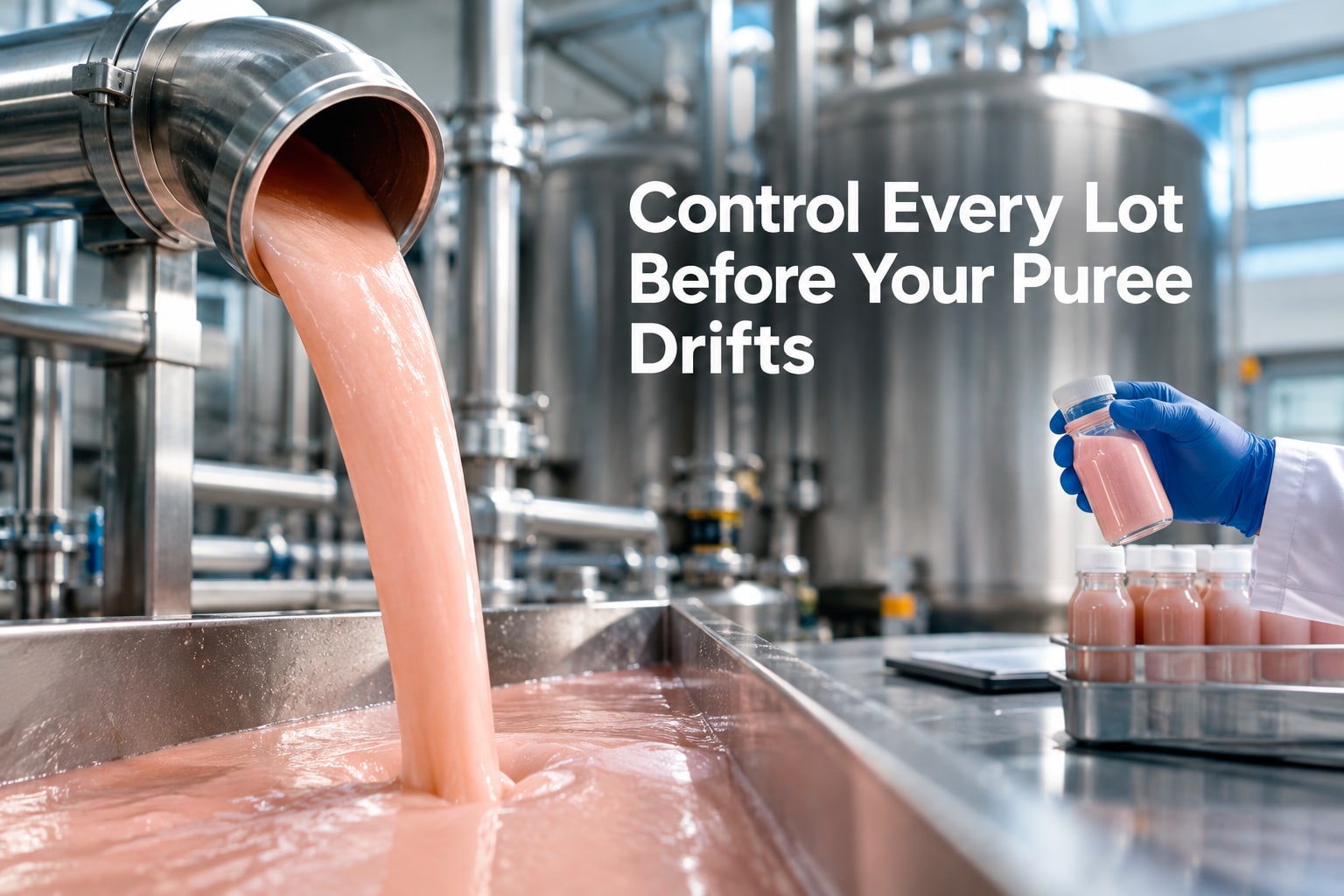
Use the same principle after pulping: sample the tank at top, middle and bottom, then take finished aseptic bags across the filling sequence. Testing one convenient container can conceal settling, screen-related fibre changes or a late filling problem.
Record every process variable that changes body, colour and safety
Operators keep guava puree batch consistency by recording settings and measured results at every point that changes texture, colour or microbial safety. Do not rely on the final °Brix alone.
| Process area | Record for every batch | Why it matters |
|---|---|---|
| Pulping | Fruit temperature, feed rate, pulper speed, screen size, yield, and seed or peel carryover | Changes pulp level, fibre and colour |
| Refining | Rotor speed, screen aperture, pressure, flow rate, and particle-size result | Alters smoothness, viscosity and sediment |
| Enzyme treatment | Enzyme name, lot, dose, addition time, temperature, pH and contact time | Pectinase can reduce viscosity and increase yield |
| Thermal process | Product formulation, initial temperature, flow rate, hold time, product temperature, pressure and scheduled process code | Heat penetration depends on viscosity, particles, package and equipment |
| Aseptic filling | Package size, sterilant concentration, sterilant temperature and exposure, fill temperature, fill mass, sterile-air pressure, line stops and seal results | Filling cannot correct an unvalidated heat process or a damaged seal |
Record screen changes as controlled deviations, not operator preferences. A new fruit formulation, particle-size distribution, viscosity, package or filler requires process-authority review before altering the validated thermal schedule.
Keep quality-release checks separate from safety verification. Release records can include °Brix, pH, acidity, colour, viscosity, pulp, seeds and sensory results; safety records must demonstrate the validated pathogen-reduction process, aseptic integrity and environmental controls. A passing finished-sample result does not replace process control.
Give ingredient buyers a specification they can audit
A usable specification for guava puree for ingredient buyers pairs every acceptance limit with a measured result, test method, sample point, and lot identity. It must cover both incoming fruit and finished puree; a °Brix-only specification cannot control flavour, colour, acidity, or viscosity.
Request the certificate of analysis (CoA) to show:
- Finished-product lot number, raw-material lot or blend, production date, pack date, net weight, pack format, storage conditions, and intended shelf life.
- Fruit cultivar or white/pink type, maturity, defect tolerance, seed load, and maximum time from harvest to processing.
- Sampling point and plan: fruit intake, homogenised tank, or finished aseptic bag. For a tote or tank, state whether the result came from a composite of multiple points.
- Specification range, actual result, units, test method, and laboratory or instrument identification for each test.
- Soluble solids in °Brix from a thoroughly homogenised sample, plus pH and titratable acidity.
- Colour values, pulp or suspended-solids level, particle-size limit, viscosity, yeast, mould, coliforms, and pathogen results such as Salmonella and E. coli.
- Viscosity conditions: sample temperature, preconditioning, shear rate, spindle or geometry, and whether the sample was stirred or homogenised.
A bulk guava puree supplier should also define validated storage and handling limits. Zeus India Enterprise gives buyers a practical benchmark to demand this evidence before comparing white and pink guava puree lots. Compare retained samples only after matching storage time and temperature history.
Related product
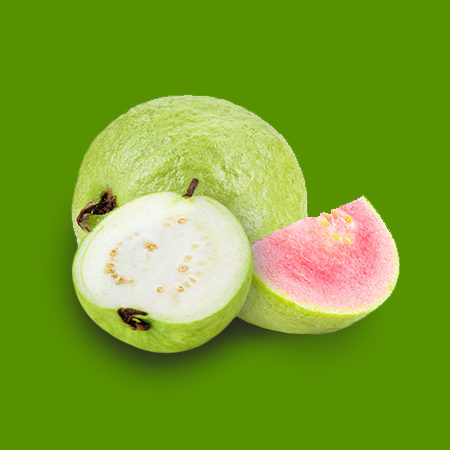 | White and Pink Guava Puree Zeus India is a trusted exporter and supplier of premium White Guava Puree and Pink Guava Puree in India, catering to the growing demands of the... View product → |
Trend drift by lot, line and storage history
A recurring shift is a trend, not a bad sample. A white pink guava puree manufacturer for reducing batch inconsistency should chart °Brix, pH, acidity, L*, a*, b*, viscosity and sensory scores against raw-material lot, cultivar, production line, pack date and storage history.
Plotting results in lot order reveals gradual drift; separating lines and cultivars shows whether the cause is fruit or equipment.
Investigate the pattern in this order:
- Compare white-fleshed and pink-fleshed lots separately; an identical °Brix does not prove identical aroma, pulp or texture.
- Compare each line’s refining, heating, filling and sanitation records with the first lot that moved outside the normal trend.
- Match buyer samples by pack date, container location and storage temperature; heat exposure, freezing and temperature cycling can create false differences in colour, separation and viscosity.
- Review the certificate of analysis for production lot, raw-material lot or blend, sampling point, test method and storage condition before blaming the process.
Separate quality release from microbial safety. Release testing can cover colour, °Brix, pH, acidity, viscosity, pulp, particles and flavour, while the validated thermal schedule, aseptic integrity checks and environmental controls protect safety.
Do not add heat merely to recover a sensory trend: it can flatten fresh guava flavour, and a passing finished-sample microbial result does not validate a failed process. A bulk guava puree supplier should state the validated storage range, handling instructions and maximum shelf life so comparisons remain fair.
Frequently asked questions
What does guava puree batch consistency include?
Define consistency with agreed limits for colour, flavour, pH, soluble solids, viscosity, pulp, particle size and microbiological results, using a reference batch.
How should a manufacturer sample guava fruit lots?
Use a documented representative sampling plan that covers the lot, records the lot identity and links test results to the finished puree batch.
Which process variables affect guava puree consistency?
Record variables such as fruit lot, heat treatment, processing time, pulp level, particle size, pH, soluble solids, filling conditions and storage history.
How can ingredient buyers audit a guava puree specification?
Request measurable limits, test methods, sampling points, batch records and microbiological results rather than accepting descriptions such as “pink” or “smooth”.