
A leaking liner, dented drum, swollen bag or blocked outlet can turn an otherwise usable puree shipment into a costly quarantine decision. By following a documented receiving check, controlled handling method and fault-by-fault troubleshooting process, you can separate transport damage from normal pulp behaviour, storage abuse and genuine product failure.
Key takeaways
- Quarantine drums with damaged seals, leaks, swelling or unexplained temperature exposure.
- Keep aseptic drums upright, dry and within the supplier’s stated storage temperature.
- Warm viscous puree under controlled conditions; never puncture or force a collapsed bag.
- Specify bag, drum, temperature, pumping and inspection requirements before shipment.
How to inspect and quarantine an Alphonso puree drum at receiving
Do not accept an aseptic bag in drum fruit puree shipment because the outer drum looks clean. Inspect every unit before unloading into released stock, and quarantine anything that could have damaged the sterile bag or altered the puree.
1. Match the delivery note to the drum label: product name, lot number, best-before date, gross weight and net weight. Photograph each label before moving the drum.
2. Examine the steel or plastic body, seam, chimes, lid and pallet for dents, punctures, abrasion, rust, crushed corners, broken stretch wrap or shifted loads. Do not roll, drag or fork a drum against the bag outlet.
3. Inspect the fitment, cap, liner seal and outlet area for leakage, tampering, looseness, staining, swelling or side-load damage. Never open a suspect drum to investigate it.
4. Record the arrival temperature and obtain the transport temperature record. Compare both with the supplier’s stated storage and transport limits; a reading below the specified minimum demands a disposition review because freezing can stress seams and fitments.
5. Confirm that the drum stands upright and stable, with no collapsed or displaced liner visible at the opening. Keep it isolated until the inspection record and photographs are complete.
Quarantine the unit immediately for leakage, swelling, broken seals, damaged fitments, severe chime deformation, missing identification, evidence of freezing, tampering or any temperature excursion outside specification. Label it “HOLD,” segregate it from released stock, and retain the drum, bag identification, weights, temperature history and photographs.
These records separate Alphonso puree shipment problems caused by transit or handling from genuine product defects.
How to unload, store and open a mango puree aseptic drum safely
Keep the drum upright, stable and protected from impact from unloading through connection. Good mango puree aseptic drum handling prevents a fork, chime or hose from transferring force to the bag and fitment.
1. Unload with a drum grab, drum trolley or properly secured pallet. Do not roll, drag, drop, tilt onto the outlet or lift by the fitment. Keep forks away from the drum wall, and move it across a clean, dry route.
2. Store it upright at the temperature range stated on the supplier specification. Keep it away from direct sunlight, heaters, standing water and condensation; follow the stated stacking limit and rotate stock by batch and best-before date.
3. Before opening, confirm the drum is stable and the fitment area is clean and undamaged. Do not open a leaking, swollen, punctured or badly deformed drum to investigate it; isolate it and record photographs, identification and temperature history.
4. Clean and sanitise the fitment and the mating connection using your plant’s validated procedure. Open the aseptic port only after the product line, clamps and tools are ready. An aseptic bag in drum fruit puree loses its original aseptic barrier once that product-contact path is exposed.
5. Support the hose and product line independently. Never let pump movement, hose weight or a tight bend pull sideways on the bag connector. Start the pump gently, watch the fitment and bag for leakage, and use the validated post-opening use period and storage temperature; the closed-looking drum does not restore aseptic protection.
How to fix collapsed bags, difficult pumping and uneven puree
Start with measurements, not more pump speed. Record the puree temperature at the drum core, then compare viscosity, soluble solids and pH with the lot specification; cold product often becomes too viscous, while a specification or process deviation points to a product-quality problem.
1. Stabilise the upright drum and support the outlet. Check that the fitment is not side-loaded, the hose has no sharp bend, and the pump suction line, valve, gasket and strainer are clear. Remove unnecessary restrictions before changing the pump setting.
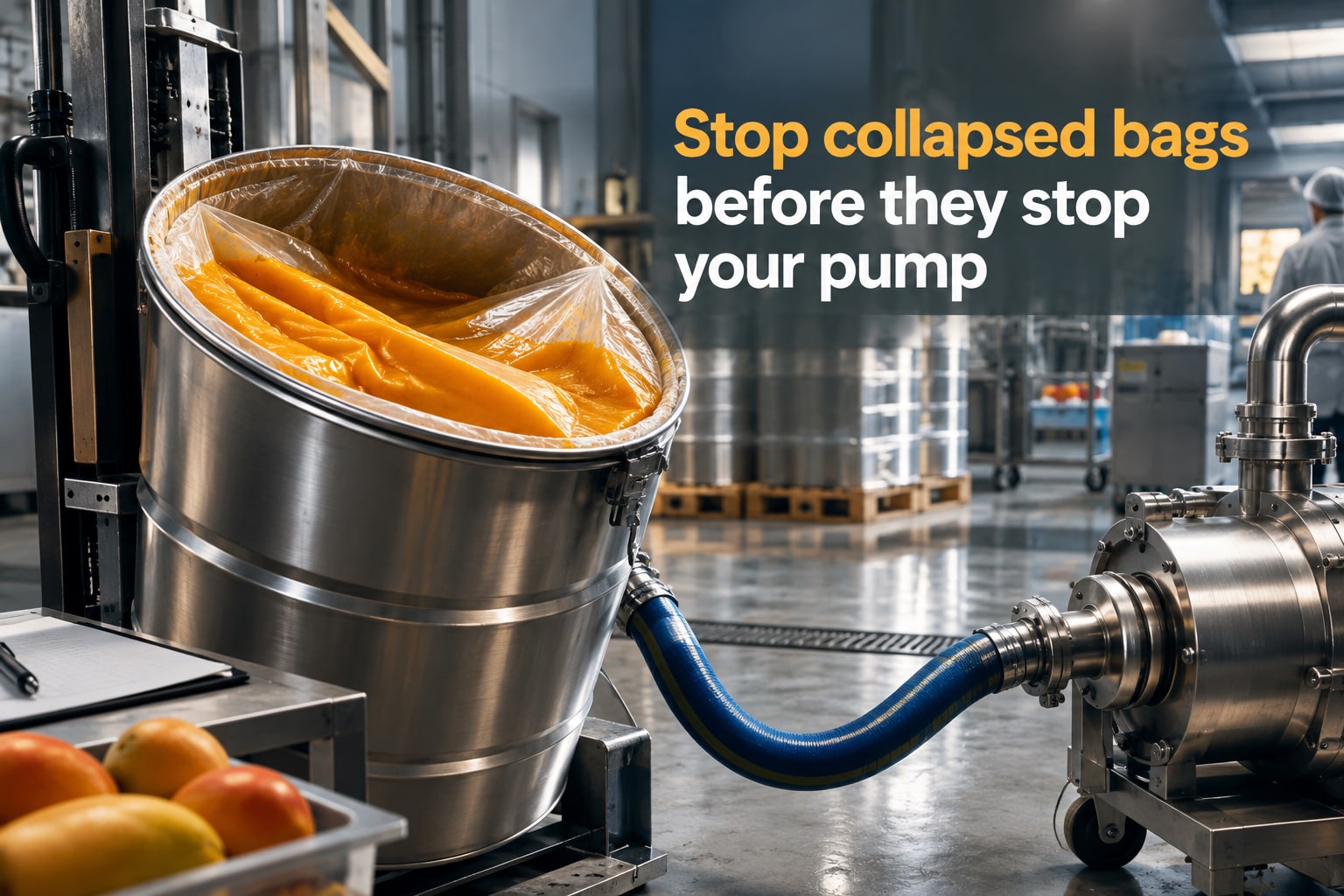
2. Treat intermittent starvation as a flow problem. A flexible bag normally contracts during discharge, but restricted venting or a blocked outlet can make it collapse unevenly. Never puncture the bag or admit non-sterile air. If suction remains unreliable, use a suitable positive-displacement pump and support the hose independently.
3. Temper cold puree under a validated procedure until it reaches the supplier’s processing range. Do not apply direct steam, hot-water immersion or local heat: hot spots can damage the aseptic bag and create cooked flavour or darkening.
4. For settling or fibre, compare the affected drum with an undisturbed sample and check the lot’s stated consistency. Use only a hygienic, validated agitation or recirculation method after opening; a finer screen can worsen starvation and strip normal mango fibre.
This mango puree processing troubleshooting sequence belongs in the batch record, alongside temperature, pump settings and strainer findings. Good mango puree aseptic drum handling prevents a pumping fault from becoming a contamination event.
How to diagnose leaks, swelling, freezing, odours and colour changes
A sound diagnosis starts with evidence, not appearance. Keep the drum quarantined and record the lot, bag and drum numbers, gross and net weights, seal and fitment condition, arrival temperature, transport logger, storage history and photographs before opening.
1. Trace a leak to its location. A puncture, scuff or displaced liner points to forklift impact, dragging or chime damage; a split seal or fitment leak points to packaging failure. If the drum is wet but the bag appears intact, inspect condensation and the drum base before blaming the product.
2. Treat an unopened swollen drum as a hold. Swelling with sour, alcoholic or fermented odour suggests gas formation or post-process contamination; swelling after freezing and thawing can reflect ice expansion and seal stress. Do not vent or release it without supplier and quality review.
3. Check freezing against the temperature record. Ice crystals, a hard layer or separated thawed liquid identify a temperature excursion, not ordinary viscosity. Cold puree also pumps poorly, so compare viscosity or Bostwick value only at the specification’s test temperature.
4. Compare colour and odour with an approved sample from the same lot. Mild separation or colour variation can be normal; sharp browning, burnt notes or fermented odour indicate heat abuse, oxidation, contamination or processing failure. Test pH, soluble solids and microbiology when results fall outside specification.
5. Classify alphonso puree shipment problems by pattern: one damaged drum indicates handling or packaging; multiple drums from one lot indicate storage abuse or mango puree processing troubleshooting at manufacture. Record every finding under alphonso mango puree aseptic bag in drum handling issues, then obtain disposition before opening suspect bags.
Which shipment specification prevents repeat Alphonso puree handling failures
Do not approve a drum against appearance alone. The specification must define the operating limits for an aseptic bag in drum fruit puree, with every test tied to a method and temperature.
| Control | Required specification | Decision trigger |
|---|---|---|
| Drum and bag | Approved drum, liner, fitment, pallet pattern, stacking height and forklift limits | Reject or quarantine unapproved configurations or impact damage |
| Temperature | Transport and storage range, minimum temperature above the formulation’s freezing point, logger requirement and rewarming method | Hold any excursion below the minimum for inspection and disposition |
| Product | pH range, soluble-solids range in °Brix, colour method, sensory limits and Bostwick or viscosity range at a stated temperature | Do not release results outside the lot specification |
| Pumping | Outlet type, hose connection, drum stabilisation and independently supported hose | Stop if side-load reaches the fitment or pumping starves |
| Use period | Validated hours or days after aseptic opening, with temperature and hygiene conditions | Discard after the validated period |
Require a certificate of analysis, batch number, best-before date, packaging inspection record, scheduled-process or commercial-sterility record, temperature logger data and excursion decisions. Record drum photographs and actual receiving, storage and pumping temperatures against the batch.
These controls expose alphonso mango puree aseptic bag in drum handling issues as packaging, temperature or product failures rather than blaming viscosity. Zeus India Enterprise should provide this lot-level evidence so future purchasing compares measurable performance, not flavour claims.
Related product
 | Alphonso Mango Puree Zeus India is a trusted exporter and supplier of premium Alphonso Mango Puree in India, known for delivering rich taste, natural aroma, vibrant... View product → |
Frequently asked questions
How should you inspect an Alphonso puree drum at receiving?
Check the drum, lid, seams, closures, labels, batch number and temperature record before unloading it into released stock. Quarantine units with dents that threaten the bag, leaks, swelling, broken seals or missing identification.
How do you store and open an aseptic mango puree drum safely?
Keep the drum upright in a clean, dry storage area at the supplier’s specified temperature. Inspect the closure and aseptic bag connection, sanitise the access point, and use a food-grade pump without damaging the bag.
What causes difficult pumping or uneven Alphonso mango puree?
Low product temperature, settled solids, excessive viscosity, a collapsed bag or an unsuitable pump setup can restrict flow. Confirm the product temperature, gently condition the drum as specified, and check the dip tube, fittings and pump.
When should an aseptic puree drum be quarantined?
Quarantine it when the bag leaks, the drum is swollen, the product is frozen, the odour is abnormal, the colour has changed unexpectedly, the seal is broken or shipment records show a temperature excursion.