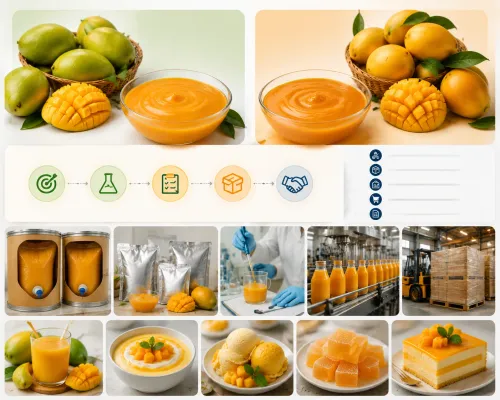


Mango puree pricing in bulk supply chains is influenced by a combination of agricultural, industrial, and logistical factors. For food manufacturers in Bengaluru, Karnataka, understanding these cost drivers is essential for efficient procurement planning and long-term budgeting.
The most fundamental factor is mango variety selection. Totapuri mango puree is generally more affordable due to higher availability and better pulp yield. Alphonso mango puree, however, commands a premium price because of its limited seasonal availability and superior sensory characteristics.
Seasonality plays a major role in pricing fluctuations. During peak mango harvest seasons, raw material availability increases, leading to more stable pricing. Off-season procurement often results in higher costs due to limited supply and storage requirements.
Processing technology also impacts pricing. Advanced aseptic processing systems require significant investment in sterilization, quality control, and packaging infrastructure. However, these systems reduce spoilage and extend shelf life, which ultimately improves cost efficiency for large-scale buyers.
In Bengaluru’s agro-processing ecosystem, suppliers like Zeus India Enterprise operate with structured production systems that balance cost efficiency and quality standards for industrial buyers.
Key pricing determinants include:
1. Raw Material Costs
Mango procurement rates
Seasonal fluctuations
Variety-specific pricing differences
2. Processing Expenses
Energy consumption during pasteurization
Labor and automation costs
Quality control systems
3. Packaging Costs
Aseptic bag and drum materials
Sterilization requirements
Bulk handling systems
4. Logistics and Export Costs
Transportation distance
Cold chain vs non-cold chain shipping
International freight charges
5. Order Volume
Bulk contracts reduce per-unit pricing
Smaller orders increase cost per unit
Market demand trends also influence pricing. When demand for mango-based beverages and dairy products rises globally, procurement prices tend to increase due to higher competition for raw materials.Food manufacturers often mitigate price volatility by entering long-term supply agreements. This ensures stable pricing and consistent availability throughout production cycles.
Understanding these pricing dynamics allows businesses to optimize procurement strategies and maintain profitability without compromising product quality.